
Do I Absolutely Need Surgery to Fix a Torn Meniscus?
No. The vast majority of degenerative meniscus tears heal entirely without surgery. An aggressive, non-operative physiotherapy protocol of joint unloading, quadriceps strengthening, and neuromuscular retraining stabilizes the knee, permanently eliminates catching pain, and prevents early-onset osteoarthritis.
The Misunderstanding of Knee Cartilage Injuries
An MRI reading of a "torn meniscus" strikes fear into the hearts of active Torontonians. Whether you twisted your knee playing in a recreational soccer league at Lamport Stadium, or simply felt a sharp pop while crouching down to pick up a box in your Queen West apartment, the immediate assumption is that a torn tissue must be surgically cut out or sewn back together.
For decades, orthopedic surgeons routinely performed arthroscopic surgeries to "clean up" torn menisci. However, modern medical imaging and rigorous clinical trials have completely flipped this narrative.
Unless your knee is physically, immovably locked in place, rushing into surgery is often highly detrimental. Removing cartilage rapidly accelerates joint degeneration. At Rehab Mechanics, we prioritize identifying the true biomechanical cause of your knee pain, utilizing advanced conservative rehabilitation to stabilize the joint and save your natural cartilage.
Structural Analysis of the Knee's Shock Absorbers
To understand why conservative physiotherapy is the international standard of care, we must perform a detailed biomechanical analysis of the knee joint and its internal shock absorbers.
The Anatomy of the C-Shaped Cushions
The knee is a massive hinge joint where your thigh bone (femur) rests on top of your shin bone (tibia). Sandwiched between these two bones are two pieces of tough, rubbery fibrocartilage known as the medial (inside) and lateral (outside) menisci.
Mechanical Function: They act as crucial shock absorbers, distributing your body weight evenly across the joint surface and preventing the bones from grinding directly against one another.
The Blood Supply Dilemma (Red Zone vs. White Zone)
The location of the tear dictates the healing potential:
The Red-Red Zone: The outer third of the meniscus has a rich blood supply. Tears here can physically heal and scar back together with proper load management.
The White-White Zone: The inner two-thirds lack a direct blood supply. Tears here will never "knit" back together. However, they do not need to. Physiotherapy trains the surrounding muscles to absorb the shock, rendering the tear entirely asymptomatic.
Identifying the Clinical Red Flags
Meniscus tears present with a highly specific set of mechanical symptoms that differ greatly from standard runner's knee or a basic ligament sprain:
The "Catching" Sensation: A sharp, localized pain when you bend or straighten the knee, feeling as though something is momentarily stuck inside the joint hinge.
Joint Line Tenderness: Pressing your finger precisely into the soft space between the bones on the side of your knee produces exquisite pain.
Delayed Effusion: Unlike an ACL tear which swells instantly, a meniscus tear often causes the knee to slowly puff up with fluid 24 to 48 hours after the initial tweak.
The Physiotherapy Protocol: Bulletproofing the Knee
Our clinical approach focuses strictly on mechanical decompression, reducing joint effusion, and building massive structural support around the damaged cartilage.
1. Joint Decompression and Effusion Management
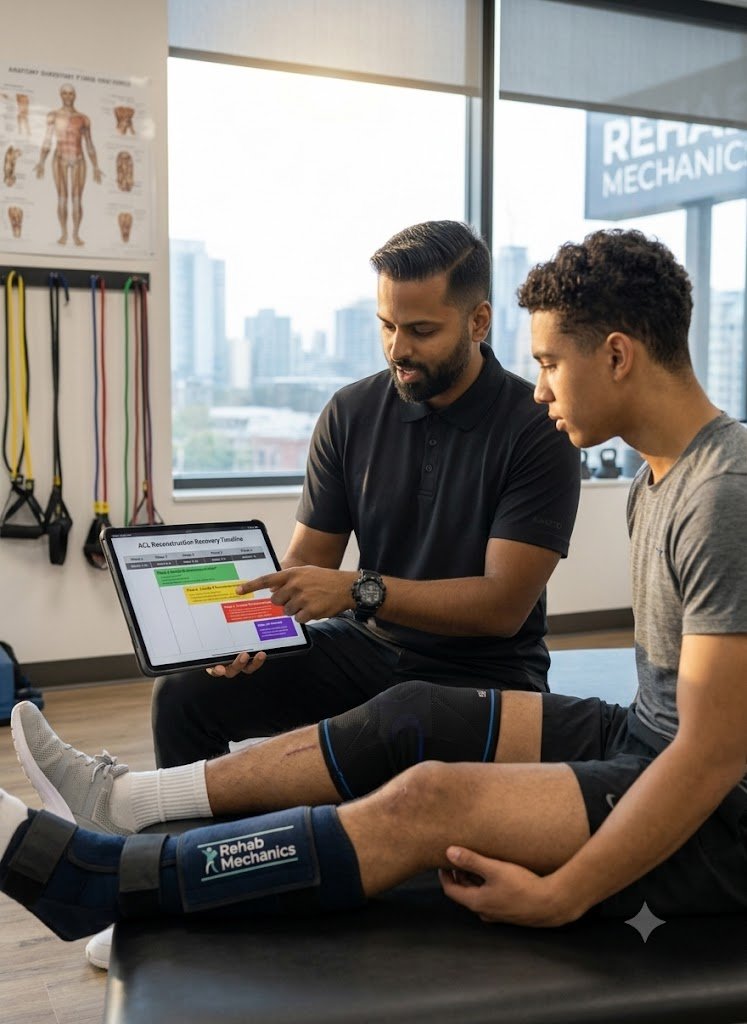
We cannot build strength if the joint is massively swollen.
Manual Therapy: We use targeted soft tissue release on the calf, hamstring, and IT band to reduce the compressive forces pulling the knee joint tightly together.
Lymphatic Drainage: Utilizing manual techniques to push the stagnant joint fluid (effusion) out of the knee capsule, instantly reducing the feeling of pressure and restoring range of motion.
2. Neuromuscular Quadriceps Reactivation
Swelling inside the knee triggers a reflex that actively shuts down your quadriceps muscle (Arthrogenic Muscle Inhibition).
Isometric Activation: We use pain-free isometric holds and Neuromuscular Electrical Stimulation (NMES) to force the quadriceps to fire, overriding the brain's shutdown signal.
3. Closed Kinetic Chain Strength and Proprioception
We must teach the leg how to absorb gravity without relying on the damaged cartilage.
Gluteal Stabilization: Strengthening the side glutes (gluteus medius) prevents the knee from caving inward (valgus collapse), which is the primary movement that crushes the meniscus.
Proprioceptive Retraining: Utilizing balance boards to retrain the micro-stabilizers in the knee, ensuring the joint reacts instantly to sudden changes in direction.
Primary Source Proof
Massive, landmark orthopedic trials (including the ESCAPE trial) have definitively proven that for degenerative meniscus tears, structured, supervised physical therapy yields pain relief and functional outcomes that are identical to arthroscopic partial meniscectomy surgery, without subjecting the patient to surgical risks.
Read the PubMed Evidence: Physical Therapy versus Arthroscopic Partial Meniscectomy for Meniscal Tears
Save Your Cartilage Today
You do not have to accept an invasive surgery to fix a clicking, painful knee. By aggressively strengthening the muscular scaffolding around the joint, your body can adapt, compensate, and completely resolve the pain of a torn meniscus.
Book your comprehensive knee assessment today. We are conveniently located inside the Prime Medical Centre at 68 Abell Street, easily accessible in Toronto Queen West.
Contact us to schedule your appointment:
Email: info@rehabmechanics.com
Phone: (416) 533-3900
About the Author
Mr. Sanjay Attwala (B.Sc., M.Sc., RPT) is a Registered Physiotherapist, clinical director, and the founder of Rehab Mechanics in Toronto. With over 15 years of registered clinical practice and a deep specialization in complex musculoskeletal rehabilitation, Sanjay synthesizes rigorous international academic training with advanced evidence-based therapeutics to guide his clinical practice and patient education initiatives.
Academic Background & Credentials
Master of Science (M.Sc.) in Physiotherapy – University of Keele, United Kingdom (2010).
Bachelor of Science (B.Sc.) – University of Waterloo, Ontario, Canada.
Registered Physiotherapist (RPT) – Regulated health professional in excellent standing with the College of Physiotherapists of Ontario (CPO).
Corporate Entity – Operating officially under the S. Attwala Physiotherapy Professional Corporation with a DBA of Rehab Mechanics.
Clinical Expertise & Philosophy
Sanjay’s clinical approach rejects passive symptom management in favor of identifying underlying biomechanical root causes. His diverse expertise spans advanced manual therapies, personalized corrective exercise prescription, and modern physical modalities. At the Rehab Mechanics Toronto Queen West clinic, he routinely diagnoses and treats complex conditions including:
Spinal & Discogenic Pathology – Cervical, thoracic, and lumbar disc injuries, sciatica, and sacroiliac joint (SIJ) dysfunction.
Upper & Lower Extremity Injuries – Rotator cuff tears, frozen shoulder, tennis/golfer’s elbow, carpal tunnel syndrome, and complex ankle/foot pathologies.
Perinatal & Pelvic Health Rehabilitation – Specialized assessment and rehabilitation protocols tailored specifically for women during pregnancy and the post-partum period, addressing pelvic girdle pain, diastasis recti, and core stabilization.
Specialized Rehabilitation – Pelvic health therapy, TMJ dysfunction, post-surgical rehabilitation (including Total Hip and Total Knee Replacements), and custom orthotics dispensing.
Shockwave Therapy: with advanced cutting edge technological devices to suit your needs.
Interdisciplinary Practice & Patient Care
Sanjay practices an integrated model of healthcare, working closely alongside medical doctors inside the Prime Medical Centre on Abell Street to streamline patient recovery pathways. He maintains a human-centric, communication-first clinical framework, ensuring that care remains fully customized rather than automated.
His clinical caseload encompasses a broad operational spectrum under Ontario's regulatory frameworks, including:
Motor Vehicle Accident (MVA) Claims – Rehabilitation navigating Ontario’s statutory accident benefits schedule.
Workplace Safety and Insurance Board (WSIB) – Occupational injury management and return-to-work screening.
Extended Health Care (EHC) & Private Practice – Multi-tier insurance coordination and long-term athletic development plans.
Commitment to Research & Community
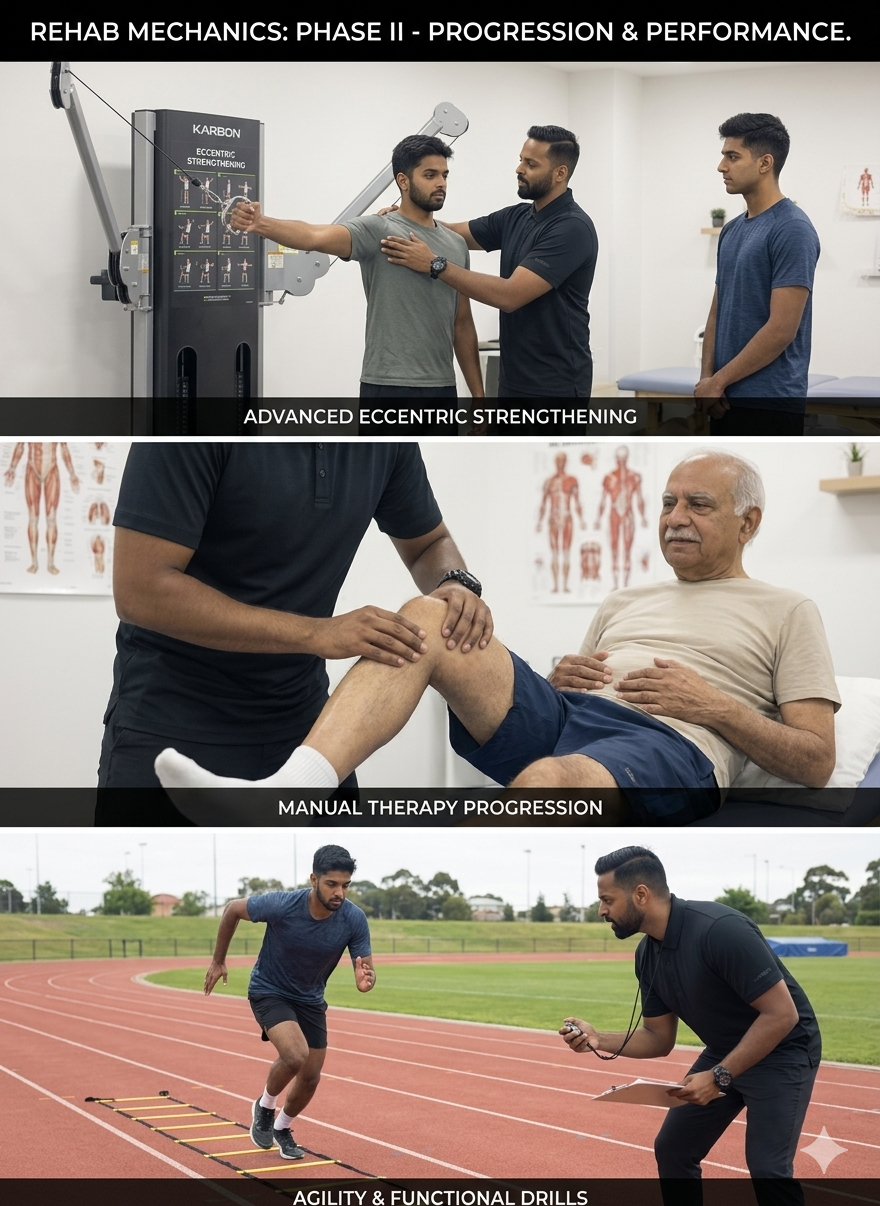
Outside of his clinical caseload at Rehab Mechanics and his additional practice affiliations in Etobicoke, Sanjay is an active health writer and community educator. He translates contemporary peer-reviewed medical research into accessible, actionable guidance on his professional blog. As a dedicated father and husband, he mirrors his professional advice in his personal life, focusing on structural mobility, cross-training, and longevity to help his family and his community thrive. Naturally he takes he a keen interest in rehabilitation for women who are pregnant and post-partum.
Disclaimer: The information provided on this blog is intended for educational and informational purposes only. It does not constitute medical advice, diagnosis, or a treatment plan. Always seek the direct advice of a Registered Physiotherapist, physician, or other qualified health provider regarding any medical condition or physical rehabilitation routine.