

Evidence-Based Physiotherapy in Queen West, Toronto | Rehab Mechanics
A comprehensive, biomechanical approach to your rehabilitation.
At Rehab Mechanics, we have a proven track record of successfully treating complex, stubborn, and acute musculoskeletal injuries. We do not just chase symptoms, prescribe generic rest, or apply temporary fixes; we utilize advanced diagnostic assessments to identify the root mechanical cause of your pain. By understanding exactly how your body moves and where the physical breakdowns occur, we construct highly targeted treatment plans that yield lasting results.
Rehab Mechanics provides evidence‑based physiotherapy in the heart of Queen West, Toronto. Our clinical approach blends advanced biomechanical assessment, targeted corrective exercise, and hands‑on manual therapy to help patients recover from complex injuries and restore long‑term physical function. Whether you’re dealing with knee pain, back tension, shoulder stiffness, or chronic movement issues, our team focuses on identifying the root mechanical cause of your discomfort — not just treating symptoms.
We serve patients across Queen West, Liberty Village, Trinity Bellwoods, Parkdale, and the surrounding downtown Toronto communities. Our clinic is located inside Prime Medical Centre at 68 Abell Street, offering easy access by TTC and convenient parking options.
Our Clinical approach
We seamlessly combine advanced soft tissue therapy, precise corrective exercises, and highly effective technological modalities to eliminate pain and assist our patients in safely returning to full, resilient physical function. We empower you to take control of your healing through targeted education, comprehensive movement analysis, and expert, hands-on care. Our philosophy is simple: passive treatments may provide short-term relief, but active, biomechanically sound movement is what ultimately cures physical dysfunction and prevents future injuries.
Why Choose Rehab Mechanics
Our physiotherapy care is built on clinical precision, modern biomechanics, and personalized treatment planning. Every assessment includes a detailed movement analysis, strength testing, and joint mobility evaluation. We take the time to explain your diagnosis clearly, ensuring you understand how your body moves and how your injury developed.
Our treatment plans are fully customized — no generic exercise sheets, no rushed appointments, and no temporary fixes. We focus on long‑term results through active rehabilitation and targeted manual therapy.
What we treat
Our evidence-based diagnostic and treatment protocols cover a wide spectrum of physical dysfunctions. We view the body as an interconnected system, allowing us to effectively treat:
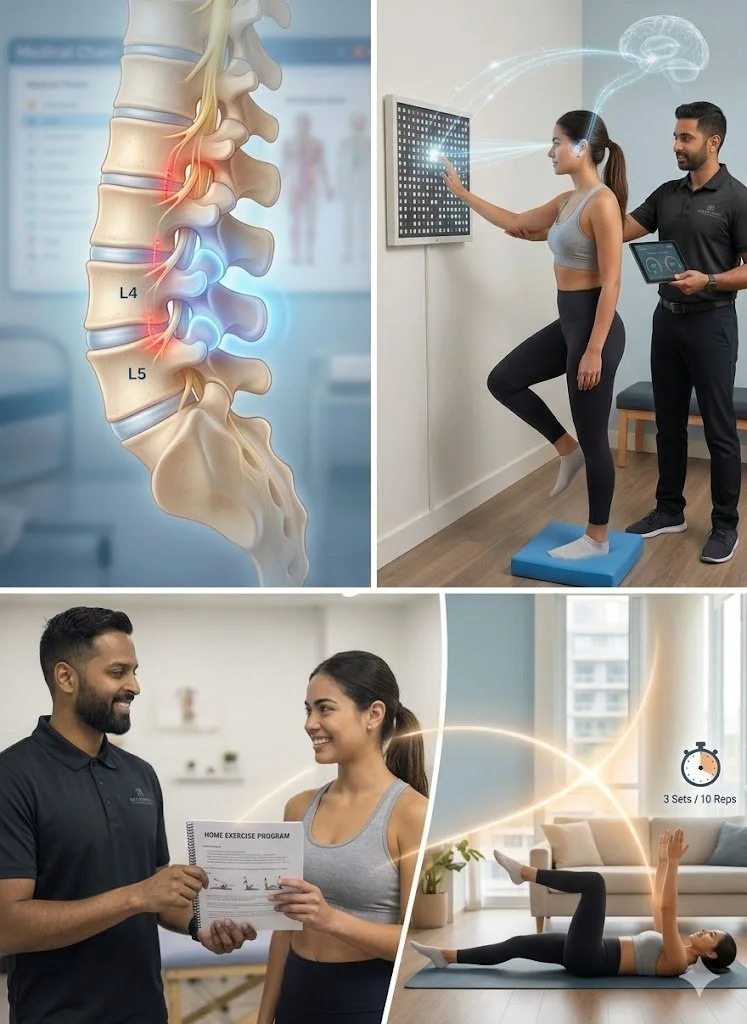
Spinal & Pelvic Health: Discogenic injuries (cervical neck, mid-back, and lumbar low back), chronic Sciatica, Sacroiliac Joint (SIJ) dysfunction, Postural Dysfunction, and targeted pelvic health therapy. We focus on directional preference therapies and deep core stabilization to relieve nerve compression and structural strain.
Upper Extremity & Craniofacial: TMJ dysfunction, Rotator Cuff injuries (including severe tears, frozen shoulder, and arthritic joints), Tennis/Golfer's Elbow, and Wrist injuries (Carpal Tunnel Syndrome, De Quervain's Tenosynovitis). Our protocols aim to restore the delicate balance of mobility and stability required for complex upper body mechanics.
Lower Extremity: Hip injuries (ligamental trauma, labral tears, advanced arthritis, and Total Hip Replacements), Knee injuries (ligamental tears like ACL/MCL, meniscus tears, arthritis, and Total Knee Replacements), and Ankle/Foot injuries (acute sprains, post-fracture rehab, severe plantar fasciitis, heel spurs, and flat feet).
Performance & Longevity: Comprehensive, biomechanical strength training integrated seamlessly into your current or new workout routines to enhance athletic output, prevent functional decline, and bulletproof your joints against daily wear and tear.
In-person treatment
Our state-of-the-art, welcoming clinic is conveniently located inside the Prime Medical Centre at Unit #1 - 68 Abell Street, Toronto, ON M6J 0B1. Designed to be an optimal environment for healing and focus, we are easily accessible via the Queen streetcar, with highly convenient Green P and street parking options readily available for our patients.
Most popular blog topics of Summer 2026
FAQ’s
Do I need a doctor’s referral to see a physiotherapist in Ontario?
No. Physiotherapists in Ontario are primary‑care providers, which means you can book an appointment directly without a referral. Some extended health insurance plans may request one for reimbursement, but it is not required to begin treatment.
What should I expect during my first physiotherapy appointment?
Your initial assessment includes a detailed movement analysis, strength testing, joint mobility evaluation, and a biomechanical review of how your injury developed. You’ll receive a clear diagnosis, an explanation of the root mechanical cause, and a personalized treatment plan tailored to your goals.
How long is each physiotherapy session?
Assessments typically run 45–60 minutes, while follow‑up treatments are 30–45 minutes depending on your condition and treatment plan. Every session is one‑on‑one and focused entirely on your rehabilitation.
Is physiotherapy covered by insurance?
Yes. Most extended health plans cover physiotherapy services. We provide detailed receipts for easy reimbursement, and our team can help guide you through the process if needed.
What types of injuries do you treat?
We treat a wide range of musculoskeletal conditions, including:
Knee pain, meniscus irritation, bursitis
Back pain, disc injuries, sciatica
Shoulder injuries, rotator cuff tears, impingement
Hip pain, labral tears, arthritis
Wrist, elbow, and hand conditions
Postural dysfunction and movement‑related pain
Sports injuries and performance limitations
Our approach focuses on identifying the root mechanical cause rather than chasing symptoms.
Do you offer treatment for chronic or long‑standing injuries?
Yes. Many of our patients come to us after months or years of persistent pain. Our biomechanical assessments are designed to uncover hidden movement faults that often go undiagnosed, allowing us to build targeted treatment plans that finally address the underlying issue.
What is your treatment philosophy?
We believe that passive treatments may provide short‑term relief, but active, biomechanically sound movement is what creates lasting change. Our care blends hands‑on therapy, corrective exercise, and modern rehabilitation technology to restore proper mechanics and prevent future injury.
How soon will I start feeling better?
Most patients notice meaningful improvement within 3–5 sessions, depending on the severity and duration of their condition. Complex injuries may require a longer treatment plan, but every session is designed to move you closer to pain‑free, efficient movement.
Do you provide home exercise programs?
Yes. Every patient receives a personalized home program with clear instructions, progressions, and video demonstrations. These exercises reinforce your in‑clinic treatment and accelerate recovery.
Where are you located?
We are located inside Prime Medical Centre, Unit #1 — 68 Abell Street, Toronto, in the heart of Queen West. We’re easily accessible by TTC and surrounded by convenient parking options.
How do I book an appointment?
You can book an appointment by calling (416) 533‑3900, filling out our “contact form” on our website, and/or emailing info@rehabmechanics.com. Our front desk team will help schedule your assessment and answer any questions you may have.
How does Rehab Mechanics use Google My Business (GMB)?
Our GMB profile helps patients find our clinic, verify our services, and access our website. Interactions through GMB—such as calls, directions, and searches—strengthen our digital presence and improve local search indexing.
Does Rehab Mechanics use Google Tag Manager, analytics, or tracking tools?
Yes. We use Google Tag Manager and analytics tools to improve site performance, understand user engagement, and ensure proper indexing. No personal health information is collected.
How does Rehab Mechanics comply with Google AdSense requirements?
Rehab Mechanics maintains a valid ads.txt file, uses compliant ad placements, and follows Google’s publisher policies. All monetization supports educational physiotherapy content.
Who writes Rehab Mechanics’ content?
Content is authored by Mr. Sanjay Attwala, BSC, MSC, RPT, a registered physiotherapist with extensive experience in orthopedic rehabilitation, biomechanics, and sports medicine.