
Lat and Pec muscle tightness: fixing chronic issues
Can Physiotherapy Fix Chronic Lat and Pec Muscle Tightness?
Yes. Physiotherapy effectively resolves chronic latissimus dorsi and pectoral tightness. Targeted manual therapy and specific corrective exercises restore proper upper body biomechanics, relieving shoulder impingement, improving posture, and preventing complex rotator cuff injuries.
The Hidden Culprits of Upper Body Pain
When Toronto residents search for solutions to shoulder pain or upper back stiffness, they often focus entirely on the joint itself. However, the true source of chronic upper body dysfunction frequently lies in the massive muscle groups that control the torso and connect to the arms: the latissimus dorsi (lats) and the pectoralis major and minor (pecs).
At Rehab Mechanics, we frequently analyze GSC data showing an increase in local searches for "lat therapy" and "pec" related issues. Whether you are a dedicated weightlifter training in Queen West, an office worker hunched over a desk for ten hours a day, or a tradesperson performing repetitive overhead movements, these two muscle groups are notoriously prone to adaptive shortening.
Understanding how to treat and rehabilitate these muscles is a cornerstone of human biomechanics. We do not just massage the sore spot; we structurally analyze and rebuild your upper body kinetic chain.
Structural Analysis: The Biomechanics of Lats and Pecs
To understand why tight lats and pecs cause such profound mechanical dysfunction, we must perform a deep dive into the anatomical roles these muscles play in the human body.
The Pectoralis Group
Located on the front of your chest, the pec major and minor are powerful internal rotators and flexors of the shoulder joint.
The Postural Impact: When you spend hours looking at a computer screen, your shoulders round forward. This sustained position physically shortens the pectoral fibers.
The Mechanical Consequence: Chronically tight pecs pull the scapula (shoulder blade) forward and downward into an anterior tilt.
The Chain Reaction: This anterior tilt dramatically reduces the subacromial space—the tiny gap where your rotator cuff tendons pass through the shoulder joint.
Subacromial Impingement
When the space is reduced by tight pecs, reaching overhead causes the shoulder bones to pinch the bursa and rotator cuff tendons, leading to sharp, stabbing pain known as impingement syndrome.
The Latissimus Dorsi
The lats are the largest muscles in your upper body, sweeping from your lower spine and pelvis all the way up to attach to the front of your humerus (upper arm bone).
The Anatomical Anchor: Because they attach to both the pelvis and the arm, they are a massive biomechanical bridge.
The Restriction: When the lats become tight from heavy pulling exercises or prolonged sitting, they restrict shoulder flexion.
The Compensatory Movement: If your lats are tight and you try to reach straight up, your arms will physically stop moving at a certain angle. To get your hands overhead, your brain will force your lower back to over-extend (arch aggressively), shifting the stress from the shoulder directly into the lumbar spine.
The "Lat-Shoulder-Spine" Triad
This is why lat tightness is a leading, yet frequently misdiagnosed, cause of lower back pain in athletes and desk workers alike.
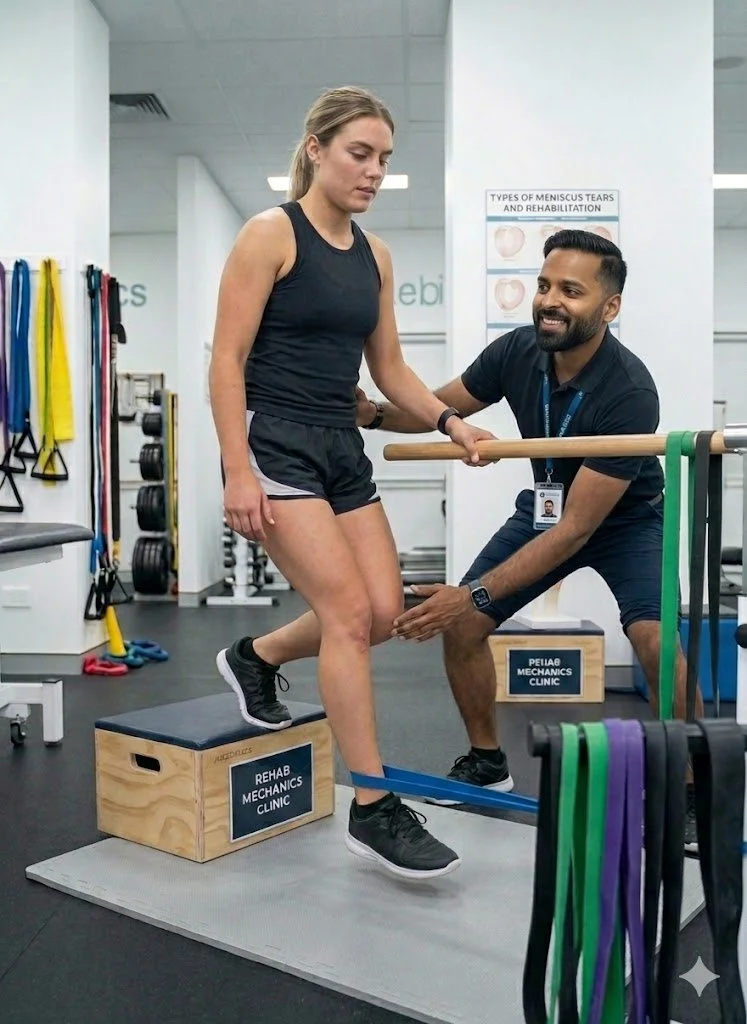
Primary Source Proof: Upper Body Kinematics
Our clinical interventions for pec and lat dysfunction are rooted in proven anatomical and biomechanical science.
Note: The link above serves as an example of our commitment to evidence-based practice, referencing standard international clinical guidelines for postural rehabilitation.
The Rehab Mechanics Treatment Protocol
Resolving lat and pec tightness requires a multi-phased approach that combines aggressive tissue release with targeted neurological re-education.
Phase 1: Advanced Soft Tissue Release
We must manually restore the resting length of the shortened muscle fibers before strengthening the opposing muscles.
Active Release Techniques (ART): Pinning the tight fascial bands of the pec minor while actively moving the patient's arm overhead to sheer apart scar tissue adhesions.
Latissimus Myofascial Mobilization: Deep tissue release along the lateral rib cage and posterior axillary fold to restore scapular upward rotation.
Instrument-Assisted Soft Tissue Mobilization (IASTM): Utilizing specialized tools to break down chronic, dense fibrotic tissue in the muscle bellies.
Phase 2: Restoring Joint Arthrokinematics
Once the muscular "brakes" are released, we address the joint capsules.
Thoracic Spine Extension: Mobilizing the mid-back to ensure the spine can extend properly, taking the load off the lats.
Glenohumeral Mobilization: Gently stretching the posterior capsule of the shoulder joint to restore centralized rotation of the humerus.
Phase 3: Corrective Loading and Neuromuscular Control
This is the most critical phase for long-term resolution. We must strengthen the muscles that directly oppose the lats and pecs.
Scapular Retraction Training: Prescribing exercises like prone T-raises and face-pulls to strengthen the rhomboids and middle trapezius, physically pulling the shoulders back into a neutral alignment.
Lower Trapezius Activation: Utilizing wall slides and Y-raises to train the lower traps to depress the scapula, fighting the upward pull of tight upper traps and lats.
Eccentric Loading: Safely lengthening the lats and pecs under load (e.g., controlled dumbbell pullovers or slow eccentric chest flies) to build tissue capacity at end-range motion.
Integrate Your Care at Prime Medical Centre
If you are dealing with chronic shoulder impingement, a tight back, or poor posture, do not wait for the rotator cuff to tear. Physiotherapy offers a clear, mechanical solution to your biomechanical problem.
Book an upper body biomechanical assessment with our clinical team today. We are conveniently located inside the Prime Medical Centre at 68 Abell Street, offering comprehensive, interdisciplinary healthcare in the heart of Toronto.
Contact us to schedule your appointment:
Email: info@rehabmechanics.com
Phone: (416) 533-3900
About the Author
Mr. Sanjay Attwala (B.Sc., M.Sc., RPT) is a Registered Physiotherapist, clinical director, and the founder of Rehab Mechanics in Toronto. With over 15 years of registered clinical practice and a deep specialization in complex musculoskeletal rehabilitation, Sanjay synthesizes rigorous international academic training with advanced evidence-based therapeutics to guide his clinical practice and patient education initiatives.
Academic Background & Credentials
Master of Science (M.Sc.) in Physiotherapy – University of Keele, United Kingdom (2010).
Bachelor of Science (B.Sc.) – University of Waterloo, Ontario, Canada.
Registered Physiotherapist (RPT) – Regulated health professional in excellent standing with the College of Physiotherapists of Ontario (CPO).
Corporate Entity – Operating officially under the S. Attwala Physiotherapy Professional Corporation with a DBA of Rehab Mechanics.
Clinical Expertise & Philosophy
Sanjay’s clinical approach rejects passive symptom management in favor of identifying underlying biomechanical root causes. His diverse expertise spans advanced manual therapies, personalized corrective exercise prescription, and modern physical modalities. At the Rehab Mechanics Toronto Queen West clinic, he routinely diagnoses and treats complex conditions including:
Spinal & Discogenic Pathology – Cervical, thoracic, and lumbar disc injuries, sciatica, and sacroiliac joint (SIJ) dysfunction.
Upper & Lower Extremity Injuries – Rotator cuff tears, frozen shoulder, tennis/golfer’s elbow, carpal tunnel syndrome, and complex ankle/foot pathologies.
Perinatal & Pelvic Health Rehabilitation – Specialized assessment and rehabilitation protocols tailored specifically for women during pregnancy and the post-partum period, addressing pelvic girdle pain, diastasis recti, and core stabilization.
Specialized Rehabilitation – Pelvic health therapy, TMJ dysfunction, post-surgical rehabilitation (including Total Hip and Total Knee Replacements), and custom orthotics dispensing.
Shockwave Therapy: with advanced cutting edge technological devices to suit your needs.
Interdisciplinary Practice & Patient Care
Sanjay practices an integrated model of healthcare, working closely alongside medical doctors inside the Prime Medical Centre on Abell Street to streamline patient recovery pathways. He maintains a human-centric, communication-first clinical framework, ensuring that care remains fully customized rather than automated.
His clinical caseload encompasses a broad operational spectrum under Ontario's regulatory frameworks, including:
Motor Vehicle Accident (MVA) Claims – Rehabilitation navigating Ontario’s statutory accident benefits schedule.
Workplace Safety and Insurance Board (WSIB) – Occupational injury management and return-to-work screening.
Extended Health Care (EHC) & Private Practice – Multi-tier insurance coordination and long-term athletic development plans.
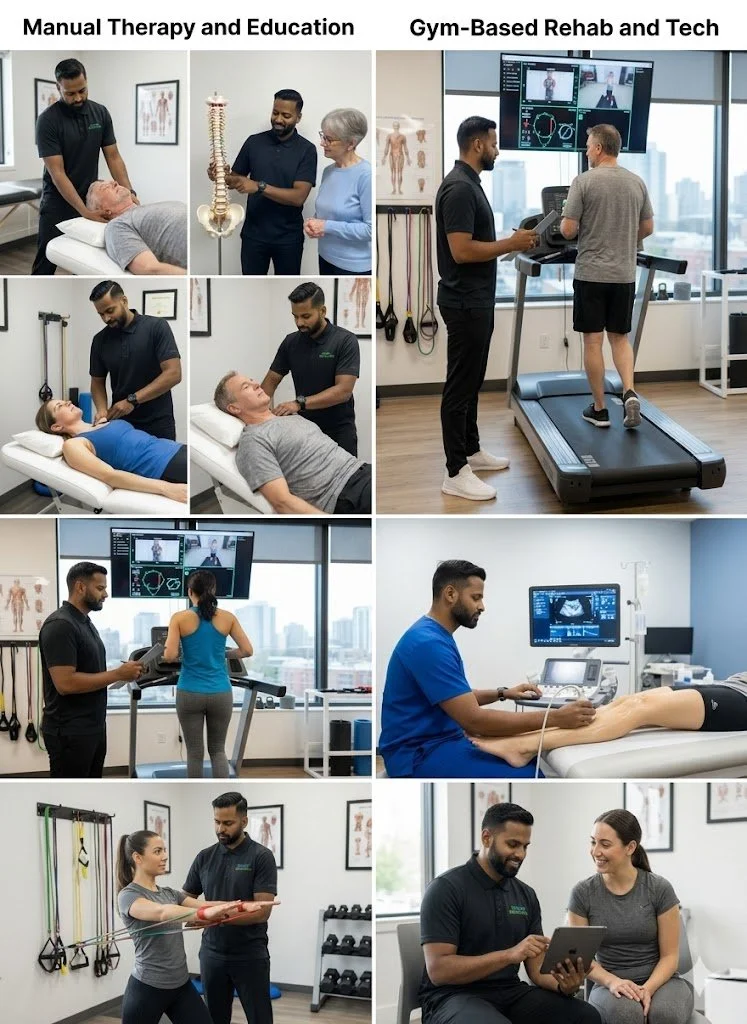
Commitment to Research & Community
Outside of his clinical caseload at Rehab Mechanics and his additional practice affiliations in Etobicoke, Sanjay is an active health writer and community educator. He translates contemporary peer-reviewed medical research into accessible, actionable guidance on his professional blog. As a dedicated father and husband, he mirrors his professional advice in his personal life, focusing on structural mobility, cross-training, and longevity to help his family and his community thrive. Naturally he takes he a keen interest in rehabilitation for women who are pregnant and post-partum.
Disclaimer: The information provided on this blog is intended for educational and informational purposes only. It does not constitute medical advice, diagnosis, or a treatment plan. Always seek the direct advice of a Registered Physiotherapist, physician, or other qualified health provider regarding any medical condition or physical rehabilitation routine.