Can Shockwave Therapy Dissolve Calcium Buildup in My Shoulder?
Yes. Extracorporeal Shockwave Therapy (ESWT) effectively treats calcific tendinitis without surgery. High-energy acoustic waves physically shatter the calcium deposits within the rotator cuff tendon, stimulate intense blood flow, and accelerate the body's natural cellular absorption of the painful calcification.
The Agony of the Frozen Calcium Shoulder
In the active, fast-paced neighborhoods of Queen West and Liberty Village, shoulder pain is an incredibly common complaint. Most patients assume their pain is a standard rotator cuff tear or simple muscle fatigue from overhead weightlifting, swimming, or long hours typing at a poorly positioned desk.
However, some patients experience a sudden, breathtaking spike in shoulder pain that is so agonizing they end up in the emergency room. They cannot lift their arm a single inch, and the pain disrupts their sleep entirely. When an X-ray is finally taken, the culprit is revealed: a large, dense lump of calcium sitting directly inside the rotator cuff tendon. This is known as Calcific Tendinitis.
When patients are diagnosed with this condition, they are often terrified that invasive arthroscopic surgery is the only way to "scrape" the calcium out. At Rehab Mechanics, we utilize cutting-edge physical modalities to treat this exact pathology. Extracorporeal Shockwave Therapy (ESWT) is the non-surgical gold standard for physically breaking down calcific deposits and restoring your shoulder’s structural mechanics.
Structural Analysis: The Mechanics of Calcific Tendinitis
To understand how sound waves can shatter bone-like deposits, we must perform a deep biological analysis of why your body decided to grow calcium inside a tendon in the first place.
The Anatomy of the Rotator Cuff
The rotator cuff is a group of four small muscles that stabilize the shoulder joint. The most frequently injured is the supraspinatus tendon, which runs across the top of the shoulder joint through a very narrow bony tunnel.
The Hypoxia Trigger (Lack of Oxygen)
Calcium does not randomly appear in healthy tissue. It forms as a biological response to chronic mechanical stress and a lack of oxygen (hypoxia).
The Compression: If you have poor posture (rounded shoulders), that narrow bony tunnel shrinks. Every time you reach overhead, you mechanically crush the supraspinatus tendon.
The Cellular Change: This constant crushing squeezes the blood out of the tendon. In this low-oxygen environment, the tendon cells undergo a bizarre transformation. They actually transform into bone-forming cells (chondrocytes) and begin depositing calcium salts directly into the soft tendon fibers.
The Three Phases of the Disease
Calcific tendinitis is highly unpredictable because it progresses through distinct phases, and the pain levels change drastically depending on the phase.
1. The Formative Phase
The calcium is actively being deposited. The crystal is hard and chalky. Surprisingly, this phase is often completely painless, or causes only a mild, dull ache.
2. The Resorptive Phase (The Agony)
This is when the severe, ER-visit level of pain strikes. The body realizes the calcium shouldn't be there and mounts a massive inflammatory attack to dissolve it.
The Toothpaste Effect: The hard calcium turns into a soft, toothpaste-like consistency. It swells rapidly, creating immense pressure inside the tendon and causing explosive, throbbing pain with any micro-movement.
3. The Post-Calcific Phase
The calcium is fully absorbed, and the tendon begins to heal with new collagen fibers.
Primary Source Proof: ESWT Efficacy
Orthopedic and sports medicine research universally endorses Extracorporeal Shockwave Therapy as a highly effective, non-invasive alternative to surgery for the eradication of calcific deposits in the rotator cuff.
Note: The link above serves as an example of our commitment to evidence-based practice, referencing standard international clinical guidelines for advanced modality rehabilitation.
The Rehab Mechanics Shockwave Protocol
We do not just hand you a generic stretching sheet for calcific tendinitis. We use advanced, clinical-grade shockwave technology to aggressively intervene in the disease process, followed by rigorous biomechanical correction.
Phase 1: Acoustic De-Calcification (ESWT)
Shockwave therapy is the absolute core of this treatment. It involves a handheld probe that delivers rapid, high-energy acoustic sound waves deep into the shoulder.
Mechanical Shattering: The high-pressure acoustic waves pass harmlessly through the soft tissue but hit the dense calcium deposit like a jackhammer. This mechanical force shatters the calcification into microscopic fragments.
Neovascularization: The trauma of the sound waves tricks the body into thinking a new injury has occurred. The body responds by growing brand-new capillary blood vessels (neovascularization) directly into the tendon. This massive influx of blood flushes away the shattered calcium fragments and provides the oxygen needed for the tendon to finally heal.
Pain Modulation: ESWT overwhelms the local nerve endings, dramatically dropping the concentration of Substance P (a pain neurotransmitter), providing significant pain relief after the session.
Phase 2: Joint Mobilization and Decompression
Once the shockwave breaks down the deposit, we must ensure the shoulder joint has the space to move without further crushing the healing tendon.
Inferior Glides: Our physiotherapists apply targeted, downward manual pressure to the humerus (arm bone). This creates physical space in the subacromial tunnel, ensuring the swollen tendon has room to glide.
Thoracic Unlocking: If your mid-back is frozen in a desk-worker slouch, your shoulder blades cannot rotate properly. We utilize high-grade spinal mobilizations to restore your thoracic extension.
Phase 3: Eccentric Loading and Neuromuscular Control
We must structurally rebuild the tendon so the calcium does not return.
Eccentric Rotator Cuff Training: Tendons rebuild their collagen optimally under slow, lengthening tension (eccentric loading). We prescribe highly specific resistance band protocols to stimulate healthy, parallel tendon growth.
Scapular Stabilization: Strengthening the serratus anterior and lower trapezius to ensure your shoulder blade pulls back and down during overhead lifting, permanently opening the bony tunnel and preventing the hypoxic crushing that started the disease.
Shatter the Pain, Avoid the Scalpel
You do not have to live with blinding shoulder pain or accept the risks of arthroscopic surgery. Advanced physical modalities like shockwave therapy can biologically erase the calcification and restore your shoulder's human mechanics.
Book a comprehensive shockwave assessment with our clinical team today. We are conveniently located inside the Prime Medical Centre at 68 Abell Street, offering elite, technologically advanced orthopedic care in Toronto Queen West.
Contact us to schedule your appointment:
Email: info@rehabmechanics.com
Phone: (416) 533-3900
About the Author
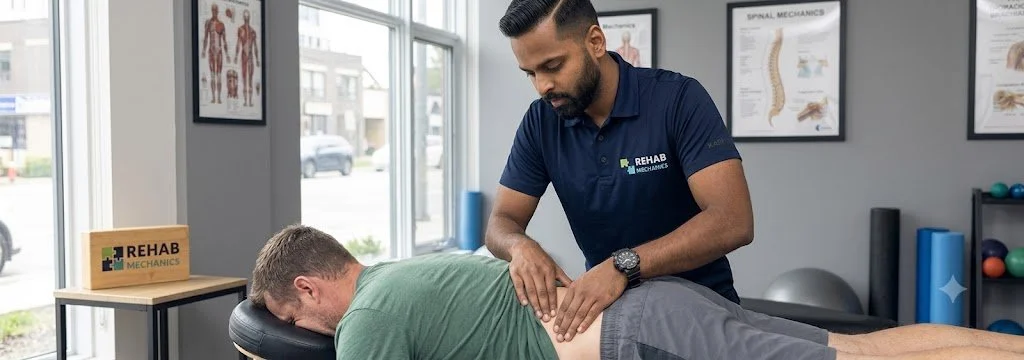
Mr. Sanjay Attwala (B.Sc., M.Sc., RPT) is a Registered Physiotherapist, clinical director, and the founder of Rehab Mechanics in Toronto. With over 15 years of registered clinical practice and a deep specialization in complex musculoskeletal rehabilitation, Sanjay synthesizes rigorous international academic training with advanced evidence-based therapeutics to guide his clinical practice and patient education initiatives.
Academic Background & Credentials
Master of Science (M.Sc.) in Physiotherapy – University of Keele, United Kingdom (2010).
Bachelor of Science (B.Sc.) – University of Waterloo, Ontario, Canada.
Registered Physiotherapist (RPT) – Regulated health professional in excellent standing with the College of Physiotherapists of Ontario (CPO).
Corporate Entity – Operating officially under the S. Attwala Physiotherapy Professional Corporation with a DBA of Rehab Mechanics.
Clinical Expertise & Philosophy
Sanjay’s clinical approach rejects passive symptom management in favor of identifying underlying biomechanical root causes. His diverse expertise spans advanced manual therapies, personalized corrective exercise prescription, and modern physical modalities. At the Rehab Mechanics Toronto Queen West clinic, he routinely diagnoses and treats complex conditions including:
Spinal & Discogenic Pathology – Cervical, thoracic, and lumbar disc injuries, sciatica, and sacroiliac joint (SIJ) dysfunction.
Upper & Lower Extremity Injuries – Rotator cuff tears, frozen shoulder, tennis/golfer’s elbow, carpal tunnel syndrome, and complex ankle/foot pathologies.
Perinatal & Pelvic Health Rehabilitation – Specialized assessment and rehabilitation protocols tailored specifically for women during pregnancy and the post-partum period, addressing pelvic girdle pain, diastasis recti, and core stabilization.
Specialized Rehabilitation – Pelvic health therapy, TMJ dysfunction, post-surgical rehabilitation (including Total Hip and Total Knee Replacements), and custom orthotics dispensing.
Shockwave Therapy: with advanced cutting edge technological devices to suit your needs.
Interdisciplinary Practice & Patient Care
Sanjay practices an integrated model of healthcare, working closely alongside medical doctors inside the Prime Medical Centre on Abell Street to streamline patient recovery pathways. He maintains a human-centric, communication-first clinical framework, ensuring that care remains fully customized rather than automated.
His clinical caseload encompasses a broad operational spectrum under Ontario's regulatory frameworks, including:
Motor Vehicle Accident (MVA) Claims – Rehabilitation navigating Ontario’s statutory accident benefits schedule.
Workplace Safety and Insurance Board (WSIB) – Occupational injury management and return-to-work screening.
Extended Health Care (EHC) & Private Practice – Multi-tier insurance coordination and long-term athletic development plans.
Commitment to Research & Community
Outside of his clinical caseload at Rehab Mechanics and his additional practice affiliations in Etobicoke, Sanjay is an active health writer and community educator. He translates contemporary peer-reviewed medical research into accessible, actionable guidance on his professional blog. As a dedicated father and husband, he mirrors his professional advice in his personal life, focusing on structural mobility, cross-training, and longevity to help his family and his community thrive. Naturally he takes he a keen interest in rehabilitation for women who are pregnant and post-partum.
Disclaimer: The information provided on this blog is intended for educational and informational purposes only. It does not constitute medical advice, diagnosis, or a treatment plan. Always seek the direct advice of a Registered Physiotherapist, physician, or other qualified health provider regarding any medical condition or physical rehabilitation routine.