
Defeating daily chronic pain
How to avoid the pain you are feeling day-to-day?
Here are the following steps:
1. RICE (rest, ice, compression and elevation);
2. Eat right;
3. Eat well; and
4. Try fasting.
Knee pain affects millions, limiting mobility and diminishing quality of life—whether you're climbing stairs, walking the dog, or playing with the kids. This complex joint bears much of your body’s weight, making it vulnerable to injury, wear, and inflammation. For many, discomfort starts subtly but can quickly escalate, interfering with work, exercise, and routine tasks common in both urban and suburban lifestyles.
Common triggers include overuse from repetitive activities, sports-related trauma, osteoarthritis due to aging or strain, and alignment issues that increase joint stress. Left unaddressed, minor aches may lead to chronic conditions, reduced range of motion, and even long-term disability. Early signs like swelling, stiffness, clicking sensations, or pain during movement should never be ignored.
In this guide, you’ll learn:
Key causes behind acute and chronic knee discomfort
Warning signals that indicate when to seek help
Practical recovery strategies including movement modifications and targeted exercises
Preventive measures to protect joint health and maintain mobility
Understanding your knee’s role in daily function is the first step toward lasting relief. By recognizing symptoms early and taking informed action, you can stay active and reduce the risk of worsening damage—no matter your age or activity level.
What’s Behind Your Knee Pain? Understanding the Root Causes
Knee discomfort is one of the most common musculoskeletal complaints, affecting individuals across all ages and activity levels. Whether you're an active adult in the heart of the city or a weekend warrior enjoying local trails, understanding the underlying triggers of knee pain is the first step toward effective relief and recovery.
One of the primary causes is injury, such as ligament sprains, meniscus tears, or patellar tendinitis, often resulting from sudden movements or sports-related impact. Overuse is another frequent culprit—repetitive strain from running, climbing stairs, or prolonged standing can lead to inflammation and joint fatigue, especially in urban environments where walking distances are greater. Additionally, medical conditions like osteoarthritis, rheumatoid arthritis, or tendinitis can gradually degrade joint function, leading to chronic discomfort and reduced mobility.
Key indicators to monitor include:
Localized swelling or warmth around the kneecap
Pain when bending or extending the knee
Popping or locking sensations during movement
Early recognition of these signs allows for timely intervention. Incorporating low-impact activities, proper footwear, and joint-supportive habits can make a significant difference—especially for residents seeking long-term knee health in active communities.
Don’t Ignore These Red Flags: When Knee Pain Demands Medical Attention
Knee pain is a common complaint, but certain symptoms should never be brushed off as “just part of getting older” or a minor strain. Recognizing the warning signs that warrant professional evaluation can prevent long-term damage and accelerate recovery. If you’re experiencing persistent swelling that doesn’t improve after a few days of rest, it may signal internal joint inflammation or fluid buildup requiring clinical assessment.
Similarly, instability—such as your knee buckling or giving way during routine movements—often points to ligament damage or meniscal injury. Audible popping sounds at the time of injury, especially when followed by immediate pain and swelling, may indicate an ACL or MCL tear and should be evaluated promptly.
Other critical indicators include:
Inability to fully straighten or bend the knee
Noticeable redness, warmth, or tenderness around the joint
Pain that disrupts sleep or limits daily activities like climbing stairs or walking
For individuals in local communities, early access to skilled care can make a significant difference in recovery outcomes. If symptoms persist beyond 48–72 hours despite home care like rest, ice, or over-the-counter relief, seeking a professional diagnosis is essential. A thorough biomechanical assessment can uncover underlying issues before they progress, helping you return to movement safely and efficiently.
Your Step-by-Step Recovery Roadmap for Knee Pain Relief
Recovering from knee pain doesn’t have to be overwhelming—when you follow a structured, progressive approach. Start with relative rest: reduce high-impact activities like running or jumping, but avoid complete inactivity to prevent joint stiffness. Use supportive braces or compression sleeves if needed to stabilize the knee during daily movement.
Next, apply ice and elevation for 15–20 minutes several times a day, especially after activity, to control inflammation. Pair this with gentle range-of-motion exercises, such as seated knee extensions or heel slides, to maintain flexibility without strain.
Once discomfort decreases, progress to strengthening exercises targeting the quadriceps, hamstrings, and hip stabilizers. Try straight-leg raises, mini squats, and clamshells—perform 2–3 sets of 10–15 reps daily. Use resistance bands to gradually increase difficulty as strength improves.
Incorporate low-impact mobility work like stationary cycling or walking on flat terrain to boost circulation and joint lubrication. Always prioritize pain-free movement—sharp pain is a signal to stop and reassess.
Finally, consider manual therapy or guided physiotherapy, especially if progress stalls. Many local clinics offer personalized programs that include therapeutic ultrasound, dry needling, or gait analysis to support your recovery. Consistency, pacing, and proper form are key to long-term knee health.
Your Knee Pain Questions, Answered
Knee discomfort affects millions of people each year, and understanding the root of the problem is the first step toward recovery. Whether you're an active individual, a weekend warrior, or managing day-to-day strain, knee pain can disrupt your life. Here’s a breakdown of common questions people ask—along with practical answers that can guide your journey back to mobility.
What causes knee pain in otherwise healthy individuals? Overuse, improper movement patterns, or sudden changes in activity level can lead to irritation of tendons, bursae, or cartilage. Even without injury, repetitive strain from walking, climbing stairs, or squatting can trigger inflammation.
Is knee swelling always a sign of serious injury? Not necessarily. Swelling can result from minor irritation or fluid buildup (effusion), but persistent or rapid swelling should be evaluated to rule out ligament damage, meniscus tears, or joint effusion.
How effective is rest in knee recovery? Rest is important, but so is controlled movement. Complete immobilization can weaken supporting muscles. Gentle range-of-motion exercises can promote circulation and speed healing.
Can footwear really impact knee health? Yes. Poor arch support or worn-out soles can alter gait mechanics, increasing stress on the knee joint—especially for those spending long hours standing or walking on hard surfaces.
When should I consider physical therapy? If pain lasts more than a few days or limits daily function, a structured rehab program can restore strength, improve alignment, and reduce recurrence. Many find relief through personalized movement strategies.
Are X-rays always needed for knee pain? Not always. Soft tissue issues like tendonitis or ligament sprains won’t show on X-rays. A clinical evaluation often guides whether imaging is necessary.
What can I do at home to support healing? Apply ice after activity, avoid prolonged sitting with bent knees, and incorporate gentle stretches. Supportive taping or braces may also help stabilize the joint during recovery.
Take Control of Your Knee Health: Your Path Forward
Understanding the root causes of knee pain—whether from overuse, injury, or degenerative conditions—is the first step toward lasting recovery. By now, you’ve learned how factors like poor biomechanics, muscle imbalances, and repetitive strain can compromise joint function, especially in active individuals across urban and suburban communities. You’ve also explored practical strategies such as the RICE method (Rest, Ice, Compression, Elevation), targeted strengthening exercises, and the importance of early intervention when red flags like swelling or instability arise.
The key to effective recovery lies in consistency and proactive care. Start by assessing your daily movements and footwear—small adjustments can significantly reduce joint stress. Incorporate low-impact activities like swimming or cycling to maintain mobility without加重 strain. If discomfort persists beyond a few days or interferes with daily tasks, seeking guidance from a local physiotherapy provider can help create a personalized rehabilitation plan. Professionals in your area can offer hands-on treatments, gait analysis, and progressive exercise programs tailored to your lifestyle.
Remember, knee pain doesn’t have to be a permanent limitation. With the right knowledge and actionable steps, you can rebuild strength, improve flexibility, and regain confidence in your movement. Stay committed to your joint health—your future self will thank you.
About the Author
Mr. Sanjay Attwala (B.Sc., M.Sc., RPT) is a Registered Physiotherapist, clinical director, and the founder of Rehab Mechanics in Toronto. With over 15 years of registered clinical practice and a deep specialization in complex musculoskeletal rehabilitation, Sanjay synthesizes rigorous international academic training with advanced evidence-based therapeutics to guide his clinical practice and patient education initiatives.
Academic Background & Credentials
Master of Science (M.Sc.) in Physiotherapy – University of Keele, United Kingdom (2010).
Bachelor of Science (B.Sc.) – University of Waterloo, Ontario, Canada.
Registered Physiotherapist (RPT) – Regulated health professional in excellent standing with the College of Physiotherapists of Ontario (CPO).
Corporate Entity – Operating officially under the S. Attwala Physiotherapy Professional Corporation with a DBA of Rehab Mechanics.
Clinical Expertise & Philosophy
Sanjay’s clinical approach rejects passive symptom management in favor of identifying underlying biomechanical root causes. His diverse expertise spans advanced manual therapies, personalized corrective exercise prescription, and modern physical modalities. At the Rehab Mechanics Toronto Queen West clinic, he routinely diagnoses and treats complex conditions including:
Spinal & Discogenic Pathology – Cervical, thoracic, and lumbar disc injuries, sciatica, and sacroiliac joint (SIJ) dysfunction.
Upper & Lower Extremity Injuries – Rotator cuff tears, frozen shoulder, tennis/golfer’s elbow, carpal tunnel syndrome, and complex ankle/foot pathologies.
Perinatal & Pelvic Health Rehabilitation – Specialized assessment and rehabilitation protocols tailored specifically for women during pregnancy and the post-partum period, addressing pelvic girdle pain, diastasis recti, and core stabilization.
Specialized Rehabilitation – Pelvic health therapy, TMJ dysfunction, post-surgical rehabilitation (including Total Hip and Total Knee Replacements), and custom orthotics dispensing.
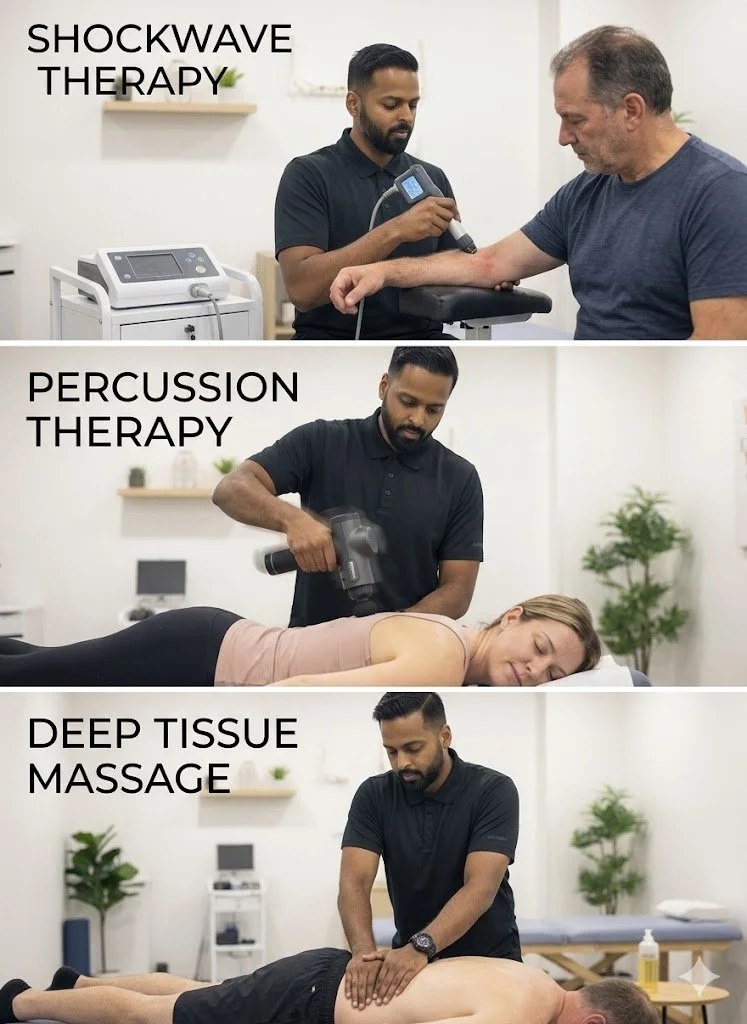
Shockwave Therapy: with advanced cutting edge technological devices to suit your needs.
Interdisciplinary Practice & Patient Care
Sanjay practices an integrated model of healthcare, working closely alongside medical doctors inside the Prime Medical Centre on Abell Street to streamline patient recovery pathways. He maintains a human-centric, communication-first clinical framework, ensuring that care remains fully customized rather than automated.
His clinical caseload encompasses a broad operational spectrum under Ontario's regulatory frameworks, including:
Motor Vehicle Accident (MVA) Claims – Rehabilitation navigating Ontario’s statutory accident benefits schedule.
Workplace Safety and Insurance Board (WSIB) – Occupational injury management and return-to-work screening.
Extended Health Care (EHC) & Private Practice – Multi-tier insurance coordination and long-term athletic development plans.
Commitment to Research & Community
Outside of his clinical caseload at Rehab Mechanics and his additional practice affiliations in Etobicoke, Sanjay is an active health writer and community educator. He translates contemporary peer-reviewed medical research into accessible, actionable guidance on his professional blog. As a dedicated father and husband, he mirrors his professional advice in his personal life, focusing on structural mobility, cross-training, and longevity to help his family and his community thrive. Naturally he takes he a keen interest in rehabilitation for women who are pregnant and post-partum.
Disclaimer: The information provided on this blog is intended for educational and informational purposes only. It does not constitute medical advice, diagnosis, or a treatment plan. Always seek the direct advice of a Registered Physiotherapist, physician, or other qualified health provider regarding any medical condition or physical rehabilitation routine.