How to truly read medical research - fact vs. fiction
Unlocking the Secrets of Quality Medical Research
In today’s fast-paced healthcare environment, making informed decisions means knowing how to distinguish robust, reliable research from mere opinion. A solid grasp of medical research quality not only empowers patients but also equips community members to ask the right questions in local clinics and hospitals. As you dive into this guide, you'll learn:
Key indicators of trustworthy studies that can influence treatment outcomes.
Actionable tips to recognize the hallmarks of rigorous research methodology.
How to evaluate the credibility of findings without getting overwhelmed by complex data.
This introductory section sets the stage by revealing why a critical review of medical literature is essential. With increasing awareness, you can ensure that your healthcare choices are backed by sound and validated evidence. Whether you are navigating options in your local health center or consulting with professionals in regional medical facilities, understanding these research fundamentals can transform your approach to healthcare. Join us as we explore the tools and insights needed to confidently embark on a journey towards well-informed patient decisions.
Mastering the Essentials of Medical Research Quality
When evaluating medical research, understanding the factors that influence quality and reliability is critical. A rigorous study design acts as the backbone for robust findings, while effective bias control measures ensure that results remain trustworthy. Researchers must prioritize clear objectives, randomized sampling, and controlled variables to minimize errors that could mislead conclusions. This approach not only enhances internal validity but also fortifies external relevance, enabling findings to inform practical, local solutions.
Key considerations include:
Study Design: Emphasize randomized control trials and longitudinal studies that account for confounding factors.
Bias Mitigation: Utilize blinding techniques and standardized assessments to reduce measurement and selection bias.
Data Integrity: Ensure meticulous data collection protocols and transparent reporting to support reproducible outcomes.
By integrating these methods, practitioners can better interpret research outcomes and apply them to real-world scenarios, particularly in community and local healthcare settings. Adhering to stringent standards of evidence builds confidence among medical professionals and stakeholders. Ultimately, practical application of these criteria advances the how-to approach for improving patient outcomes and optimizing treatment strategies through trustworthy, high-quality research.
Mastering the Art of Evaluating Medical Research
Navigating the world of clinical studies and research findings can seem overwhelming, but taking a structured approach empowers you to make informed healthcare decisions. Follow these steps for a clear path toward evaluating medical research quality effectively:
Understand the Study Design
Familiarize yourself with different research methods such as randomized controlled trials, observational studies, and meta-analyses. This will help you gauge the study’s reliability.
Scrutinize the Methodology
Look at sample sizes, control groups, and statistical analysis to determine if the study design minimizes bias.
Consider whether the researchers have addressed potential confounding factors.
Assess Credibility
Verify the sources and consider any potential conflicts of interest that might impact results.
Examine the affiliation of the researchers and the institutions involved.
Consult Local Experts
Engage with healthcare professionals in your area to discuss how local health trends and community-specific factors might impact findings.
Apply Findings Thoughtfully
Integrate research outcomes with your unique health profile and treatment goals, ensuring an informed, practical approach to your wellbeing.
What defines a high-quality medical study? Quality studies typically utilize robust methodologies including randomized controlled trials, sufficient sample sizes, and clear outcome measures. Ensuring data is collected systematically adds to the overall credibility and applicability of the findings.
How do I identify reliable research amidst conflicting reports? Reliability hinges on peer-review, transparent methodologies, and consistency with established medical guidelines. Look for detailed discussions of variables, control groups, and statistical significance to distinguish trustworthy studies from less rigorous reports.
Why is study design crucial in interpreting research results? A well-designed study minimizes bias using methods like blinding and randomized assignments. This approach strengthens conclusions and helps clinicians and patients better gauge treatment efficacy.
What role does peer review play in research validation? Peer review acts as a quality control measure, ensuring that research methods and conclusions have been evaluated by independent experts before publication.
How do local research practices and guidelines influence interpretation? Local standards and regulations can affect study designs and data interpretation. Understanding regional guidelines is essential, as findings may be tailored to address population-specific health challenges and available resources.
Can applying these findings enhance patient care? Absolutely—integrating well-interpreted research into clinical practice allows for targeted, evidence-based treatment strategies customized to local healthcare environments.
Empowering Your Healthcare Journey
As we wrap up this guide, it’s clear that knowledge and critical thinking are your best allies in navigating the complex world of medical research quality. Embracing a proactive approach not only builds confidence but also enhances your ability to make informed decisions about your health. By understanding the fundamentals of research credibility and analyzing evidence through a critical lens, you can better assess treatment options and healthcare recommendations.
Key takeaways for effective empowerment in healthcare include:
Active Learning: Invest time in understanding basic research methodologies and quality indicators.
Utilize Local Resources: Attend health workshops, community seminars, or local clinic sessions to stay updated.
Critical Evaluation: Regularly question and review the evidence behind treatment options and medical claims.
Engage with Professionals: Consult with healthcare experts to discuss findings and clarify uncertainties.
Taking these actionable steps will equip you with the tools needed to decipher complex medical information and confidently manage your health. Continue your journey by remaining curious and proactive, ensuring that every decision is guided by both knowledge and critical insight.

About the Author
Mr. Sanjay Attwala (B.Sc., M.Sc., RPT) is a Registered Physiotherapist, clinical director, and the founder of Rehab Mechanics in Toronto. With over 15 years of registered clinical practice and a deep specialization in complex musculoskeletal rehabilitation, Sanjay synthesizes rigorous international academic training with advanced evidence-based therapeutics to guide his clinical practice and patient education initiatives.
Academic Background & Credentials
Master of Science (M.Sc.) in Physiotherapy – University of Keele, United Kingdom (2010).
Bachelor of Science (B.Sc.) – University of Waterloo, Ontario, Canada.
Registered Physiotherapist (RPT) – Regulated health professional in excellent standing with the College of Physiotherapists of Ontario (CPO).
Corporate Entity – Operating officially under the S. Attwala Physiotherapy Professional Corporation with a DBA of Rehab Mechanics.
Clinical Expertise & Philosophy
Sanjay’s clinical approach rejects passive symptom management in favor of identifying underlying biomechanical root causes. His diverse expertise spans advanced manual therapies, personalized corrective exercise prescription, and modern physical modalities. At the Rehab Mechanics Toronto Queen West clinic, he routinely diagnoses and treats complex conditions including:
Spinal & Discogenic Pathology – Cervical, thoracic, and lumbar disc injuries, sciatica, and sacroiliac joint (SIJ) dysfunction.
Upper & Lower Extremity Injuries – Rotator cuff tears, frozen shoulder, tennis/golfer’s elbow, carpal tunnel syndrome, and complex ankle/foot pathologies.
Perinatal & Pelvic Health Rehabilitation – Specialized assessment and rehabilitation protocols tailored specifically for women during pregnancy and the post-partum period, addressing pelvic girdle pain, diastasis recti, and core stabilization.
Specialized Rehabilitation – Pelvic health therapy, TMJ dysfunction, post-surgical rehabilitation (including Total Hip and Total Knee Replacements), and custom orthotics dispensing.
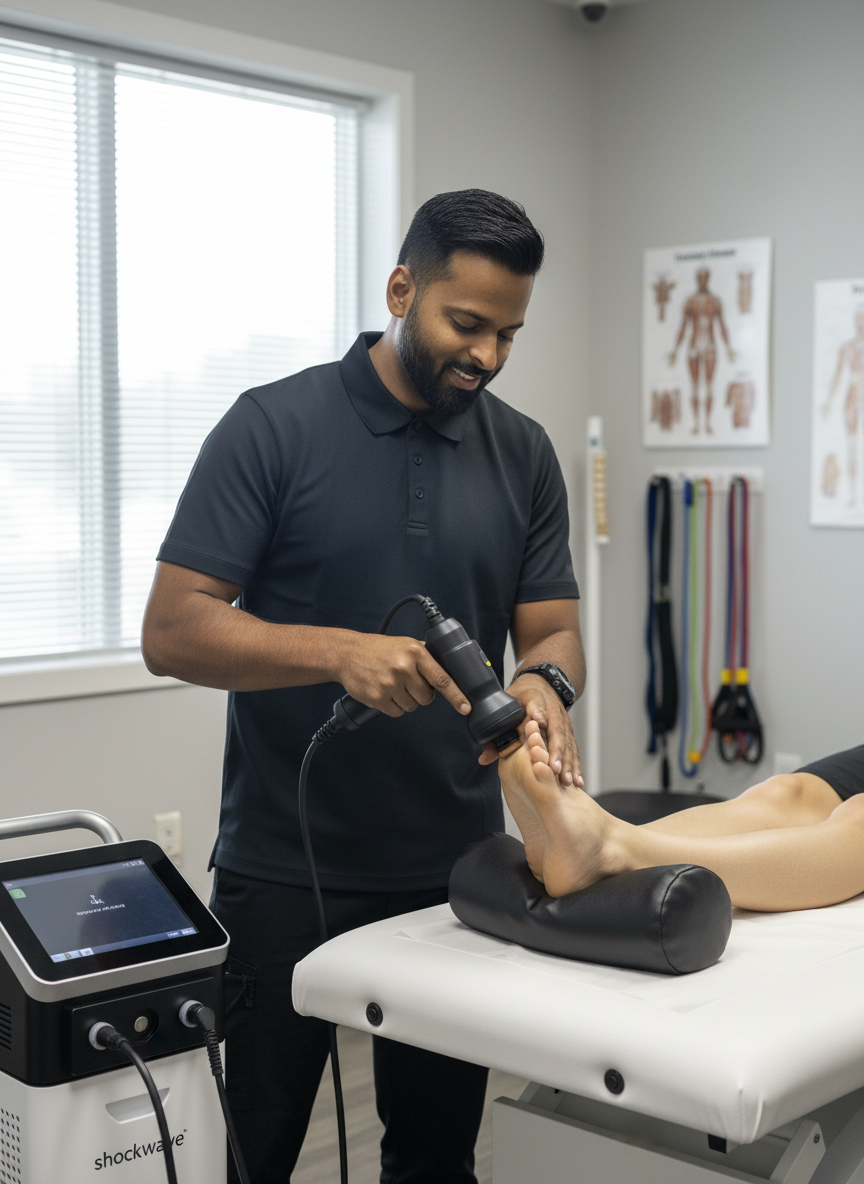
Shockwave Therapy: with advanced cutting edge technological devices to suit your needs.
Interdisciplinary Practice & Patient Care
Sanjay practices an integrated model of healthcare, working closely alongside medical doctors inside the Prime Medical Centre on Abell Street to streamline patient recovery pathways. He maintains a human-centric, communication-first clinical framework, ensuring that care remains fully customized rather than automated.
His clinical caseload encompasses a broad operational spectrum under Ontario's regulatory frameworks, including:
Motor Vehicle Accident (MVA) Claims – Rehabilitation navigating Ontario’s statutory accident benefits schedule.
Workplace Safety and Insurance Board (WSIB) – Occupational injury management and return-to-work screening.
Extended Health Care (EHC) & Private Practice – Multi-tier insurance coordination and long-term athletic development plans.
Commitment to Research & Community
Outside of his clinical caseload at Rehab Mechanics and his additional practice affiliations in Etobicoke, Sanjay is an active health writer and community educator. He translates contemporary peer-reviewed medical research into accessible, actionable guidance on his professional blog. As a dedicated father and husband, he mirrors his professional advice in his personal life, focusing on structural mobility, cross-training, and longevity to help his family and his community thrive. Naturally he takes he a keen interest in rehabilitation for women who are pregnant and post-partum.
Disclaimer: The information provided on this blog is intended for educational and informational purposes only. It does not constitute medical advice, diagnosis, or a treatment plan. Always seek the direct advice of a Registered Physiotherapist, physician, or other qualified health provider regarding any medical condition or physical rehabilitation routine.