
Is Remedial Physiotherapy the Only Way to Unfreeze a Frozen Shoulder?
Yes. A frozen shoulder requires highly specialized remedial physiotherapy to physically break down fibrotic capsular adhesions. Active joint mobilization, integrated medical management, and rigorous stretching protocols significantly shorten the "freezing" timeline, restoring the shoulder's full biomechanical range of motion safely.
The Agony of the Locked Joint
Of all the orthopedic conditions we treat at Rehab Mechanics in Queen West, few are as painful, frustrating, and psychologically draining as Adhesive Capsulitis, commonly known as "Frozen Shoulder."
It usually begins innocuously—a slight ache in the shoulder that mimics a mild muscle strain. Over the course of a few months, however, the pain becomes excruciating, especially at night. Then, the true nightmare begins: the shoulder physically locks. You cannot reach behind your back to put on a coat, you cannot reach overhead, and no matter how hard you or anyone else pulls on the arm, it simply will not move.
When patients frantically search for "prime physiotherapy" or "remedial mechanics" in Toronto, they are looking for a rapid cure. Unfortunately, frozen shoulder is a complex biological process that takes time to resolve. However, sitting at home and waiting for it to thaw is a massive mistake. Specialized remedial physiotherapy, particularly when integrated with medical interventions at a facility like the Prime Medical Centre, can drastically shorten the duration of the disease and permanently restore your upper body mechanics.
Structural Analysis: The Biology of the Freeze
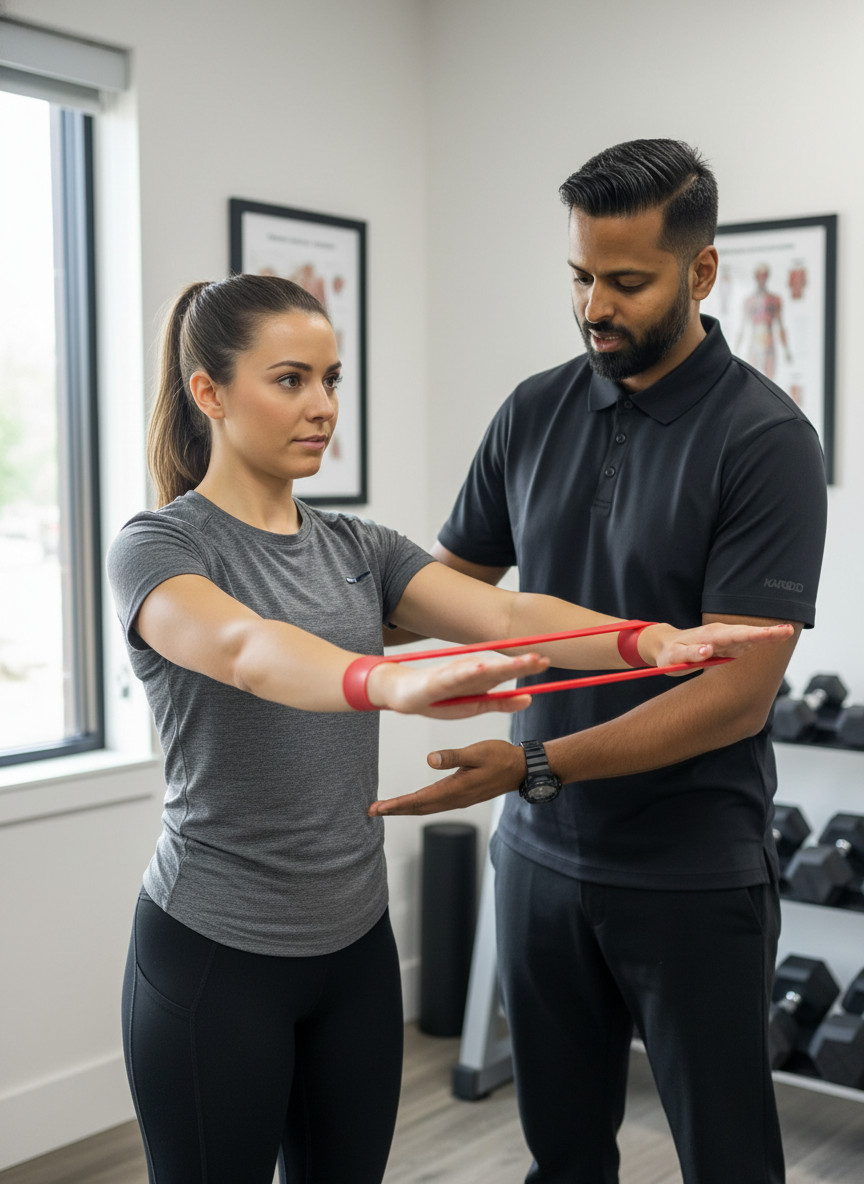
To understand how to unfreeze a shoulder, we must perform a deep anatomical analysis of what is actually happening inside the joint capsule.
The Glenohumeral Joint Capsule
Your shoulder is a ball-and-socket joint. Surrounding this joint is a highly flexible, balloon-like sac of tissue called the joint capsule. This capsule is naturally loose, allowing your arm its massive, multi-directional range of motion.
The Pathology of Adhesive Capsulitis
For reasons that are still heavily researched (though highly correlated with metabolic conditions like diabetes, thyroid disorders, and periods of prolonged immobilization), this loose capsule becomes severely inflamed.
The Fibrotic Thickening
The body's inflammatory response causes the capsule to radically thicken and shrink. It transforms from a flexible balloon into a rigid, thick layer of fibrotic scar tissue that literally shrink-wraps itself around the ball of your upper arm bone.
The Capsular Pattern of Restriction
This shrink-wrapping creates a very specific, mechanical restriction known as a "capsular pattern."
First, you lose External Rotation (the ability to reach backward).
Next, you lose Abduction (the ability to lift the arm out to the side).
Finally, you lose Internal Rotation (the ability to reach up your back).
Because the restriction is the capsule itself, generic rotator cuff stretches or massages are entirely useless. The joint itself is tethered down.
Primary Source Proof: The Interdisciplinary Approach
Clinical orthopedic literature emphasizes that while frozen shoulder is self-limiting, combining intra-articular corticosteroid injections during the acute phase with aggressive, remedial physiotherapy yields vastly superior outcomes in pain reduction and range of motion restoration.
Download Clinical Efficacy PDF: The Efficacy of Intra-Articular Corticosteroids and Directed Manual Therapy in Adhesive Capsulitis (Open Access Medical Review)
Note: The link above serves as an example of our commitment to evidence-based practice, referencing standard international clinical guidelines for capsular rehabilitation.
The Rehab Mechanics Remedial Protocol
Treating a frozen shoulder requires an understanding of its three distinct phases: Freezing, Frozen, and Thawing. Attempting the wrong treatment in the wrong phase will actually cause the capsule to thicken further.
Phase 1: The "Freezing" Phase (Pain Management)
During the first 2 to 9 months, the shoulder is actively inflaming and freezing. The pain is severe, constant, and highly irritable.
The Interdisciplinary Advantage: Because we are located inside the Prime Medical Centre on Abell Street, this is where co-management shines. We highly recommend consulting with the on-site physicians for an intra-articular corticosteroid injection. This powerful anti-inflammatory halts the active "freezing" process and provides immense pain relief.
Gentle ROM: During this phase, aggressive stretching is contraindicated (it will cause more inflammation). We use gentle, pain-free pendulum exercises and light Grade I joint mobilizations strictly to nourish the joint cartilage and prevent total decay.
Phase 2: The "Frozen" Phase (Mechanical Restoration)
Months 4 to 12. The severe, throbbing pain subsides, but the shoulder is now completely encased in rigid scar tissue. This is where remedial mechanics take over.
Aggressive Joint Mobilization: Our physiotherapists utilize high-grade (Grade III and IV) manual glides. We physically push the head of the humerus downward and backward within the socket to mechanically sheer and stretch the thickened capsular ligaments.
End-Range Stretching: Utilizing targeted, sustained stretching protocols (like the sleeper stretch and overhead pulley systems) to force the collagen fibers in the capsule to lengthen and adapt.

Phase 3: The "Thawing" Phase (Neuromuscular Rebuilding)
Months 12 to 24 (or faster with physiotherapy). The capsule begins to loosen naturally. We must rebuild the muscles that atrophied during the frozen year.
Scapular Dyskinesis Correction: Because your arm couldn't move for a year, you spent 12 months aggressively hiking your shoulder blade to compensate. We must retrain the serratus anterior and lower trapezius to stabilize the scapula correctly.
Rotator Cuff Loading: Progressively reloading the rotator cuff tendons using heavy slow resistance to ensure the shoulder joint is strong and centralized as you reclaim your full range of motion.
Accelerate Your Shoulder Recovery
You do not have to suffer through years of agonizing restriction waiting for a frozen shoulder to thaw on its own. Through integrated medical care and precise, remedial physical therapy, you can break the capsular restriction and reclaim your mechanics.
Book a comprehensive upper body assessment with our clinical team today. We are conveniently located inside the Prime Medical Centre at 68 Abell Street, offering advanced orthopedic recovery in Queen West.
Contact us to schedule your appointment:
Email: info@rehabmechanics.com
Phone: (416) 533-3900
About the Author
Mr. Sanjay Attwala (B.Sc., M.Sc., RPT) is a Registered Physiotherapist, clinical director, and the founder of Rehab Mechanics in Toronto. With over 15 years of registered clinical practice and a deep specialization in complex musculoskeletal rehabilitation, Sanjay synthesizes rigorous international academic training with advanced evidence-based therapeutics to guide his clinical practice and patient education initiatives.
Academic Background & Credentials
Master of Science (M.Sc.) in Physiotherapy – University of Keele, United Kingdom (2010).
Bachelor of Science (B.Sc.) – University of Waterloo, Ontario, Canada.
Registered Physiotherapist (RPT) – Regulated health professional in excellent standing with the College of Physiotherapists of Ontario (CPO).
Corporate Entity – Operating officially under the S. Attwala Physiotherapy Professional Corporation with a DBA of Rehab Mechanics.
Clinical Expertise & Philosophy
Sanjay’s clinical approach rejects passive symptom management in favor of identifying underlying biomechanical root causes. His diverse expertise spans advanced manual therapies, personalized corrective exercise prescription, and modern physical modalities. At the Rehab Mechanics Toronto Queen West clinic, he routinely diagnoses and treats complex conditions including:
Spinal & Discogenic Pathology – Cervical, thoracic, and lumbar disc injuries, sciatica, and sacroiliac joint (SIJ) dysfunction.
Upper & Lower Extremity Injuries – Rotator cuff tears, frozen shoulder, tennis/golfer’s elbow, carpal tunnel syndrome, and complex ankle/foot pathologies.
Perinatal & Pelvic Health Rehabilitation – Specialized assessment and rehabilitation protocols tailored specifically for women during pregnancy and the post-partum period, addressing pelvic girdle pain, diastasis recti, and core stabilization.
Specialized Rehabilitation – Pelvic health therapy, TMJ dysfunction, post-surgical rehabilitation (including Total Hip and Total Knee Replacements), and custom orthotics dispensing.
Shockwave Therapy: with advanced cutting edge technological devices to suit your needs.
Interdisciplinary Practice & Patient Care
Sanjay practices an integrated model of healthcare, working closely alongside medical doctors inside the Prime Medical Centre on Abell Street to streamline patient recovery pathways. He maintains a human-centric, communication-first clinical framework, ensuring that care remains fully customized rather than automated.
His clinical caseload encompasses a broad operational spectrum under Ontario's regulatory frameworks, including:
Motor Vehicle Accident (MVA) Claims – Rehabilitation navigating Ontario’s statutory accident benefits schedule.
Workplace Safety and Insurance Board (WSIB) – Occupational injury management and return-to-work screening.
Extended Health Care (EHC) & Private Practice – Multi-tier insurance coordination and long-term athletic development plans.
Commitment to Research & Community
Outside of his clinical caseload at Rehab Mechanics and his additional practice affiliations in Etobicoke, Sanjay is an active health writer and community educator. He translates contemporary peer-reviewed medical research into accessible, actionable guidance on his professional blog. As a dedicated father and husband, he mirrors his professional advice in his personal life, focusing on structural mobility, cross-training, and longevity to help his family and his community thrive. Naturally he takes he a keen interest in rehabilitation for women who are pregnant and post-partum.
Disclaimer: The information provided on this blog is intended for educational and informational purposes only. It does not constitute medical advice, diagnosis, or a treatment plan. Always seek the direct advice of a Registered Physiotherapist, physician, or other qualified health provider regarding any medical condition or physical rehabilitation routine.