Can Physiotherapy Cure Thoracic Outlet Syndrome Without Surgery?
Yes. Physiotherapy successfully treats neurogenic Thoracic Outlet Syndrome without surgery. By correcting severe forward-head posture, mobilizing the first rib, and releasing hypertrophied scalene muscles, physical therapy mechanically decompresses the brachial plexus, eliminating radiating arm numbness, tingling, and chronic weakness.
The Misdiagnosed Numbness in Your Arm
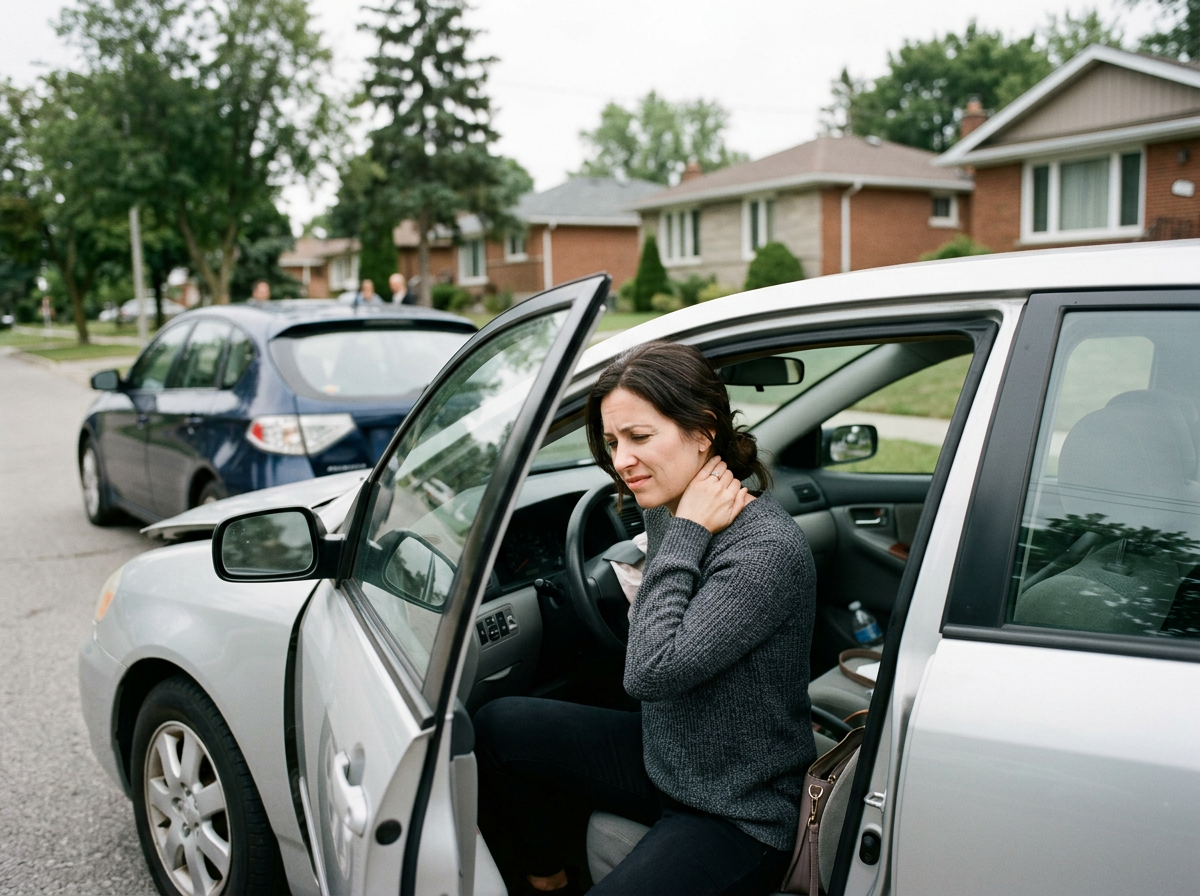
For the thousands of Toronto professionals spending their days hunched over dual monitors in Liberty Village or carrying heavy commuter bags on the TTC, neck and arm pain is an all-too-common reality.
When patients experience a deep, aching pain in their neck accompanied by "pins and needles," numbness, or profound weakness shooting down their arm and into their hands, the initial medical assumption is usually one of two things: Carpal Tunnel Syndrome or a herniated cervical disc.
Patients often undergo weeks of wrist splinting or neck traction with absolutely zero relief. Why? Because the nerve compression is not happening in the wrist or the spine. It is happening in the crowded anatomical intersection between the neck and the shoulder—a condition known as Thoracic Outlet Syndrome (TOS).
At Rehab Mechanics, we specialize in complex musculoskeletal diagnostics. We understand that TOS is fundamentally a space issue caused by structural postural collapse. Through advanced manual therapy and precise biomechanical correction, we physically widen the thoracic outlet, saving patients from invasive nerve-decompression surgeries.
Structural Analysis: The Anatomy of the Thoracic Outlet
To understand how physiotherapy cures TOS, we must map the complex pathway of the nerves and blood vessels as they leave your neck and travel down into your arm.
The Brachial Plexus and Subclavian Vessels
The brachial plexus is a massive, highly sensitive bundle of nerves that exits the cervical spine. Along with the subclavian artery and vein, this bundle must travel through a very narrow, triangular passageway (the thoracic outlet) to reach your arm.
The Three Sites of Mechanical Strangulation
In Thoracic Outlet Syndrome, these vital nerves and blood vessels are physically crushed at one of three distinct anatomical bottlenecks.
1. The Scalene Triangle
The scalene muscles run from the side of your neck down to your first rib. The brachial plexus must thread the needle directly between the anterior and middle scalene muscles.
The Postural Trigger: If you have severe "tech neck" (forward head posture), these scalene muscles must overwork to hold your heavy head up.
The Strangulation: They become hypertrophied (thickened) and locked in spasm, acting like a tight vice grip that crushes the nerves against the first rib.
2. The Costoclavicular Space
This is the tiny gap between your collarbone (clavicle) and your first rib.
The Postural Trigger: Carrying heavy backpacks or simply slouching causes the collarbone to drop downward.
The Strangulation: The collarbone physically pins the brachial plexus and blood vessels directly against the rigid bone of the first rib, causing intense, throbbing arm pain and a feeling of "heaviness" or coldness in the hand.
3. The Pectoralis Minor Space
After passing the collarbone, the nerves must run directly underneath the pectoralis minor muscle on the front of your chest.
The Postural Trigger: Sitting with rounded, forward shoulders physically shortens the pec minor into a tight, dense band.
The Strangulation: When you reach your arm overhead, this tight muscular band acts like a tourniquet, cutting off the nerve signals and blood flow to the arm (known as the "Double Crush" effect).
Identifying the Clinical Red Flags
TOS presents with highly specific symptoms that differentiate it from a simple pinched neck nerve.
The Overhead Dead Arm: Lifting your arms overhead to wash your hair, hang curtains, or sleep with your arm under your pillow causes the arm to quickly "go to sleep," ache profoundly, or turn pale.
The Heavy Hand: A persistent feeling of clumsiness or dropping small objects like keys or a coffee mug.
The Ulnar Distribution: The tingling is usually most severe in the pinky and ring fingers, tracing up the inside of the forearm.
Aching Collarbone: A dull, deep ache located right at the base of the neck and behind the collarbone.
Primary Source Proof: Non-Operative Decompression
Clinical neurology and orthopedic literature confirm that targeted, conservative physiotherapy focusing on muscular release and postural restoration is the highly effective, first-line standard of care for neurogenic Thoracic Outlet Syndrome.
Download Clinical Efficacy PDF: Conservative Management and Physiotherapy for Neurogenic Thoracic Outlet Syndrome (Open Access Medical Review)
Note: The link above serves as an example of our commitment to evidence-based practice, referencing standard international clinical guidelines for nerve entrapment rehabilitation.
The Rehab Mechanics TOS Protocol
Treating TOS requires absolute precision. We cannot use generic neck stretches, as aggressively pulling on an already-crushed nerve will only increase the burning pain. We must physically decompress the bottlenecks.
Phase 1: Advanced Decompression and Manual Therapy (Weeks 1-4)
Before we can correct posture, we must manually open the thoracic outlet.
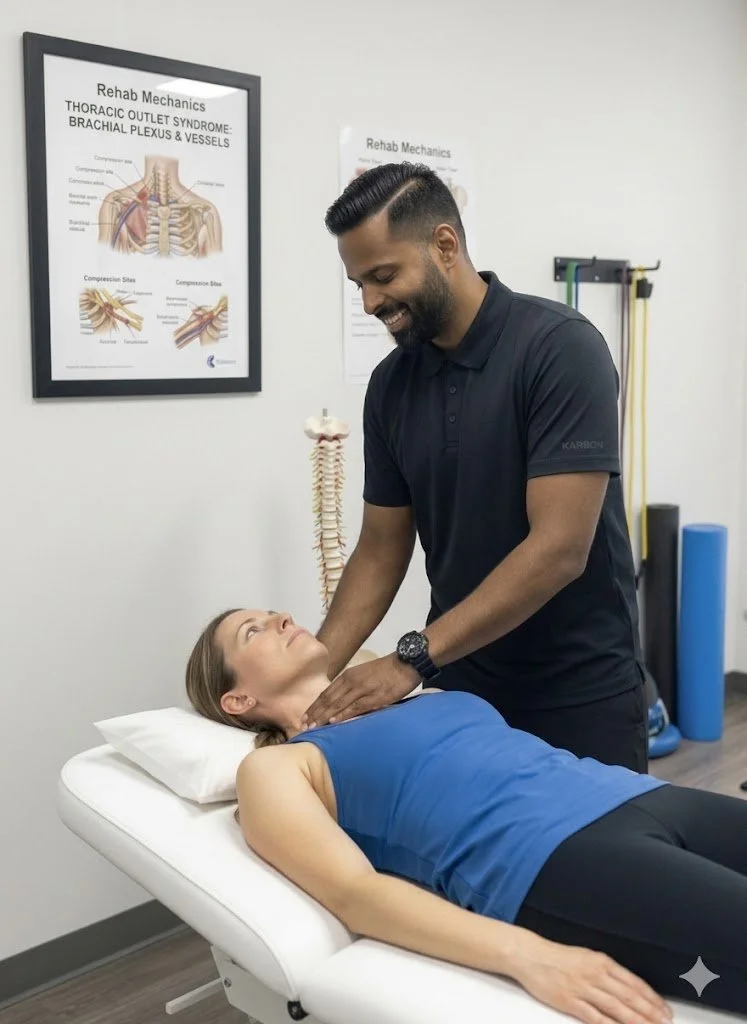
First Rib Mobilization: Our Registered Physiotherapists use precise, downward manual pressure to mobilize an elevated, stuck first rib. Dropping this rib instantly creates massive physical space for the nerves to breathe.
Scalene and Pec Minor Release: Utilizing intensive soft tissue mobilization and ischemic compression to melt away the dense spasms in the neck and chest muscles that are strangulating the brachial plexus.
Diaphragmatic Breathing Integration: The scalene muscles are secondary breathing muscles. We teach you how to breathe using your diaphragm to stop the scalenes from overworking and spasming with every breath you take.
Phase 2: Neurodynamic Flossing (Weeks 3-6)
Nerves need to slide smoothly to stay healthy.
Nerve Gliding: When compressed for months, the brachial plexus gets stuck in microscopic scar tissue. We prescribe specific, gentle "flossing" movements that tug the nerve back and forth through the thoracic outlet, breaking the adhesions and restoring its slippery mobility.
Phase 3: Scapular and Cervical Fortification (Weeks 6+)
This is the permanent cure. We must rebuild the muscular scaffolding that holds your collarbone and shoulders in a neutral, open position.
Lower Trapezius and Serratus Activation: Implementing heavy, targeted rows and prone Y-raises to strengthen the mid-back. These muscles physically pull the shoulder blades down and back, lifting the collarbone completely off the underlying nerves.
Deep Cervical Flexor Endurance: Re-training the tiny muscles in the front of your neck to hold your head perfectly balanced over your spine, ending the reliance on the overworked scalenes.
Stop the Numbness and Save Your Nerves
You do not have to live with a chronically numb, aching arm or consider risky surgical rib resections. By correcting the structural collapse of your upper body and widening the anatomical bottlenecks, physiotherapy can permanently free your nerves.
Book a comprehensive neurological and biomechanical assessment with our specialized team today. We are conveniently located inside the Prime Medical Centre at 68 Abell Street, offering advanced orthopedic care in Toronto Queen West.
Contact us to schedule your appointment:
Email: info@rehabmechanics.com
Phone: (416) 533-3900
About the Author
Mr. Sanjay Attwala (B.Sc., M.Sc., RPT) is a Registered Physiotherapist, clinical director, and the founder of Rehab Mechanics in Toronto. With over 15 years of registered clinical practice and a deep specialization in complex musculoskeletal rehabilitation, Sanjay synthesizes rigorous international academic training with advanced evidence-based therapeutics to guide his clinical practice and patient education initiatives.
Academic Background & Credentials
Master of Science (M.Sc.) in Physiotherapy – University of Keele, United Kingdom (2010).
Bachelor of Science (B.Sc.) – University of Waterloo, Ontario, Canada.
Registered Physiotherapist (RPT) – Regulated health professional in excellent standing with the College of Physiotherapists of Ontario (CPO).
Corporate Entity – Operating officially under the S. Attwala Physiotherapy Professional Corporation with a DBA of Rehab Mechanics.
Clinical Expertise & Philosophy
Sanjay’s clinical approach rejects passive symptom management in favor of identifying underlying biomechanical root causes. His diverse expertise spans advanced manual therapies, personalized corrective exercise prescription, and modern physical modalities. At the Rehab Mechanics Toronto Queen West clinic, he routinely diagnoses and treats complex conditions including:
Spinal & Discogenic Pathology – Cervical, thoracic, and lumbar disc injuries, sciatica, and sacroiliac joint (SIJ) dysfunction.
Upper & Lower Extremity Injuries – Rotator cuff tears, frozen shoulder, tennis/golfer’s elbow, carpal tunnel syndrome, and complex ankle/foot pathologies.
Perinatal & Pelvic Health Rehabilitation – Specialized assessment and rehabilitation protocols tailored specifically for women during pregnancy and the post-partum period, addressing pelvic girdle pain, diastasis recti, and core stabilization.
Specialized Rehabilitation – Pelvic health therapy, TMJ dysfunction, post-surgical rehabilitation (including Total Hip and Total Knee Replacements), and custom orthotics dispensing.
Shockwave Therapy: with advanced cutting edge technological devices to suit your needs.
Interdisciplinary Practice & Patient Care
Sanjay practices an integrated model of healthcare, working closely alongside medical doctors inside the Prime Medical Centre on Abell Street to streamline patient recovery pathways. He maintains a human-centric, communication-first clinical framework, ensuring that care remains fully customized rather than automated.
His clinical caseload encompasses a broad operational spectrum under Ontario's regulatory frameworks, including:
Motor Vehicle Accident (MVA) Claims – Rehabilitation navigating Ontario’s statutory accident benefits schedule.
Workplace Safety and Insurance Board (WSIB) – Occupational injury management and return-to-work screening.
Extended Health Care (EHC) & Private Practice – Multi-tier insurance coordination and long-term athletic development plans.
Commitment to Research & Community
Outside of his clinical caseload at Rehab Mechanics and his additional practice affiliations in Etobicoke, Sanjay is an active health writer and community educator. He translates contemporary peer-reviewed medical research into accessible, actionable guidance on his professional blog. As a dedicated father and husband, he mirrors his professional advice in his personal life, focusing on structural mobility, cross-training, and longevity to help his family and his community thrive. Naturally he takes he a keen interest in rehabilitation for women who are pregnant and post-partum.
Disclaimer: The information provided on this blog is intended for educational and informational purposes only. It does not constitute medical advice, diagnosis, or a treatment plan. Always seek the direct advice of a Registered Physiotherapist, physician, or other qualified health provider regarding any medical condition or physical rehabilitation routine.