Can Physiotherapy Permanently Cure Plantar Fasciitis Without Custom Orthotics?
Yes and NO. While custom orthotics provide immediate offloading for severe cases, physiotherapy is the definitive cure. By restoring ankle dorsiflexion, mobilizing the plantar fascia, and strengthening the intrinsic foot muscles, physical therapy rebuilds your foot's natural shock-absorbing capacity.
The "Glass Shard" in the Heel
There are few sensations more painful than the first few steps out of bed in the morning. For many Torontonians—especially those who spend their days on their feet or those who have recently increased their running volume—that first step feels like a glass shard or a dull, deep ache stabbing directly into the heel.
This is Plantar Fasciitis. It is one of the most common, yet frequently misunderstood, pathologies we treat at Rehab Mechanics. Patients are often told to "roll a frozen water bottle under your foot" or buy expensive, passive arch supports. While these provide temporary relief, they do not resolve the mechanical failure of the foot. To truly defeat plantar fasciitis, you must restore the mobility of your ankle and the intrinsic strength of your arch.
Structural Analysis: The Mechanics of Foot Pain
The plantar fascia is not just a strip of tissue; it is a vital, high-tension ligament that controls the entire biomechanical function of your foot.
The Windlass Mechanism
The plantar fascia connects your heel bone (calcaneus) to the base of your toes.
The Arch Spring: When you step down, the fascia stretches like a high-tension spring to absorb the shock of your weight.
The Lever: When you prepare to push off your toes, the fascia winds tightly, turning your foot into a rigid, powerful lever for walking or running.
The Failure of the Shock Absorber
Plantar fasciitis is not "inflammation" (itis). It is actually plantar fasciopathy—a state of chronic cellular degeneration caused by repetitive mechanical overload.
Ankle Stiffness: If your ankle (talocrural joint) is stiff and cannot bend forward (dorsiflexion), your foot is forced to compensate. The arch collapses inward (overpronation) to allow the foot to move forward.
The Sheer Force: This constant, aggressive collapse places massive tensile stretching forces on the fascia, leading to microscopic tears, scar tissue build-up, and localized bone-spur development.
Primary Source Proof: Biomechanical Rehabilitation
Scientific literature supports the use of progressive mechanical loading and ankle mobilization as the most effective path to curing chronic heel pain, proving that passive arch support is insufficient for long-term resolution.
The Rehab Mechanics Foot Reconstruction Protocol
We treat plantar fasciitis by rebuilding the mechanical health of the entire leg, starting from the ground up.
Phase 1: Tissue Decompression and Shockwave Therapy
Before we strengthen, we must clear the fibrotic, scarred tissue.
Shockwave Therapy: We use high-energy acoustic waves to break down the dense, painful scar tissue in the fascia and stimulate new, healthy blood vessel growth in the degenerated heel.
Myofascial Release: Deep, manual release of the calf muscles (gastrocnemius and soleus). If your calf is tight, your ankle cannot move, and your fascia will remain under constant tension.
Phase 2: Ankle Dorsiflexion Restoration
We must restore the joint's ability to bend, which is the root cause of the arch collapse.
Manual Joint Mobilizations: Our physiotherapists use hands-on techniques to force the talocrural joint to glide properly, ensuring the ankle can bend freely without relying on arch collapse.
Dynamic Calf Stretching: Progressive lengthening of the posterior chain to ensure full ankle range of motion during walking.
Phase 3: The Rathleff Protocol (High-Load Strengthening)
We rebuild the foot's structural integrity using heavy loading.
The Rathleff Protocol: A specific, heavy-load strength protocol using a rolled towel under the toes to maximally activate the plantar fascia while performing calf raises. This has been clinically proven to be the most effective intervention for resolving heel pain.
Intrinsic Foot Strengthening: Exercises like "foot doming" or toe-splaying to rebuild the tiny, dormant muscles inside the foot that are designed to support your arch, rendering the need for permanent orthotics obsolete.
Restore Your Foundation
You do not have to live with the morning hobble. By rebuilding your ankle mobility and foot strength, you can permanently resolve heel pain.
Book a comprehensive foot and ankle assessment today. We are conveniently located inside the Prime Medical Centre at 68 Abell Street, offering advanced orthopedic recovery in Queen West.
Contact us to schedule your appointment:
Email: info@rehabmechanics.com
Phone: (416) 533-3900
About the Author
Mr. Sanjay Attwala (B.Sc., M.Sc., RPT) is a Registered Physiotherapist, clinical director, and the founder of Rehab Mechanics in Toronto. With over 15 years of registered clinical practice and a deep specialization in complex musculoskeletal rehabilitation, Sanjay synthesizes rigorous international academic training with advanced evidence-based therapeutics to guide his clinical practice and patient education initiatives.
Academic Background & Credentials
Master of Science (M.Sc.) in Physiotherapy – University of Keele, United Kingdom (2010).
Bachelor of Science (B.Sc.) – University of Waterloo, Ontario, Canada.
Registered Physiotherapist (RPT) – Regulated health professional in excellent standing with the College of Physiotherapists of Ontario (CPO).
Corporate Entity – Operating officially under the S. Attwala Physiotherapy Professional Corporation with a DBA of Rehab Mechanics.
Clinical Expertise & Philosophy
Sanjay’s clinical approach rejects passive symptom management in favor of identifying underlying biomechanical root causes. His diverse expertise spans advanced manual therapies, personalized corrective exercise prescription, and modern physical modalities. At the Rehab Mechanics Toronto Queen West clinic, he routinely diagnoses and treats complex conditions including:
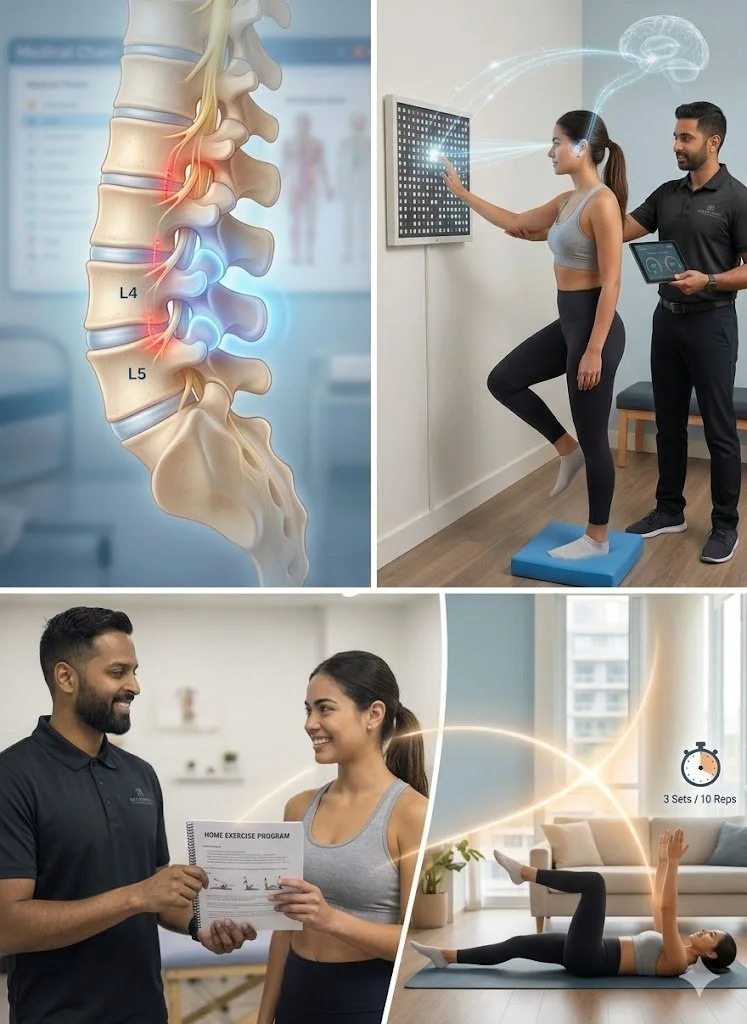
Spinal & Discogenic Pathology – Cervical, thoracic, and lumbar disc injuries, sciatica, and sacroiliac joint (SIJ) dysfunction.
Upper & Lower Extremity Injuries – Rotator cuff tears, frozen shoulder, tennis/golfer’s elbow, carpal tunnel syndrome, and complex ankle/foot pathologies.
Perinatal & Pelvic Health Rehabilitation – Specialized assessment and rehabilitation protocols tailored specifically for women during pregnancy and the post-partum period, addressing pelvic girdle pain, diastasis recti, and core stabilization.
Specialized Rehabilitation – Pelvic health therapy, TMJ dysfunction, post-surgical rehabilitation (including Total Hip and Total Knee Replacements), and custom orthotics dispensing.
Shockwave Therapy: with advanced cutting edge technological devices to suit your needs.
Interdisciplinary Practice & Patient Care
Sanjay practices an integrated model of healthcare, working closely alongside medical doctors inside the Prime Medical Centre on Abell Street to streamline patient recovery pathways. He maintains a human-centric, communication-first clinical framework, ensuring that care remains fully customized rather than automated.
His clinical caseload encompasses a broad operational spectrum under Ontario's regulatory frameworks, including:
Motor Vehicle Accident (MVA) Claims – Rehabilitation navigating Ontario’s statutory accident benefits schedule.
Workplace Safety and Insurance Board (WSIB) – Occupational injury management and return-to-work screening.
Extended Health Care (EHC) & Private Practice – Multi-tier insurance coordination and long-term athletic development plans.
Commitment to Research & Community
Outside of his clinical caseload at Rehab Mechanics and his additional practice affiliations in Etobicoke, Sanjay is an active health writer and community educator. He translates contemporary peer-reviewed medical research into accessible, actionable guidance on his professional blog. As a dedicated father and husband, he mirrors his professional advice in his personal life, focusing on structural mobility, cross-training, and longevity to help his family and his community thrive. Naturally he takes he a keen interest in rehabilitation for women who are pregnant and post-partum.
Disclaimer: The information provided on this blog is intended for educational and informational purposes only. It does not constitute medical advice, diagnosis, or a treatment plan. Always seek the direct advice of a Registered Physiotherapist, physician, or other qualified health provider regarding any medical condition or physical rehabilitation routine.