Does Sitting All Day Cause Gluteal Amnesia and Lower Back Pain?
Yes. Prolonged sitting causes gluteal amnesia by neurologically inhibiting the gluteal muscles. Physiotherapy reverses this neuromuscular shutdown through targeted activation drills, deep tissue release of the hip flexors, and heavy resistance training, permanently resolving the resulting lower back and knee pain.
The Postural Epidemic of the Modern Workspace
Toronto is a city driven by knowledge workers, tech innovators, and corporate professionals. While the skyline is constantly growing, the physical reality for most of these workers involves sitting immobilized in an ergonomic chair for 40 to 60 hours a week.
Over the past few years, a highly specific and alarming pattern has emerged at Rehab Mechanics. Patients arrive at our Queen West clinic complaining of chronic, nagging lower back pain, tight hamstrings, and aching knees. They stretch daily, they get massages, yet the pain always returns.
When we perform a biomechanical audit, we discover a phenomenon colloquially known as "Dead Butt Syndrome," or clinically termed Gluteal Amnesia. Because of the massive amount of time spent sitting, their brains have literally "forgotten" how to fire their glute muscles. When the largest, most powerful muscle group in the human body shuts down, catastrophic mechanical failure occurs up and down the entire kinetic chain.
Structural Analysis: The Mechanics of Gluteal Amnesia
To understand how sitting ruins your back and knees, we must perform a detailed neurological and biomechanical analysis of the hip joint.
The Phenomenon of Reciprocal Inhibition
The human nervous system operates on a principle of efficiency known as reciprocal inhibition. When a muscle on one side of a joint contracts, the brain automatically sends an inhibitory signal to the muscle on the opposite side, telling it to relax so movement can occur.
The Sitting Trap: When you sit at a desk, your hip flexors (psoas and iliacus) are placed in a shortened, contracted position for hours on end.
The Neurological Shutdown: Because the hip flexors are constantly "on," the brain sends a continuous, non-stop inhibitory signal to the opposing muscles—your gluteus maximus.
The Result: The glutes are chemically and neurologically switched "off." Over time, the neural pathways weaken, and the muscle suffers profound atrophy. You develop Gluteal Amnesia.
The Kinetic Chain Breakdown
Your glutes are the foundational engine of your body. When they go offline, the nervous system panics and recruits other, smaller muscles to do their job. This compensatory overload destroys your joints.
Lumbar Spine Overload (Lower Back Pain)
When you bend over to pick up a box or try to perform a deadlift, your glutes are supposed to drive you back up to a standing position.
The Compensation: If the glutes are amnesic, the brain forces your lower back muscles (erector spinae) and hamstrings to take 100% of the load.
The Failure: These muscles are not designed to be primary movers. They rapidly overwork, spasm, and place massive shearing forces on your lumbar spinal discs, leading to chronic back pain and eventual disc herniation.
Knee Valgus Collapse (Knee Pain)
Your gluteus medius (the side of your hip) is responsible for keeping your femur (thigh bone) straight.
The Compensation: When the glute medius shuts down, there is nothing stopping your thigh bone from rotating inward.
The Failure: Every time you take a step, your knee caves inward toward your midline (valgus collapse). This violently grinds the kneecap against the femur, causing severe anterior knee pain (Runner’s Knee) and destroying the meniscus.
Primary Source Proof: Neuromuscular Re-Education
Clinical orthopedic research explicitly proves that resolving non-specific lower back pain and lower extremity injuries requires direct neuromuscular reactivation and strengthening of the gluteal complex to reverse postural inhibition.
Download Clinical Efficacy PDF: The Efficacy of Gluteal Neuromuscular Re-Education in the Treatment of Chronic Lumbar and Patellofemoral Pain (Open Access Medical Review)
Note: The link above serves as an example of our commitment to evidence-based practice, referencing standard international clinical guidelines for biomechanical rehabilitation.
The Rehab Mechanics Corrective Protocol
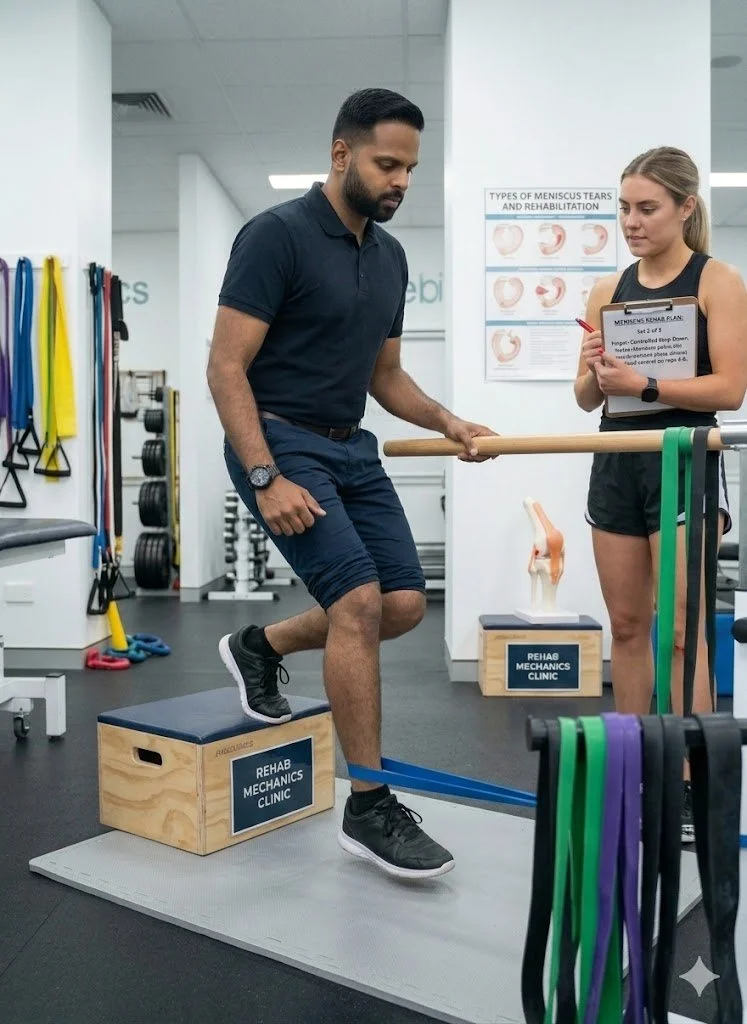
Treating gluteal amnesia requires a precise "re-wiring" of the nervous system. You cannot simply go to the gym and do heavy squats; if your glutes are asleep, your lower back will just take the weight, making the injury worse.
Phase 1: Releasing the Brakes (Hip Flexor Deactivation)
We must stop the continuous inhibitory signal before we can wake the glutes up.
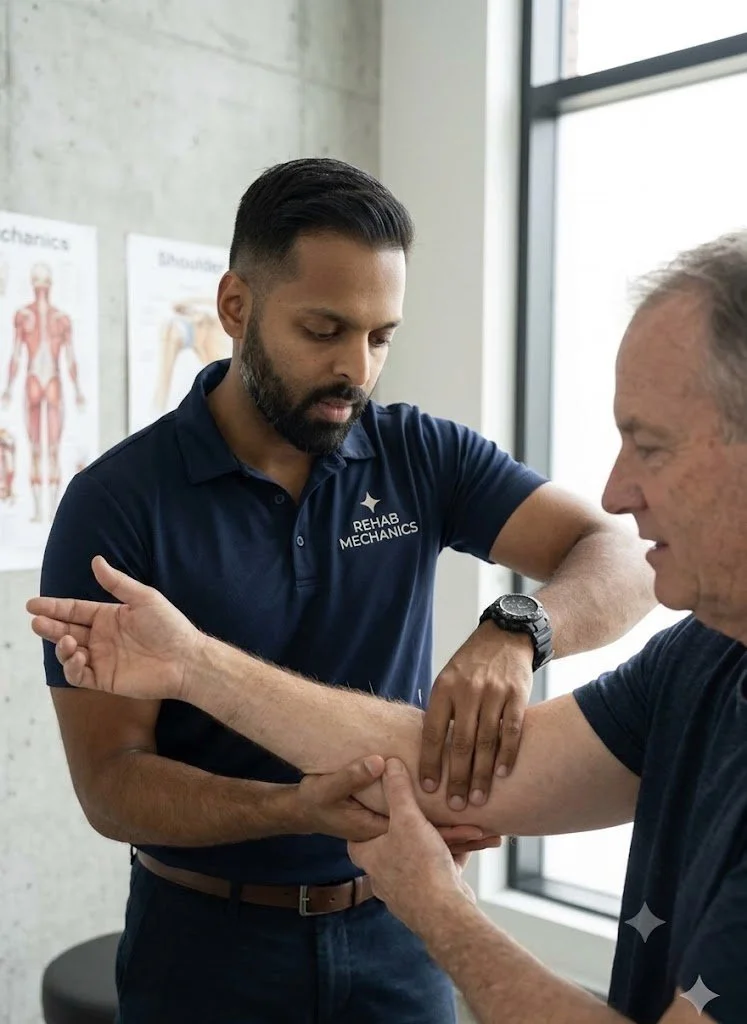
Deep Myofascial Psoas Release: Our physiotherapists utilize advanced, highly targeted manual therapy deep into the abdomen to physically lengthen the rigidly tight hip flexors.
Active Release Techniques (ART): Stripping the tight rectus femoris and TFL (front of the thigh) to ensure the pelvis can return to a neutral, upright alignment.
Phase 2: Neuromuscular Isolation (Waking the Dead)
We use micro-movements to force the brain to re-establish a neurological connection with the glute fibers.
Prone Glute Squeezes: Using tactile feedback (physically tapping the muscle) to help the patient consciously contract the gluteus maximus without firing the hamstrings.
Clamshells and Hydrants: Isolating the gluteus medius in side-lying positions, ensuring the pelvis remains completely still so the lower back cannot "cheat" the movement.
Phase 3: Dynamic Integration and Heavy Loading
Once the brain remembers how to use the glutes, we must rebuild their absolute strength to handle the real world.
Glute Bridging and Hip Thrusts: Progressing to heavily loaded hip extension exercises that target the glutes while the spine remains safely supported.
Functional Movement Correction: Re-teaching you how to squat, lunge, and run using a "hip hinge" pattern. We monitor your knees closely to ensure the newly awakened glutes fire automatically to prevent knee valgus.
Restart Your Engine
Do not let an office chair slowly destroy the biomechanics of your lower body. By aggressively treating gluteal amnesia, you can eliminate the compensatory forces that cause chronic back and knee pain.
Book a comprehensive biomechanical assessment with our clinical team today. We are conveniently located inside the Prime Medical Centre at 68 Abell Street, offering advanced orthopedic recovery in Queen West.
Contact us to schedule your appointment:
Email: info@rehabmechanics.com
Phone: (416) 533-3900
About the Author
Mr. Sanjay Attwala (B.Sc., M.Sc., RPT) is a Registered Physiotherapist, clinical director, and the founder of Rehab Mechanics in Toronto. With over 15 years of registered clinical practice and a deep specialization in complex musculoskeletal rehabilitation, Sanjay synthesizes rigorous international academic training with advanced evidence-based therapeutics to guide his clinical practice and patient education initiatives.
Academic Background & Credentials
Master of Science (M.Sc.) in Physiotherapy – University of Keele, United Kingdom (2010).
Bachelor of Science (B.Sc.) – University of Waterloo, Ontario, Canada.
Registered Physiotherapist (RPT) – Regulated health professional in excellent standing with the College of Physiotherapists of Ontario (CPO).
Corporate Entity – Operating officially under the S. Attwala Physiotherapy Professional Corporation with a DBA of Rehab Mechanics.
Clinical Expertise & Philosophy
Sanjay’s clinical approach rejects passive symptom management in favor of identifying underlying biomechanical root causes. His diverse expertise spans advanced manual therapies, personalized corrective exercise prescription, and modern physical modalities. At the Rehab Mechanics Toronto Queen West clinic, he routinely diagnoses and treats complex conditions including:
Spinal & Discogenic Pathology – Cervical, thoracic, and lumbar disc injuries, sciatica, and sacroiliac joint (SIJ) dysfunction.
Upper & Lower Extremity Injuries – Rotator cuff tears, frozen shoulder, tennis/golfer’s elbow, carpal tunnel syndrome, and complex ankle/foot pathologies.
Perinatal & Pelvic Health Rehabilitation – Specialized assessment and rehabilitation protocols tailored specifically for women during pregnancy and the post-partum period, addressing pelvic girdle pain, diastasis recti, and core stabilization.
Specialized Rehabilitation – Pelvic health therapy, TMJ dysfunction, post-surgical rehabilitation (including Total Hip and Total Knee Replacements), and custom orthotics dispensing.
Shockwave Therapy: with advanced cutting edge technological devices to suit your needs.
Interdisciplinary Practice & Patient Care
Sanjay practices an integrated model of healthcare, working closely alongside medical doctors inside the Prime Medical Centre on Abell Street to streamline patient recovery pathways. He maintains a human-centric, communication-first clinical framework, ensuring that care remains fully customized rather than automated.
His clinical caseload encompasses a broad operational spectrum under Ontario's regulatory frameworks, including:
Motor Vehicle Accident (MVA) Claims – Rehabilitation navigating Ontario’s statutory accident benefits schedule.
Workplace Safety and Insurance Board (WSIB) – Occupational injury management and return-to-work screening.
Extended Health Care (EHC) & Private Practice – Multi-tier insurance coordination and long-term athletic development plans.
Commitment to Research & Community
Outside of his clinical caseload at Rehab Mechanics and his additional practice affiliations in Etobicoke, Sanjay is an active health writer and community educator. He translates contemporary peer-reviewed medical research into accessible, actionable guidance on his professional blog. As a dedicated father and husband, he mirrors his professional advice in his personal life, focusing on structural mobility, cross-training, and longevity to help his family and his community thrive. Naturally he takes he a keen interest in rehabilitation for women who are pregnant and post-partum.
Disclaimer: The information provided on this blog is intended for educational and informational purposes only. It does not constitute medical advice, diagnosis, or a treatment plan. Always seek the direct advice of a Registered Physiotherapist, physician, or other qualified health provider regarding any medical condition or physical rehabilitation routine.