
Is My Sciatica Actually Caused by Piriformis Syndrome?
Maybe. True sciatica originates from a compressed spinal disc, whereas piriformis syndrome occurs when a tight gluteal muscle crushes the sciatic nerve. Physiotherapy provides a definitive clinical diagnosis and utilizes deep tissue release to instantly decompress the nerve without invasive spinal procedures.
The Diagnostic Confusion of Nerve Pain
If you live and work in Toronto—whether you are sitting for ten hours a day at a tech startup in Liberty Village or commuting across the city—you are highly susceptible to lower body nerve pain.
When a sharp, burning, electrical shock of pain shoots deep into your buttock cheek and radiates down the back of your thigh, the immediate, terrifying assumption is that you have "blown a disc" in your spine. Patients immediately jump to conclusions about herniated lumbar discs, permanent nerve damage, and the looming threat of spinal surgery.
However, in a significant percentage of cases, the spine itself is perfectly healthy. The nerve is absolutely being crushed, but the compression is happening much lower down in the kinetic chain, buried deep inside the muscles of your hip. This is known clinically as Piriformis Syndrome.
At Rehab Mechanics in Queen West, we specialize in advanced differential diagnosis. We do not just guess where your nerve is pinched based on your symptoms; we use specific structural provocation testing to locate the exact millimeter of compression, saving you from unnecessary spinal MRIs and directing the treatment to the true mechanical source of your pain.
Structural Analysis: The Anatomy of the Gluteal Region
To understand why Piriformis Syndrome perfectly mimics a slipped disc, we must perform a deep anatomical analysis of the hip and the pathway of the sciatic nerve.
The Piriformis Muscle: The Hidden Rotator
Deep underneath your massive gluteus maximus (the main surface muscle of your buttocks) lies a network of six tiny "deep external rotator" muscles. The most prominent of these is the piriformis.
The Anatomical Anchor: The piriformis muscle attaches directly to the front of your sacrum (the tailbone) and reaches across to attach to the greater trochanter (the bony bump on the outside of your hip).
The Mechanical Function: Its primary job is to externally rotate your leg (turn your foot outward) and stabilize the hip joint when you are walking or running.
The Sciatic Nerve Pathway
The sciatic nerve is the longest and thickest nerve in the human body, roughly the width of your thumb.
The Intersection: After exiting the lumbar spine, the sciatic nerve must travel down the back of the leg. To do this, it must pass through the exact same tight pelvic space as the piriformis muscle.
The Anatomical Anomaly: In about 80% of the population, the nerve runs directly underneath the piriformis muscle belly. In the other 20%, the nerve physically pierces directly through the center of the muscle fibers.
The Compression Mechanism
Piriformis Syndrome is fundamentally a mechanical strangulation of this massive nerve.
The "Wallet Neuropathy" Effect
If you sit at a desk all day, or sit with a thick wallet in your back pocket, you are applying constant, ischemic (blood-restricting) pressure to the piriformis muscle.
The Spasm: The muscle becomes exhausted, hypertonic, and locks into a rigid spasm.
The Strangulation: Because the sciatic nerve sits millimeters below (or inside) this muscle, the spasming piriformis acts like a tightened vice grip, crushing the nerve against the pelvic bone.
Biomechanical Overload
The muscle can also spasm from weakness. If your primary glute muscles are weak, the tiny piriformis tries to take over the massive job of stabilizing your entire pelvis during running or climbing stairs. It rapidly fails, swells, and crushes the nerve.
Identifying the Clinical Red Flags: Spine vs. Muscle
How do we differentiate a spinal disc herniation from a tight glute muscle? We look for specific mechanical clues.
Sitting Intolerance: Piriformis syndrome is excruciating when sitting on hard surfaces (like a wooden dining chair) because you are sitting directly on the crushed nerve. Lumbar disc issues often hurt when bending forward.
The FAIR Test Response: Flexion, Adduction, and Internal Rotation (FAIR) of the hip tightly stretches the piriformis muscle. If this specific stretch reproduces your burning leg pain, the culprit is the muscle, not the spine.
The Absence of Spinal Pain: In Piriformis Syndrome, pressing directly on the lower back (lumbar spine) produces no pain. Pressing your thumb deep into the center of the buttock cheek, however, will cause the patient to jump off the table.
Primary Source Proof: Differentiating Sciatica
Clinical guidelines in orthopedics strictly mandate comprehensive differential diagnosis to prevent the misdiagnosis of deep gluteal pain as lumbar radiculopathy.
Download Clinical Efficacy PDF: Deep Gluteal Syndrome and the Efficacy of Conservative Physiotherapy in the Management of Piriformis Syndrome (Open Access Medical Review)
Note: The link above serves as an example of our commitment to evidence-based practice, referencing standard international clinical guidelines for nerve entrapment rehabilitation.
The Rehab Mechanics Treatment Protocol
Treating Piriformis Syndrome requires a highly targeted, two-phased approach: immediately decompress the nerve, and then structurally rebuild the hip to prevent the muscle from spasming again.
Phase 1: Acute Neurological Decompression (Weeks 1-3)
We must force the piriformis muscle to release its grip on the sciatic nerve.
Deep Myofascial Release: Our physiotherapists use precise, deep-tissue ischemic compression directly on the piriformis trigger points to manually break the muscular spasm.
Sciatic Nerve Flossing (Neurodynamics): Nerves need to slide smoothly to stay healthy. We teach you specific "flossing" movements that gently pull the sciatic nerve back and forth through the tight muscle, freeing it from microscopic scar tissue adhesions.
Joint Mobilization: Freeing up the sacroiliac (SI) joint. If the pelvis is locked, the piriformis will stay tight trying to protect it.
Phase 2: Structural Gluteal Fortification (Weeks 4-8)
If we simply stretch the muscle, the pain will return the moment you sit back down at your desk. We must build the surrounding structural support.
Gluteus Maximus Activation: We implement heavy, targeted resistance training (like hip thrusts and heavy bridges) to force the large glute muscles to do their job, allowing the tiny piriformis to relax.
Eccentric Loading: Safely lengthening the external rotators under load to build robust, resilient tissue that will not spasm under the stress of daily urban walking.
Ergonomic Correction: Re-training your seated posture to ensure you are bearing weight on your "sit bones" (ischial tuberosities) rather than rolling backward onto the fleshy gluteal tissue and crushing the nerve.
Stop Guessing with Your Nerve Pain
You do not have to live with radiating leg pain, and you shouldn't assume you need spinal surgery without a thorough biomechanical workup. Expert physiotherapy can unlock your hip, free the sciatic nerve, and restore your quality of life.
Book a comprehensive differential diagnosis assessment with our clinical team today. We are conveniently located inside the Prime Medical Centre at 68 Abell Street, offering advanced care in the heart of Toronto Queen West.
Contact us to schedule your appointment:
Email: info@rehabmechanics.com
Phone: (416) 533-3900
About the Author
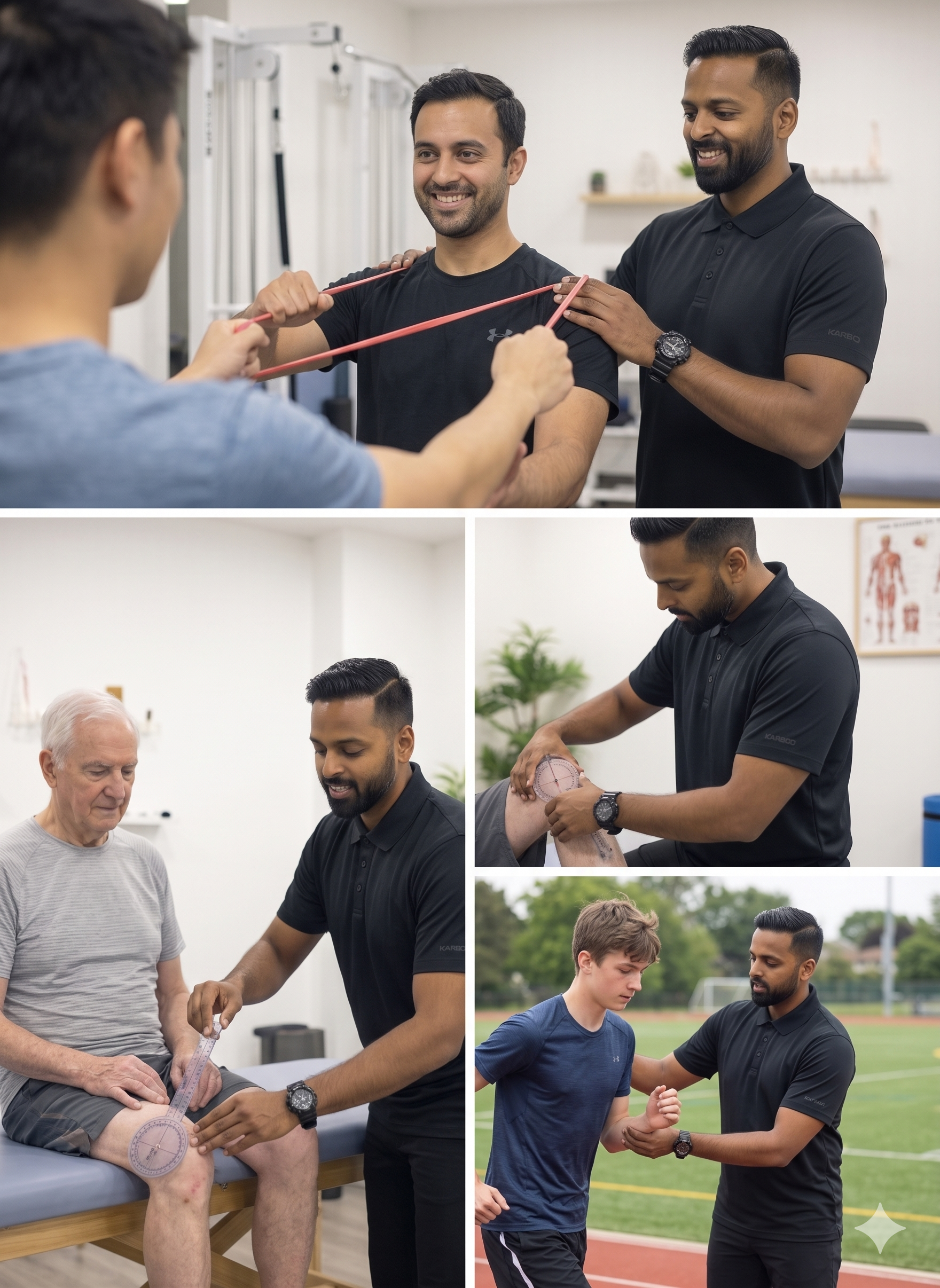
Mr. Sanjay Attwala (B.Sc., M.Sc., RPT) is a Registered Physiotherapist, clinical director, and the founder of Rehab Mechanics in Toronto. With over 15 years of registered clinical practice and a deep specialization in complex musculoskeletal rehabilitation, Sanjay synthesizes rigorous international academic training with advanced evidence-based therapeutics to guide his clinical practice and patient education initiatives.
Academic Background & Credentials
Master of Science (M.Sc.) in Physiotherapy – University of Keele, United Kingdom (2010).
Bachelor of Science (B.Sc.) – University of Waterloo, Ontario, Canada.
Registered Physiotherapist (RPT) – Regulated health professional in excellent standing with the College of Physiotherapists of Ontario (CPO).
Corporate Entity – Operating officially under the S. Attwala Physiotherapy Professional Corporation with a DBA of Rehab Mechanics.
Clinical Expertise & Philosophy
Sanjay’s clinical approach rejects passive symptom management in favor of identifying underlying biomechanical root causes. His diverse expertise spans advanced manual therapies, personalized corrective exercise prescription, and modern physical modalities. At the Rehab Mechanics Toronto Queen West clinic, he routinely diagnoses and treats complex conditions including:
Spinal & Discogenic Pathology – Cervical, thoracic, and lumbar disc injuries, sciatica, and sacroiliac joint (SIJ) dysfunction.
Upper & Lower Extremity Injuries – Rotator cuff tears, frozen shoulder, tennis/golfer’s elbow, carpal tunnel syndrome, and complex ankle/foot pathologies.
Perinatal & Pelvic Health Rehabilitation – Specialized assessment and rehabilitation protocols tailored specifically for women during pregnancy and the post-partum period, addressing pelvic girdle pain, diastasis recti, and core stabilization.
Specialized Rehabilitation – Pelvic health therapy, TMJ dysfunction, post-surgical rehabilitation (including Total Hip and Total Knee Replacements), and custom orthotics dispensing.
Shockwave Therapy: with advanced cutting edge technological devices to suit your needs.
Interdisciplinary Practice & Patient Care
Sanjay practices an integrated model of healthcare, working closely alongside medical doctors inside the Prime Medical Centre on Abell Street to streamline patient recovery pathways. He maintains a human-centric, communication-first clinical framework, ensuring that care remains fully customized rather than automated.
His clinical caseload encompasses a broad operational spectrum under Ontario's regulatory frameworks, including:
Motor Vehicle Accident (MVA) Claims – Rehabilitation navigating Ontario’s statutory accident benefits schedule.
Workplace Safety and Insurance Board (WSIB) – Occupational injury management and return-to-work screening.
Extended Health Care (EHC) & Private Practice – Multi-tier insurance coordination and long-term athletic development plans.
Commitment to Research & Community
Outside of his clinical caseload at Rehab Mechanics and his additional practice affiliations in Etobicoke, Sanjay is an active health writer and community educator. He translates contemporary peer-reviewed medical research into accessible, actionable guidance on his professional blog. As a dedicated father and husband, he mirrors his professional advice in his personal life, focusing on structural mobility, cross-training, and longevity to help his family and his community thrive. Naturally he takes he a keen interest in rehabilitation for women who are pregnant and post-partum.
Disclaimer: The information provided on this blog is intended for educational and informational purposes only. It does not constitute medical advice, diagnosis, or a treatment plan. Always seek the direct advice of a Registered Physiotherapist, physician, or other qualified health provider regarding any medical condition or physical rehabilitation routine.