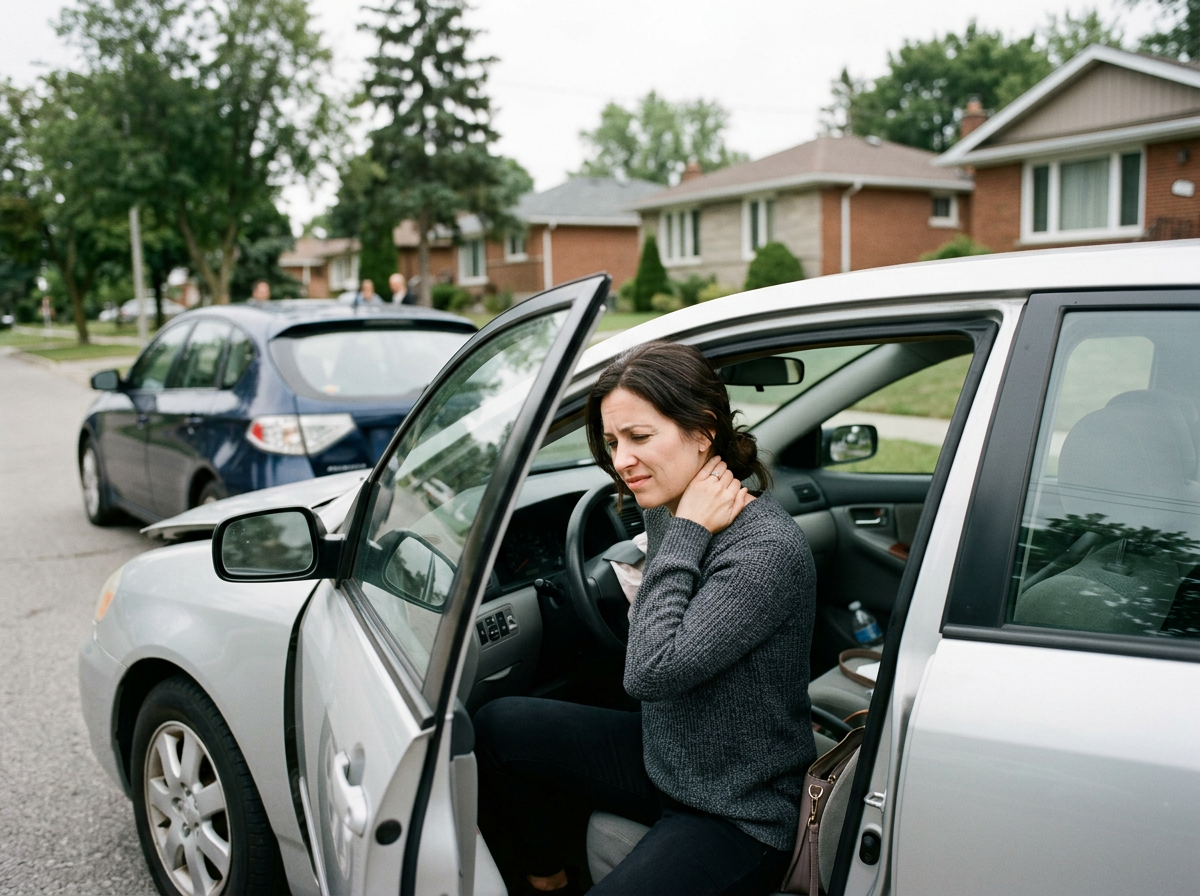
Should I See a Physiotherapist for a WSIB Workplace Injury Claim?
Yes. Consulting a physiotherapist immediately for a WSIB claim ensures rapid structural recovery and seamless administrative handling. Physiotherapy addresses repetitive strain and occupational trauma through targeted mechanical correction, while simultaneously managing Ontario’s complex workplace safety documentation and return-to-work screening.
The Reality of Occupational Injuries in Toronto
Getting injured on the job is a highly stressful event. Whether you suffered an acute lumbar sprain lifting heavy materials on a downtown construction site, or developed severe carpal tunnel syndrome from endless hours of typing at a Liberty Village tech firm, the impact on your livelihood is immediate.
When a workplace injury occurs in Ontario, it falls under the jurisdiction of the Workplace Safety and Insurance Board (WSIB). Navigating the WSIB system can be just as overwhelming as the physical pain itself. Delays in filing paperwork, misdiagnosed structural injuries, or poorly managed return-to-work plans can result in denied claims and chronic, long-term disability.
At Rehab Mechanics, we manage a broad operational spectrum of WSIB claims. We understand that occupational rehabilitation requires a dual approach: aggressive, evidence-based physical therapy to heal the injury, and meticulous administrative management to protect your compensation and employment status.
Structural Analysis: The Biomechanics of Workplace Trauma
Occupational injuries generally fall into two distinct mechanical categories. To successfully rehabilitate a worker, we must accurately analyze the mechanism of tissue failure.
1. Acute Macrotrauma
These are sudden, identifiable events that result in immediate, severe tissue damage.
The Mechanics: A slip on a wet warehouse floor, falling from a ladder, or forcefully catching a heavy, shifting load.
The Pathology: These events typically result in acute Grade 2 or 3 ligament sprains, severe muscle belly tears, spinal disc herniations, or acute meniscal tears. The immediate clinical priority is controlling extreme joint effusion (swelling) and preventing the formation of rigid, restrictive scar tissue.
2. Cumulative Trauma Disorders (CTDs)
Also known as Repetitive Strain Injuries (RSIs), these are insidious and often far more difficult to treat than an acute tear.
The Mechanics: Performing the same micro-movement thousands of times a day (e.g., scanning items, typing, operating vibrating machinery, or continuously looking down at an assembly line).
The Pathology: The human body is highly adaptable, but it requires varied movement. Constant, repetitive load without adequate recovery time exhausts the cellular capacity of tendons and fascia.
The Result: This leads to conditions like lateral epicondylitis (tennis elbow), rotator cuff tendinosis, and chronic myofascial pain syndrome. The tissue actually begins to degenerate at a cellular level, requiring aggressive mechanical loading to reverse the decay.
The Dangers of Ergonomic Failure
CTDs are almost entirely driven by poor ergonomics. If your workstation forces your spine out of a neutral alignment, your muscles must maintain a constant isometric contraction to hold you up, leading to inevitable fatigue and failure.
Primary Source Proof: Occupational Rehabilitation
Clinical guidelines from occupational health authorities mandate early active physical therapy over passive rest to ensure the highest rate of successful return-to-work outcomes.
Download Clinical Efficacy PDF: The Effectiveness of Early Physiotherapy Intervention in Reducing WSIB Claim Duration and Disability (Open Access Medical Review)
Note: The link above serves as an example of our commitment to evidence-based practice, referencing standard international clinical guidelines for occupational rehabilitation.
The Rehab Mechanics WSIB Protocol
We do not just treat the pain; we prepare your body to handle the specific mechanical demands of your occupation safely.
Phase 1: WSIB Programs of Care (POC) Integration
WSIB utilizes specific "Programs of Care" for common injuries (like the Low Back POC or the Upper Extremity POC).
Rapid Assessment: We complete your Initial Assessment Report (Form 8 or equivalent) precisely and promptly, establishing the clinical justification for your treatment plan.
Direct Billing: We coordinate directly with your WSIB adjudicator, ensuring treatments are pre-approved and billed directly so you face no out-of-pocket expenses.
Phase 2: Active Structural Rehabilitation
We utilize advanced modalities and manual therapy to accelerate tissue healing.
Targeted Modalities: Utilizing Shockwave Therapy or advanced interferential currents to rapidly decrease acute inflammation and break down chronic scar tissue from repetitive strain.
Manual Joint Mobilization: Unlocking stiff spinal segments or peripheral joints to restore the full range of motion required for your job duties.
Phase 3: Work Hardening and Functional Simulation
This is the most critical phase for preventing re-injury. We replicate your job in the clinic.
Task-Specific Loading: If you are a delivery driver, we train heavy, awkward lifting mechanics. If you are a desk worker, we build the postural endurance of your deep cervical flexors and mid-back to withstand 8-hour seated shifts.
Ergonomic Coaching: We provide actionable advice on how to modify your workstation or movement patterns to protect your joints moving forward.
Phase 4: Return-to-Work Screening
We collaborate with you and your employer to create a safe transition plan.
Modified Duties: We provide clear, medically justified restrictions (e.g., "no lifting over 15 lbs," "mandatory 5-minute break every hour") to ensure you are not thrown back into full duties before your tissues are biologically ready.
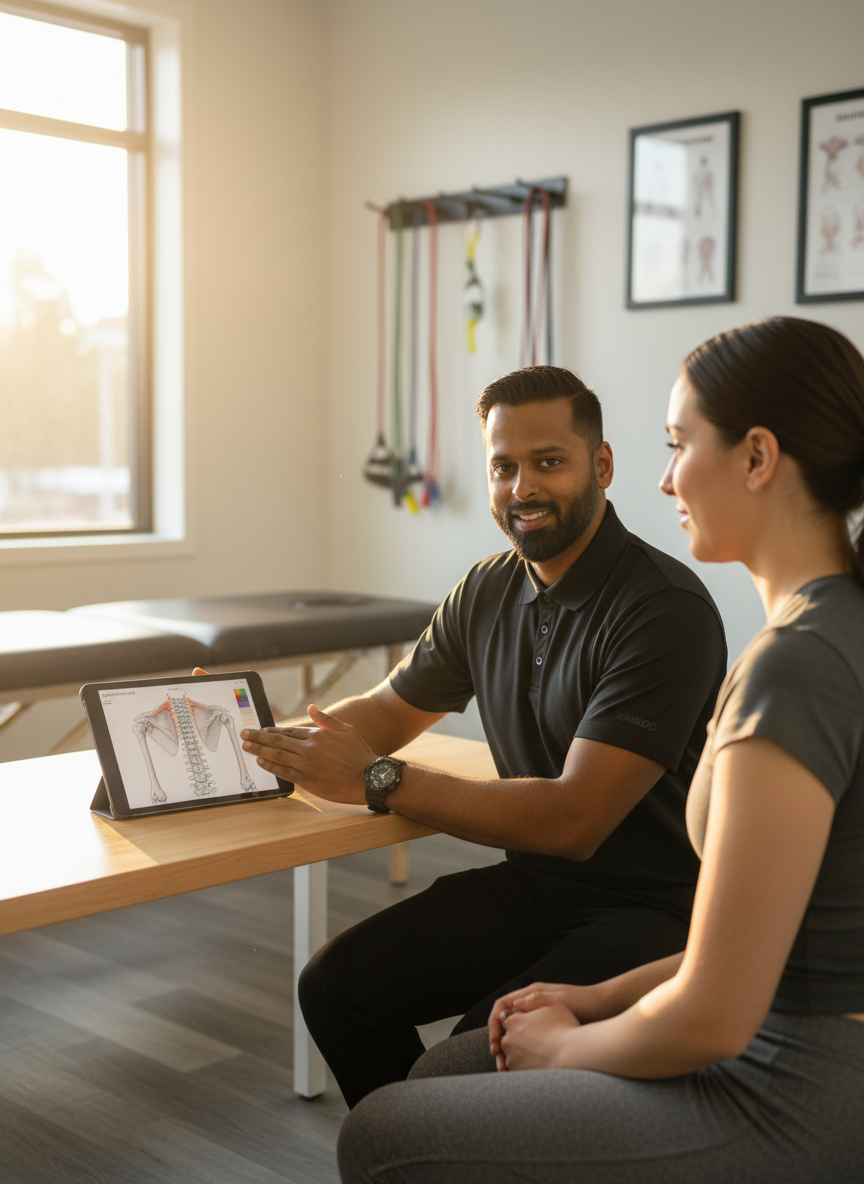
Protect Your Body and Your Livelihood
If you have suffered a workplace injury, immediate clinical intervention is your best defense against chronic pain and administrative nightmare.
Secure expert physical and administrative care today. Book a comprehensive WSIB assessment with our team. We are conveniently located inside the Prime Medical Centre at 68 Abell Street, offering advanced occupational rehabilitation in Toronto.
Contact us to schedule your appointment:
Email: info@rehabmechanics.com
Phone: (416) 533-3900
About the Author
Mr. Sanjay Attwala (B.Sc., M.Sc., RPT) is a Registered Physiotherapist, clinical director, and the founder of Rehab Mechanics in Toronto. With over 15 years of registered clinical practice and a deep specialization in complex musculoskeletal rehabilitation, Sanjay synthesizes rigorous international academic training with advanced evidence-based therapeutics to guide his clinical practice and patient education initiatives.
Academic Background & Credentials
Master of Science (M.Sc.) in Physiotherapy – University of Keele, United Kingdom (2010).
Bachelor of Science (B.Sc.) – University of Waterloo, Ontario, Canada.
Registered Physiotherapist (RPT) – Regulated health professional in excellent standing with the College of Physiotherapists of Ontario (CPO).
Corporate Entity – Operating officially under the S. Attwala Physiotherapy Professional Corporation with a DBA of Rehab Mechanics.
Clinical Expertise & Philosophy
Sanjay’s clinical approach rejects passive symptom management in favor of identifying underlying biomechanical root causes. His diverse expertise spans advanced manual therapies, personalized corrective exercise prescription, and modern physical modalities. At the Rehab Mechanics Toronto Queen West clinic, he routinely diagnoses and treats complex conditions including:
Spinal & Discogenic Pathology – Cervical, thoracic, and lumbar disc injuries, sciatica, and sacroiliac joint (SIJ) dysfunction.
Upper & Lower Extremity Injuries – Rotator cuff tears, frozen shoulder, tennis/golfer’s elbow, carpal tunnel syndrome, and complex ankle/foot pathologies.
Perinatal & Pelvic Health Rehabilitation – Specialized assessment and rehabilitation protocols tailored specifically for women during pregnancy and the post-partum period, addressing pelvic girdle pain, diastasis recti, and core stabilization.
Specialized Rehabilitation – Pelvic health therapy, TMJ dysfunction, post-surgical rehabilitation (including Total Hip and Total Knee Replacements), and custom orthotics dispensing.
Shockwave Therapy: with advanced cutting edge technological devices to suit your needs.
Interdisciplinary Practice & Patient Care
Sanjay practices an integrated model of healthcare, working closely alongside medical doctors inside the Prime Medical Centre on Abell Street to streamline patient recovery pathways. He maintains a human-centric, communication-first clinical framework, ensuring that care remains fully customized rather than automated.
His clinical caseload encompasses a broad operational spectrum under Ontario's regulatory frameworks, including:
Motor Vehicle Accident (MVA) Claims – Rehabilitation navigating Ontario’s statutory accident benefits schedule.
Workplace Safety and Insurance Board (WSIB) – Occupational injury management and return-to-work screening.
Extended Health Care (EHC) & Private Practice – Multi-tier insurance coordination and long-term athletic development plans.
Commitment to Research & Community
Outside of his clinical caseload at Rehab Mechanics and his additional practice affiliations in Etobicoke, Sanjay is an active health writer and community educator. He translates contemporary peer-reviewed medical research into accessible, actionable guidance on his professional blog. As a dedicated father and husband, he mirrors his professional advice in his personal life, focusing on structural mobility, cross-training, and longevity to help his family and his community thrive. Naturally he takes he a keen interest in rehabilitation for women who are pregnant and post-partum.
Disclaimer: The information provided on this blog is intended for educational and informational purposes only. It does not constitute medical advice, diagnosis, or a treatment plan. Always seek the direct advice of a Registered Physiotherapist, physician, or other qualified health provider regarding any medical condition or physical rehabilitation routine.