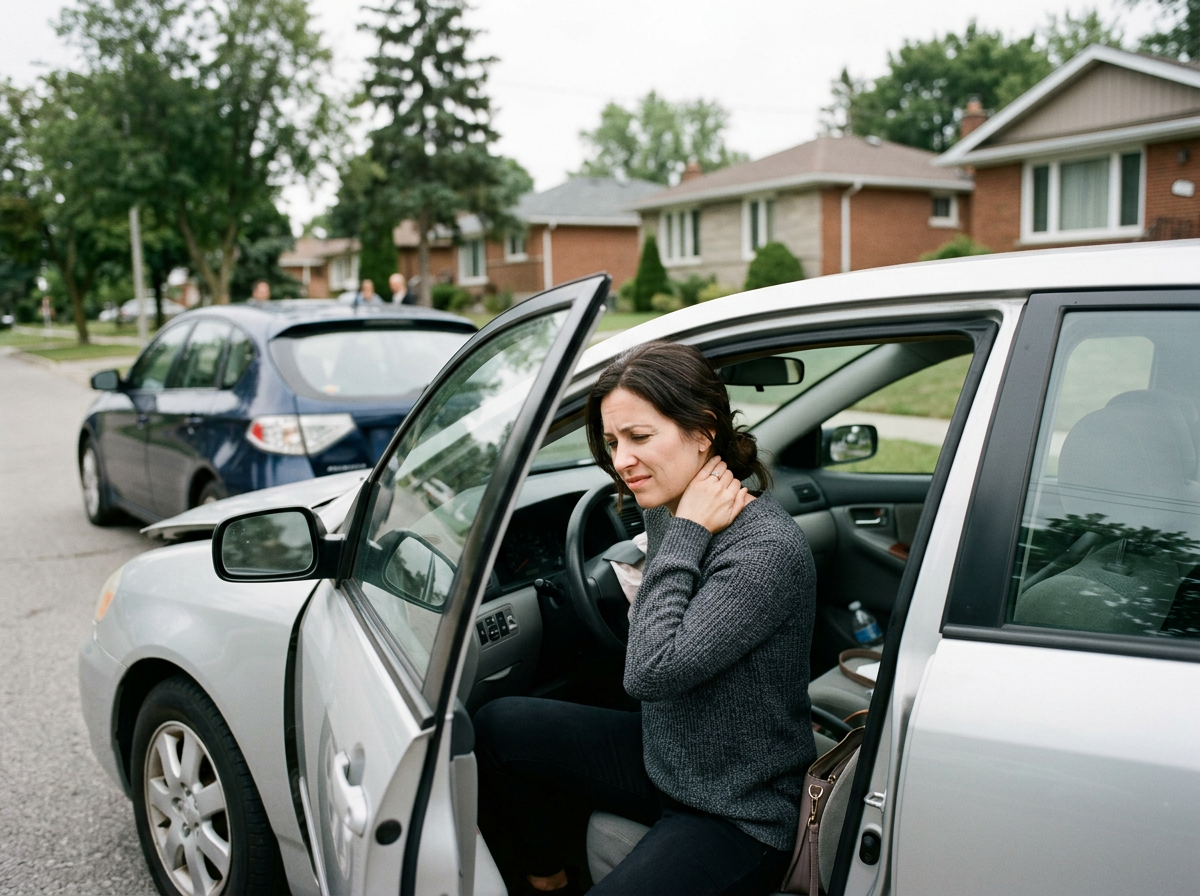
Is Physiotherapy Strictly Required After Rotator Cuff Surgery?
Yes. Post-operative physiotherapy is strictly mandatory following rotator cuff repair. Immediate, phased rehabilitation prevents severe capsular stiffness (frozen shoulder), protects the delicate surgical anchors, and progressively rebuilds neuromuscular control, ensuring you regain full overhead mobility and pain-free shoulder strength.
The Delicate Reality of Shoulder Surgery
Undergoing arthroscopic rotator cuff repair is a major orthopedic event. For patients in Toronto who have finally opted for surgery after years of chronic shoulder pain or a massive acute tear, the operation feels like the finish line. In reality, it is merely the starting line.
The surgeon's job is to physically reattach the torn tendon to the humerus (arm bone) using medical-grade anchors and sutures. However, this mechanical attachment is initially incredibly weak. It takes months for the tendon to biologically heal and fuse back into the bone.
If a patient attempts to rush their recovery by lifting their arm too soon, they risk ripping the anchors right out of the bone, requiring a devastating secondary surgery. Conversely, if a patient is terrified to move and keeps their arm rigidly locked in a sling for six weeks, the shoulder capsule will permanently shrink and scar down—a severe complication known as secondary adhesive capsulitis (frozen shoulder).
At Rehab Mechanics, we specialize in navigating this incredibly delicate post-surgical tightrope. We manage the exact, day-by-day loads placed on the healing tissue, ensuring a safe, complete return to functional mobility.
Structural Analysis: The Biology of Post-Surgical Healing
To understand why our strict physiotherapy protocols are non-negotiable, we must analyze the biological phases of tendon-to-bone healing.
The Inflammatory and Proliferative Phases
Immediately following surgery, the body floods the joint with inflammatory cells to clean up the surgical debris.
The Weakest Link: During the first 4 to 6 weeks, the only thing holding your rotator cuff to your arm bone is the surgical thread. The tendon itself is soft, inflamed, and highly vulnerable.
Active vs. Passive Movement: This is why you are strictly forbidden from actively lifting your arm using your own muscles. Contracting the repaired muscle will pull the sutures apart. However, the joint must still be moved passively by a physiotherapist to prevent the capsule from gluing itself shut.
The Remodeling Phase
From week 6 to 6 months, the body slowly replaces the weak inflammatory tissue with highly organized Type I collagen.
Mechanotransduction: This new collagen must be stressed in order to align properly and gain tensile strength. If the shoulder is not progressively loaded through physical therapy, the tendon heals as a weak, disorganized lump of scar tissue that will likely tear again in the future.
The Threat of Scapular Dyskinesis
While your arm is immobilized in a sling, your brain rapidly alters how it controls your shoulder blade (scapula).
The Compensation Trap
Your brain will "forget" how to use the rotator cuff and will try to lift your entire arm by violently shrugging your upper trapezius (neck muscles). If this faulty wiring (scapular dyskinesis) is not corrected through neuromuscular physiotherapy, you will develop severe, chronic neck pain and re-impinge the newly repaired tendon.
Primary Source Proof: Post-Operative Orthopedic Protocols
Advanced orthopedic literature universally mandates that criterion-based, strictly supervised physical therapy is the primary determining factor in the functional success of a rotator cuff repair.
Download Clinical Efficacy PDF: Evidence-Based Rehabilitation Guidelines Following Arthroscopic Rotator Cuff Repair (Open Access Medical Review)
Note: The link above serves as an example of our commitment to evidence-based practice, referencing standard international clinical guidelines for post-surgical orthopedic rehabilitation.
The Rehab Mechanics Post-Op Shoulder Protocol
Our clinical pathway is highly structured and entirely dependent on the specific size of your tear (small, medium, massive) and your surgeon's exact operative notes.
Phase 1: Maximum Protection (Weeks 0-6)
The goal is to protect the surgical repair while maintaining joint mobility.
Passive Range of Motion (PROM): The physiotherapist physically supports the weight of your arm and moves it through specific, safe arcs of motion. You do zero work.
Cervical and Scapular Release: Utilizing deep soft tissue massage on the neck and upper back to relieve the massive muscle spasms caused by wearing a heavy sling 24/7.
Pendulum Exercises: Teaching you how to use gravity and momentum to safely move the joint fluid at home without activating the repaired muscles.
Phase 2: Active-Assisted and Active ROM (Weeks 6-10)
As the tendon begins to fuse to the bone, we slowly wake the muscles up.
Pulley and Wand Exercises: Using a stick or an overhead pulley to allow your healthy arm to assist the surgical arm in lifting overhead safely.
Isometric Loading: Forcing the rotator cuff muscles to contract gently against an immovable resistance, which safely builds baseline strength and blood flow without moving the joint through a dangerous arc.
Scapular Setting: Re-training the mid-back to anchor the shoulder blade securely against the ribcage.
Phase 3: Progressive Strengthening (Weeks 10-16)
The tendon is now secure enough to handle direct load.
Isotonic Resistance Training: Utilizing light resistance bands and dumbbells to progressively load the Supraspinatus and Infraspinatus muscles.
Eccentric Focus: Emphasizing the slow, lowering phase of movement to align the new collagen fibers and maximize tendon thickness.
Phase 4: Advanced Functional Return (Months 4-6+)
We prepare the shoulder for the unpredictable demands of daily life and sports.
Plyometric Stability: Using rebounders or medicine balls to teach the rotator cuff to fire instantly and absorb rapid, unexpected forces.
Overhead Mechanics: Re-training the kinetic chain for complex movements like throwing, serving a tennis ball, or heavy barbell pressing.
Protect Your Surgical Investment
You endured the pain of a major surgery to get your life back; do not risk the outcome by neglecting your rehabilitation. Protect the repair and rebuild your strength the right way.
Book your specialized post-surgical assessment with our clinical team today. We are conveniently located inside the Prime Medical Centre at 68 Abell Street, offering elite orthopedic recovery right in Toronto.
Contact us to schedule your appointment:
Email: info@rehabmechanics.com
Phone: (416) 533-3900
About the Author
Mr. Sanjay Attwala (B.Sc., M.Sc., RPT) is a Registered Physiotherapist, clinical director, and the founder of Rehab Mechanics in Toronto. With over 15 years of registered clinical practice and a deep specialization in complex musculoskeletal rehabilitation, Sanjay synthesizes rigorous international academic training with advanced evidence-based therapeutics to guide his clinical practice and patient education initiatives.
Academic Background & Credentials
Master of Science (M.Sc.) in Physiotherapy – University of Keele, United Kingdom (2010).
Bachelor of Science (B.Sc.) – University of Waterloo, Ontario, Canada.
Registered Physiotherapist (RPT) – Regulated health professional in excellent standing with the College of Physiotherapists of Ontario (CPO).
Corporate Entity – Operating officially under the S. Attwala Physiotherapy Professional Corporation with a DBA of Rehab Mechanics.
Clinical Expertise & Philosophy
Sanjay’s clinical approach rejects passive symptom management in favor of identifying underlying biomechanical root causes. His diverse expertise spans advanced manual therapies, personalized corrective exercise prescription, and modern physical modalities. At the Rehab Mechanics Toronto Queen West clinic, he routinely diagnoses and treats complex conditions including:
Spinal & Discogenic Pathology – Cervical, thoracic, and lumbar disc injuries, sciatica, and sacroiliac joint (SIJ) dysfunction.
Upper & Lower Extremity Injuries – Rotator cuff tears, frozen shoulder, tennis/golfer’s elbow, carpal tunnel syndrome, and complex ankle/foot pathologies.
Perinatal & Pelvic Health Rehabilitation – Specialized assessment and rehabilitation protocols tailored specifically for women during pregnancy and the post-partum period, addressing pelvic girdle pain, diastasis recti, and core stabilization.
Specialized Rehabilitation – Pelvic health therapy, TMJ dysfunction, post-surgical rehabilitation (including Total Hip and Total Knee Replacements), and custom orthotics dispensing.
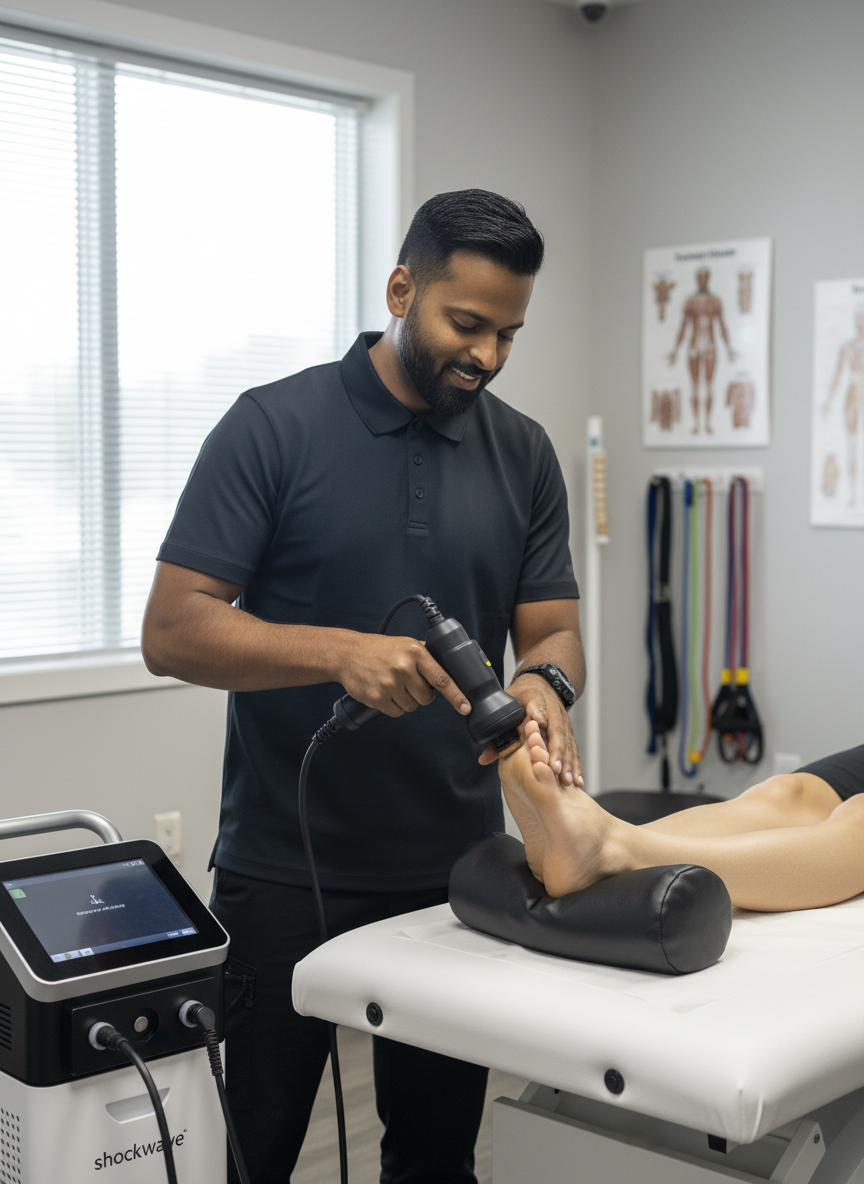
Shockwave Therapy: with advanced cutting edge technological devices to suit your needs.
Interdisciplinary Practice & Patient Care
Sanjay practices an integrated model of healthcare, working closely alongside medical doctors inside the Prime Medical Centre on Abell Street to streamline patient recovery pathways. He maintains a human-centric, communication-first clinical framework, ensuring that care remains fully customized rather than automated.
His clinical caseload encompasses a broad operational spectrum under Ontario's regulatory frameworks, including:
Motor Vehicle Accident (MVA) Claims – Rehabilitation navigating Ontario’s statutory accident benefits schedule.
Workplace Safety and Insurance Board (WSIB) – Occupational injury management and return-to-work screening.
Extended Health Care (EHC) & Private Practice – Multi-tier insurance coordination and long-term athletic development plans.
Commitment to Research & Community
Outside of his clinical caseload at Rehab Mechanics and his additional practice affiliations in Etobicoke, Sanjay is an active health writer and community educator. He translates contemporary peer-reviewed medical research into accessible, actionable guidance on his professional blog. As a dedicated father and husband, he mirrors his professional advice in his personal life, focusing on structural mobility, cross-training, and longevity to help his family and his community thrive. Naturally he takes he a keen interest in rehabilitation for women who are pregnant and post-partum.
Disclaimer: The information provided on this blog is intended for educational and informational purposes only. It does not constitute medical advice, diagnosis, or a treatment plan. Always seek the direct advice of a Registered Physiotherapist, physician, or other qualified health provider regarding any medical condition or physical rehabilitation routine.