Can Physiotherapy Fix a 'Neck Hump' and Reverse Severe Forward Head Posture?
Yes. Physiotherapy can significantly reduce or eliminate a "neck hump" by correcting severe cervicothoracic muscle imbalances. Through targeted deep neck flexor strengthening and upper thoracic mobilization, physical therapy reverses the structural adaptations of chronic forward head posture, preventing permanent spinal deformity.
The Physical Toll of the Screen-Bound Lifestyle
In the high-tech, screen-dominated hubs of Queen West and Liberty Village, the human spine is under relentless attack. Spend five minutes in a local coffee shop and you will observe a sea of professionals hunched deeply over laptops and smartphones.
Beyond the immediate neck pain and tension headaches, many individuals begin to notice an alarming physical change: a visible, hard, fleshy bump forming at the exact base of their neck. Colloquially referred to as a "neck hump" or "Dowager’s hump," this structural deformity is a source of immense physical discomfort and deep cosmetic anxiety.
Patients frequently panic, assuming they have developed a spinal tumor or a permanent, unfixable arthritic deformity. While severe, age-related osteoporosis can cause irreversible wedging of the vertebrae, the vast majority of "neck humps" in young and middle-aged urban professionals are entirely functional and biomechanically reversible. At Rehab Mechanics, we specialize in aggressive postural correction to dismantle this structural adaptation and restore your natural spinal alignment.
Structural Analysis: The Mechanics of the Cervicothoracic Junction
To effectively eliminate a neck hump, we must perform a detailed biomechanical analysis of the lower neck and upper back, a region known as the cervicothoracic junction (CTJ).
The Anatomy of the Intersection
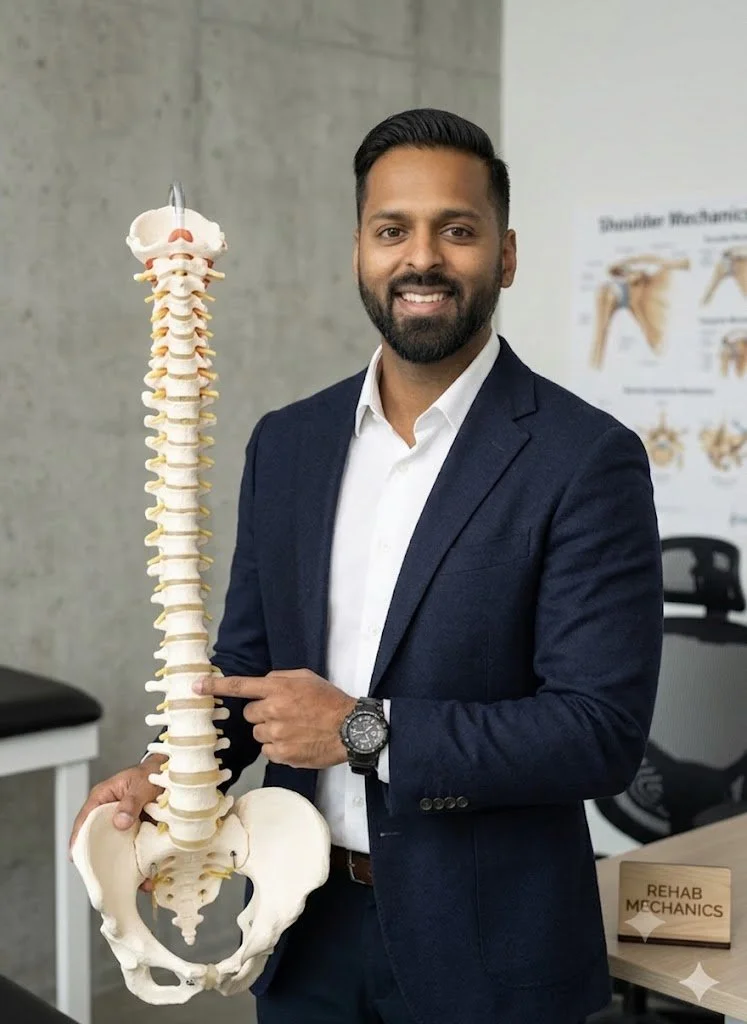
The CTJ is the exact point where your highly mobile, lordotic cervical spine (the neck) meets your rigid, kyphotic thoracic spine (the upper back). Specifically, this occurs at the C7 and T1 vertebrae.
The Spinous Processes: The C7 vertebra naturally has a long, bony projection pointing backward (the spinous process). Even in a healthy spine, this is the bump you can feel at the base of your neck.
The Biomechanical Collapse (Tech Neck)
The human head weighs approximately 10 to 12 pounds. When you stare down at a screen, your head shifts forward out of its neutral center of gravity.
The Leverage Crisis
For every inch your head translates forward, the functional load on the muscles at the base of your neck doubles.
The Muscular Exhaustion: The muscles of the upper back (trapezius, levator scapulae) must contract continuously with massive force just to keep your head from falling onto your chest.
The "Hinge" Effect: Because the head is stuck forward, you must violently hinge your upper neck backward just to look straight ahead at your monitor. This traps the lower neck in deep flexion and the upper neck in extreme extension.
Why the "Hump" Forms
The neck hump is a brilliant, albeit ugly, biological defense mechanism.
Fibro-Fatty Thickening
Because the C7 and T1 vertebrae are being constantly pulled and subjected to massive shearing forces, the body panics. It attempts to "cast" and protect the vulnerable bone.
The body rapidly deposits a thick pad of fibro-fatty tissue directly over the prominent spinous processes.
Simultaneously, the deep fascial layers glue themselves down into dense scar tissue to prevent the spine from snapping.
The result is a hard, visible, painful lump of fat, fascia, and swollen muscle.
Primary Source Proof: Postural Rehabilitation
Clinical biomechanical research explicitly proves that targeted exercise programs designed to correct forward head posture effectively reduce muscular spasticity, realign the cervicothoracic junction, and visibly improve spinal alignment.
Review the Clinical Evidence on PubMed: Effect of an Exercise Program for Posture Correction on Muscle Spasticity and Postural Alignment
Note: The link above directs to external, peer-reviewed medical literature demonstrating our commitment to evidence-based practice and international clinical guidelines for postural rehabilitation.
The Rehab Mechanics Postural Correction Protocol
You cannot fix a neck hump by simply "trying to sit up straight" or wearing a gimmicky posture brace from the internet. You must actively break down the fibrotic tissue and rebuild the neurological endurance of your spine.
Phase 1: Fibrotic Tissue Breakdown and Joint Unlocking
We must physically melt away the dense, protective padding.
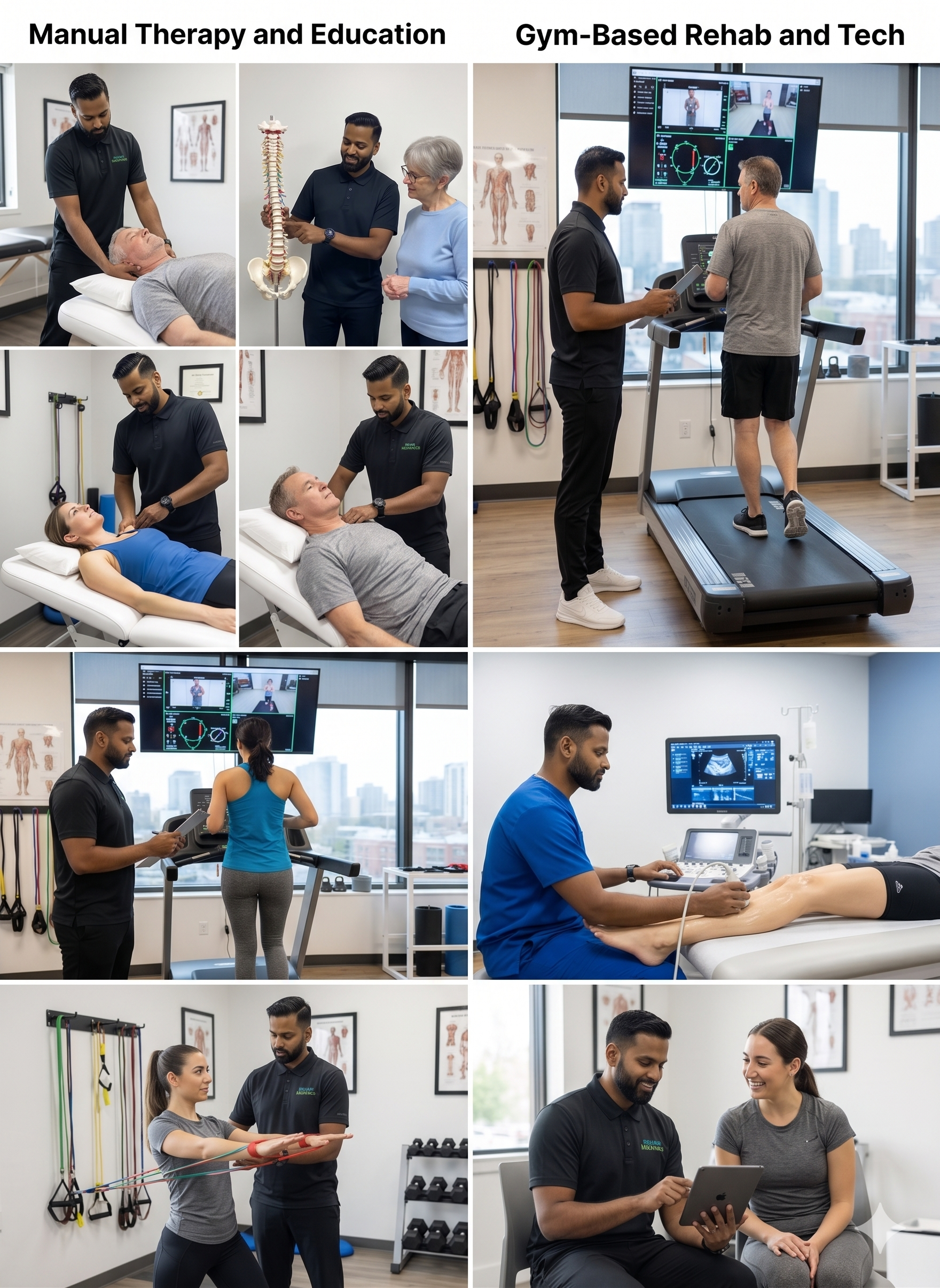
Deep Myofascial Release: Our physiotherapists apply aggressive, targeted manual pressure and instrument-assisted soft tissue mobilization (IASTM) directly over the C7/T1 junction to break down the dense, fibro-fatty fascial adhesions.
Thoracic Spine Mobilization: If the mid-back is locked in a hunch, the neck can never sit straight. We utilize high-grade joint manipulations to forcefully restore thoracic extension (the ability to arch backward).
Pectoral Release: Lengthening the tight chest muscles that are physically dragging the shoulders forward and fueling the collapse.
Phase 2: Neuromuscular Re-Education
Once the joints are free, we must wake up the muscles that have been asleep for years.
Deep Cervical Flexor (DCF) Activation: The tiny muscles in the front of your throat are entirely dormant. We use specific biofeedback drills (like micro-chin tucks) to reactivate these stabilizers. When the DCF fires, it automatically pulls the head back over the shoulders.
Lower Trapezius Fortification: Teaching the brain to fire the muscles at the bottom of the shoulder blades, ensuring the upper back is anchored firmly downward.
Phase 3: High-Load Postural Endurance
Posture is about biological endurance. You must be strong enough to hold the correction for a 10-hour workday.
Isometric Holds: Implementing heavy farmer's carries and prone positional holds to build massive endurance in the erector spinae.
Ergonomic Integration: We assess and correct your exact desk setup, monitor height, and chair support to guarantee your workspace supports your newly restored spinal mechanics rather than destroying them.
Stand Tall and Eliminate the Hump
Do not accept a permanent structural deformity as the inevitable cost of your career. By overhauling your body mechanics and reversing the forces of forward head posture, you can eliminate the neck hump and restore a healthy, pain-free spine.
Book a comprehensive postural and biomechanical assessment with our clinical team today. We are conveniently located inside the Prime Medical Centre at 68 Abell Street, offering advanced orthopedic recovery in Queen West.
Contact us to schedule your appointment:
Email: info@rehabmechanics.com
Phone: (416) 533-3900
About the Author
Mr. Sanjay Attwala (B.Sc., M.Sc., RPT) is a Registered Physiotherapist, clinical director, and the founder of Rehab Mechanics in Toronto. With over 15 years of registered clinical practice and a deep specialization in complex musculoskeletal rehabilitation, Sanjay synthesizes rigorous international academic training with advanced evidence-based therapeutics to guide his clinical practice and patient education initiatives.
Academic Background & Credentials
Master of Science (M.Sc.) in Physiotherapy – University of Keele, United Kingdom (2010).
Bachelor of Science (B.Sc.) – University of Waterloo, Ontario, Canada.
Registered Physiotherapist (RPT) – Regulated health professional in excellent standing with the College of Physiotherapists of Ontario (CPO).
Corporate Entity – Operating officially under the S. Attwala Physiotherapy Professional Corporation with a DBA of Rehab Mechanics.
Clinical Expertise & Philosophy
Sanjay’s clinical approach rejects passive symptom management in favor of identifying underlying biomechanical root causes. His diverse expertise spans advanced manual therapies, personalized corrective exercise prescription, and modern physical modalities. At the Rehab Mechanics Toronto Queen West clinic, he routinely diagnoses and treats complex conditions including:
Spinal & Discogenic Pathology – Cervical, thoracic, and lumbar disc injuries, sciatica, and sacroiliac joint (SIJ) dysfunction.
Upper & Lower Extremity Injuries – Rotator cuff tears, frozen shoulder, tennis/golfer’s elbow, carpal tunnel syndrome, and complex ankle/foot pathologies.
Perinatal & Pelvic Health Rehabilitation – Specialized assessment and rehabilitation protocols tailored specifically for women during pregnancy and the post-partum period, addressing pelvic girdle pain, diastasis recti, and core stabilization.
Specialized Rehabilitation – Pelvic health therapy, TMJ dysfunction, post-surgical rehabilitation (including Total Hip and Total Knee Replacements), and custom orthotics dispensing.
Shockwave Therapy: with advanced cutting edge technological devices to suit your needs.
Interdisciplinary Practice & Patient Care
Sanjay practices an integrated model of healthcare, working closely alongside medical doctors inside the Prime Medical Centre on Abell Street to streamline patient recovery pathways. He maintains a human-centric, communication-first clinical framework, ensuring that care remains fully customized rather than automated.
His clinical caseload encompasses a broad operational spectrum under Ontario's regulatory frameworks, including:
Motor Vehicle Accident (MVA) Claims – Rehabilitation navigating Ontario’s statutory accident benefits schedule.
Workplace Safety and Insurance Board (WSIB) – Occupational injury management and return-to-work screening.
Extended Health Care (EHC) & Private Practice – Multi-tier insurance coordination and long-term athletic development plans.
Commitment to Research & Community
Outside of his clinical caseload at Rehab Mechanics and his additional practice affiliations in Etobicoke, Sanjay is an active health writer and community educator. He translates contemporary peer-reviewed medical research into accessible, actionable guidance on his professional blog. As a dedicated father and husband, he mirrors his professional advice in his personal life, focusing on structural mobility, cross-training, and longevity to help his family and his community thrive. Naturally he takes he a keen interest in rehabilitation for women who are pregnant and post-partum.
Disclaimer: The information provided on this blog is intended for educational and informational purposes only. It does not constitute medical advice, diagnosis, or a treatment plan. Always seek the direct advice of a Registered Physiotherapist, physician, or other qualified health provider regarding any medical condition or physical rehabilitation routine.