Does a Stiff Neck and Clumsy Hands Mean Cervical Spinal Stenosis?
Yes. A stiff neck combined with dropping objects or hand clumsiness strongly indicates cervical spinal stenosis and potential myelopathy. Specialized physiotherapy physically decompresses the cervical spine, opening the nerve canals to restore neurological function and prevent irreversible spinal cord damage.
The Danger of Ignoring "Just a Stiff Neck"
For the aging tech workers and dedicated professionals in downtown Toronto, a stiff neck is often brushed off as the inevitable cost of a desk-bound career. You rub some muscle cream on your upper back, adjust your monitor, and push through the day.
However, when a chronically stiff neck is suddenly accompanied by bizarre neurological symptoms—such as struggling to button your dress shirt in the morning, constantly dropping your car keys, or feeling a strange, heavy unsteadiness in your legs when walking down Queen Street West—the problem has escalated far beyond a simple muscle strain.
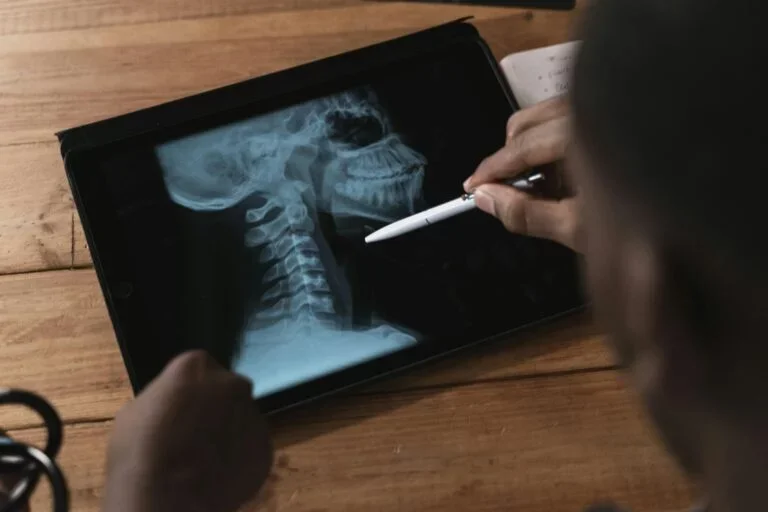
These are the clinical hallmarks of Cervical Spinal Stenosis leading to Cervical Spondylotic Myelopathy. This is not just a pinched nerve in the arm; it is a structural strangulation of the actual spinal cord inside your neck. At Rehab Mechanics, we prioritize elite neurological screening and structural diagnostics. While advanced cases of myelopathy represent a surgical emergency, early and moderate cases of cervical stenosis can be aggressively managed through biomechanical physiotherapy, stabilizing the spine and preventing the condition from deteriorating.
Structural Analysis: The Mechanics of Spinal Cord Compression
To understand the gravity of this condition, we must perform a detailed anatomical analysis of the cervical spine and how space physically runs out over time.
The Anatomy of the Cervical Canal
The seven vertebrae of your neck (C1 through C7) form a protective bony tube called the spinal canal.
The Master Cable: Running directly down the center of this tube is your spinal cord—the master electrical cable that connects your brain to the rest of your body.
The Nerve Roots: Branching off the spinal cord, individual nerve roots exit through small side holes (neural foramina) to power your arms and hands.
The Pathology of Stenosis (Narrowing)
"Stenosis" is the medical term for abnormal narrowing. It is a slow, degenerative cascade driven by age, genetics, and decades of poor posture.
Disc Degeneration and Bulging: As the cervical discs dry out and flatten with age, they bulge backward into the central spinal canal.
Osteophyte Formation: Because the discs are flat, the vertebrae rub together. The body attempts to stabilize the wobbly spine by growing massive, jagged bone spurs (osteophytes) inside the spinal canal and the neural foramina.
Ligamentum Flavum Buckling: The thick ligament that runs down the back of the spinal canal thickens and buckles inward.
Cervical Myelopathy: The Strangulation Effect
When all three of these degenerative changes happen simultaneously, the space inside the spinal canal practically vanishes.
The Crushing Force: The bone spurs, bulging discs, and thick ligaments physically crush the spinal cord itself.
The Neurological Fallout: Because the spinal cord controls the entire body below the neck, the symptoms are widespread. This is Cervical Spondylotic Myelopathy. It cuts off the high-speed neurological signals required for fine motor skills (hands) and heavy balance (legs).
Identifying the Clinical Red Flags of Myelopathy
How do we differentiate a standard pinched nerve from dangerous spinal cord compression? We look for specific, multi-system neurological failures.
Loss of Fine Motor Skills: A sudden inability to perform delicate tasks: handwriting deteriorates, tying shoelaces becomes impossible, or you struggle to use a knife and fork.
The "Heavy Legs" or Balance Issues: You feel uncoordinated, clumsy, or uniquely unsteady when walking, often feeling the need to hold onto walls or a cane.
Bilateral Symptoms: Numbness, tingling, or "electrical shocks" occurring in both hands or arms simultaneously, rather than just one side.
Lhermitte’s Sign: A terrifying sensation of an electric shock shooting rapidly down your spine and into your arms or legs when you aggressively bend your chin down to your chest.
Primary Source Proof: Non-Operative Decompression
Orthopedic and neurosurgical guidelines dictate that while severe myelopathy requires surgery, mild to moderate cervical spinal stenosis can be highly effectively managed with structured physical therapy focusing on deep neck stabilization and postural correction to prevent neurological progression.
Review the Clinical Evidence on PubMed: Non-Operative Management of Cervical Spondylotic Myelopathy and Spinal Stenosis (National Institutes of Health)
Note: The link above directs to external, peer-reviewed medical literature demonstrating our commitment to evidence-based practice and international clinical guidelines for complex spinal rehabilitation.
The Rehab Mechanics Decompression Protocol
Treating cervical stenosis requires absolute caution and immense clinical precision. Aggressively cracking or twisting a stenotic neck is incredibly dangerous. We utilize gentle, targeted "remedial mechanics" to create physical space for the spinal cord.
Phase 1: Mechanical Decompression and Traction (Weeks 1-4)
Our immediate priority is un-pinching the spinal cord and nerve roots without provoking the nervous system.
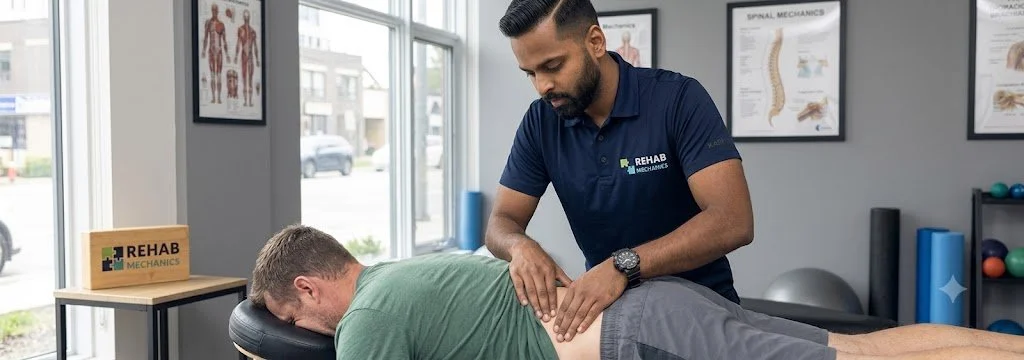
Manual Cervical Traction: Our specialized physiotherapists apply gentle, sustained upward pulling (distraction) to the skull. This physically separates the cervical vertebrae by millimeters, instantly widening the spinal canal and allowing the suffocating spinal cord to breathe.
Flexion-Biased Mobilization: Looking up at the ceiling (extension) physically closes the spinal canal and crushes the cord. We use highly specific manual techniques to promote slight cervical flexion, which maximizes the diameter of the nerve canals.
Suboccipital Release: Melting away the massive, protective muscle spasms at the base of the skull that are trapping the neck in a rigid, painful block.
Phase 2: Postural Overhaul and Thoracic Unlocking (Weeks 4-8)
We must fix the foundation. The neck cannot find a neutral, open position if the upper back is frozen in a slouch.
Thoracic Spine Mobilization: Utilizing Grade III and IV mobilizations to restore the ability of your mid-back to arch backward. This stops your neck from having to hyper-extend to see the computer screen.
Scapular Retraction: Strengthening the rhomboids and middle trapezius to pull the heavy shoulders back and down, providing a solid platform for the cervical spine to rest upon.
Phase 3: Deep Cervical Fortification (Weeks 8-12+)
Because the structural bones are failing (degeneration), the muscles must take over the job of holding the spine perfectly still.
Deep Cervical Flexor (DCF) Endurance: The tiny muscles in the front of your throat act as the core of your neck. We utilize precise biofeedback drills (like micro-nodding against resistance) to rebuild these vital stabilizers.
Isometric Stabilization: We apply multi-directional, unexpected resistance to your head while you attempt to hold it perfectly still. This trains your nervous system to automatically fire the neck muscles to prevent the wobbly vertebrae from shifting and crushing the spinal cord during sudden movements.
Protect Your Spinal Cord
Do not ignore clumsy hands or unexplainable balance issues. Cervical spinal stenosis is a serious, progressive condition. By radically overhauling your spinal mechanics and building a deep muscular brace, expert physical therapy can halt the progression, relieve the nerve pressure, and help you avoid high-risk spinal surgery.
Book a comprehensive neurological and spinal assessment with our clinical team today. We are conveniently located inside the Prime Medical Centre at 68 Abell Street, offering elite, diagnostic orthopedic care in Toronto Queen West.
Contact us to schedule your appointment:
Email: info@rehabmechanics.com
Phone: (416) 533-3900
About the Author
Mr. Sanjay Attwala (B.Sc., M.Sc., RPT) is a Registered Physiotherapist, clinical director, and the founder of Rehab Mechanics in Toronto. With over 15 years of registered clinical practice and a deep specialization in complex musculoskeletal rehabilitation, Sanjay synthesizes rigorous international academic training with advanced evidence-based therapeutics to guide his clinical practice and patient education initiatives.
Academic Background & Credentials
Master of Science (M.Sc.) in Physiotherapy – University of Keele, United Kingdom (2010).
Bachelor of Science (B.Sc.) – University of Waterloo, Ontario, Canada.
Registered Physiotherapist (RPT) – Regulated health professional in excellent standing with the College of Physiotherapists of Ontario (CPO).
Corporate Entity – Operating officially under the S. Attwala Physiotherapy Professional Corporation with a DBA of Rehab Mechanics.
Clinical Expertise & Philosophy
Sanjay’s clinical approach rejects passive symptom management in favor of identifying underlying biomechanical root causes. His diverse expertise spans advanced manual therapies, personalized corrective exercise prescription, and modern physical modalities. At the Rehab Mechanics Toronto Queen West clinic, he routinely diagnoses and treats complex conditions including:
Spinal & Discogenic Pathology – Cervical, thoracic, and lumbar disc injuries, sciatica, and sacroiliac joint (SIJ) dysfunction.
Upper & Lower Extremity Injuries – Rotator cuff tears, frozen shoulder, tennis/golfer’s elbow, carpal tunnel syndrome, and complex ankle/foot pathologies.
Perinatal & Pelvic Health Rehabilitation – Specialized assessment and rehabilitation protocols tailored specifically for women during pregnancy and the post-partum period, addressing pelvic girdle pain, diastasis recti, and core stabilization.
Specialized Rehabilitation – Pelvic health therapy, TMJ dysfunction, post-surgical rehabilitation (including Total Hip and Total Knee Replacements), and custom orthotics dispensing.
Shockwave Therapy: with advanced cutting edge technological devices to suit your needs.
Interdisciplinary Practice & Patient Care
Sanjay practices an integrated model of healthcare, working closely alongside medical doctors inside the Prime Medical Centre on Abell Street to streamline patient recovery pathways. He maintains a human-centric, communication-first clinical framework, ensuring that care remains fully customized rather than automated.
His clinical caseload encompasses a broad operational spectrum under Ontario's regulatory frameworks, including:
Motor Vehicle Accident (MVA) Claims – Rehabilitation navigating Ontario’s statutory accident benefits schedule.
Workplace Safety and Insurance Board (WSIB) – Occupational injury management and return-to-work screening.
Extended Health Care (EHC) & Private Practice – Multi-tier insurance coordination and long-term athletic development plans.
Commitment to Research & Community
Outside of his clinical caseload at Rehab Mechanics and his additional practice affiliations in Etobicoke, Sanjay is an active health writer and community educator. He translates contemporary peer-reviewed medical research into accessible, actionable guidance on his professional blog. As a dedicated father and husband, he mirrors his professional advice in his personal life, focusing on structural mobility, cross-training, and longevity to help his family and his community thrive. Naturally he takes he a keen interest in rehabilitation for women who are pregnant and post-partum.
Disclaimer: The information provided on this blog is intended for educational and informational purposes only. It does not constitute medical advice, diagnosis, or a treatment plan. Always seek the direct advice of a Registered Physiotherapist, physician, or other qualified health provider regarding any medical condition or physical rehabilitation routine.