
How Long Does Whiplash Actually Take to Heal After a Car Accident?
August 11, 2026
Whiplash is a severe ligament sprain, not a simple muscle strain, meaning structural healing takes months. Physiotherapy supports recovery by utilizing early, safe joint mobilization and targeted neuromuscular re-education to guide scar tissue formation, preventing chronic neck stiffness and debilitating tension headaches.
The Patient’s Story
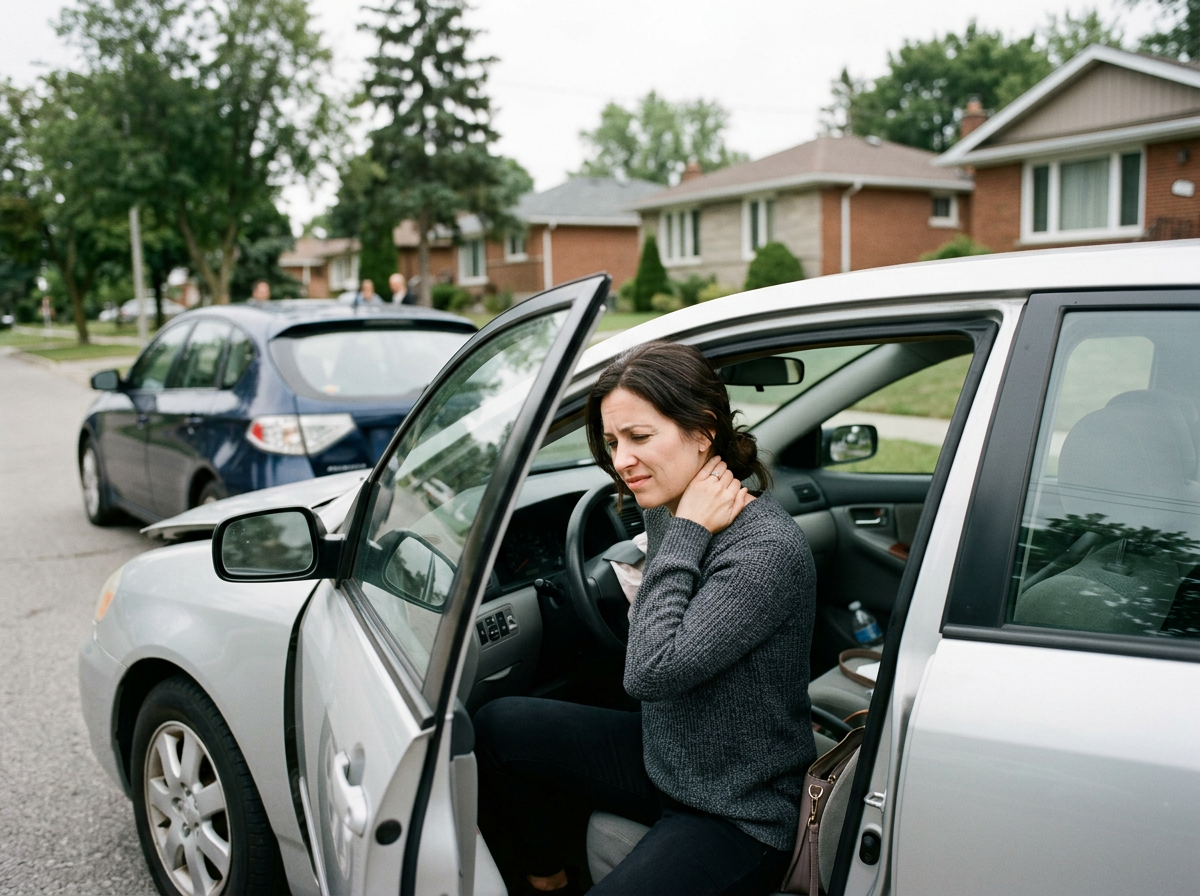
In a bustling, high-traffic city like Toronto, sudden collisions on the Gardiner Expressway or abrupt stops on a TTC streetcar are an unfortunate reality of daily life. In the immediate aftermath of a rear-end collision, patients are usually flooded with adrenaline. They speak to the police, exchange insurance information, and often head home believing they escaped completely uninjured.
However, 24 to 48 hours later, the adrenaline fades, and the devastating reality of whiplash sets in. Patients wake up with a completely rigid neck, intense burning across their shoulder blades, and a dull, throbbing headache wrapping around their temples.
When they visit a walk-in clinic, they are often given a generic foam neck collar and told to "rest for a few weeks." But weeks turn into months, and the severe neck stiffness and dizziness refuse to dissipate. The patient becomes terrified, constantly asking, "How long is this going to hurt for?"
At Rehab Mechanics, we manage complex Motor Vehicle Accident (MVA) rehabilitation daily. We understand that whiplash is not just a pulled muscle; it is a profound structural trauma to the deepest stabilizing ligaments of the spine. Passive resting guarantees that the neck will heal as a stiff, painful block of scar tissue. By implementing active, early-intervention physiotherapy, we safely guide the tissue repair process, restoring frictionless mobility and keeping you out of chronic pain.
Structural / Biomechanical Analysis
To understand the lengthy healing timeline of whiplash, we must perform a biomechanical analysis of the acceleration-deceleration mechanism and the specific tissues that fail during a crash.
The Physics of the Collision
Whiplash Associated Disorders (WAD) occur in milliseconds.
The Hyperextension Phase: When your vehicle is struck from behind, your torso is violently thrust forward by the seat, but your head remains momentarily stationary. This violently snaps the neck backward, aggressively crushing the facet joints at the back of the spine and tearing the anterior ligaments.
The Hyperflexion Phase: As the seatbelt catches your torso, your heavy head acts like a whip, violently snapping forward. This radically overstretches the spinal cord, tears the posterior neck muscles, and sprains the deep interspinous ligaments.
The Biological Healing Timeline (Muscle vs. Ligament)
The fear and frustration of whiplash stems from a fundamental misunderstanding of tissue biology.
Muscle Strains: If you only pulled a muscle (like the upper trapezius), the rich blood supply allows it to heal structurally within 3 to 6 weeks.
Ligament Sprains: Ligaments hold bones together and have notoriously poor blood flow. When the deep cervical ligaments are micro-torn in a crash, it takes a minimum of 8 to 12 weeks to lay down basic scar tissue, and up to a full year for that collagen matrix to fully mature and strengthen.
The "Stiff Neck" Consequence (Arthrofibrosis)
If you wear a neck brace or rest completely on the couch for a month, the body floods the torn neck ligaments with chaotic, dense scar tissue to "cast" the broken spine.
The Joint Jam: This thick scar tissue glues the tiny facet joints of the neck together.
The Chronic Pain Cycle: Because the joints are glued shut, you cannot turn your head to check a blind spot. The muscles of the neck go into a permanent, painful spasm trying to protect the frozen joints, which directly triggers daily cervicogenic tension headaches.
Clinical Red Flags
Accurately diagnosing the severity of a whiplash injury requires precise screening. We look for these specific red flags to dictate our treatment intensity:
Delayed Onset Agony: Pain and stiffness that do not peak until 48 to 72 hours post-collision, indicating deep ligamentous inflammation rather than superficial muscle damage.
Cervicogenic Dizziness: A sensation of vertigo, floating, or unsteadiness when turning the head, indicating that the impact damaged the proprioceptive balance sensors inside the upper neck joints.
Radicular Neuropathy: Numbness, tingling, or "pins and needles" shooting down the shoulder blade and into the fingers, suggesting the whiplash caused a cervical disc to bulge and crush a nerve root.
The "Heavy Head": A profound feeling that the neck muscles are too exhausted to hold the head upright by mid-afternoon.
Visual Disturbances: Blurred vision or severe light sensitivity, often correlating with post-concussion syndrome overlapping with the whiplash trauma.
Primary Source Proof
Clinical guidelines for Motor Vehicle Accident rehabilitation emphatically mandate that early, active joint mobilization and targeted physical therapy dramatically reduce the incidence of long-term disability and chronic pain compared to traditional passive rest protocols.
The Efficacy of Early Active Mobilization in Whiplash-Associated Disorders (National Institutes of Health)
Ligamentous Healing Timelines and the Role of Mechanotransduction in Cervical Spine Trauma (National Institutes of Health)
Sensorimotor Retraining and Manual Therapy in the Management of Chronic Whiplash (National Institutes of Health)
The Rehab Mechanics Corrective Protocol
We treat MVA injuries with an aggressive but highly protected mechanical approach. We must force the scar tissue to align properly before it permanently freezes the neck.
Phase 1 — Acute Inflammation and Protected Mobility (Weeks 1-4)
Ditching the Collar: We transition patients away from rigid cervical collars as quickly as safely possible to prevent catastrophic muscle atrophy.
Pain-Free Active Range of Motion (ROM): Prescribing controlled, highly specific micro-movements of the neck. This early motion physically aligns the newly forming collagen fibers, ensuring the scar tissue heals flexibly rather than as a rigid knot.
Advanced Modalities: Utilizing targeted interferential currents and gentle soft tissue release to drain the massive inflammatory pooling from the cervical spine.
Phase 2 — Joint Mobilization and Decompression (Weeks 4-8)
Cervical Facet Gliding: Our physiotherapists use precise Grade II and III manual techniques to gently un-jam the stiffened cervical joints, restoring the ability to safely rotate the head without sharp, catching pain.
Thoracic Spine Unlocking: A crashed neck relies entirely on the mid-back for support. We use high-grade manual therapy to unlock the thoracic spine, removing the mechanical burden from the fragile cervical ligaments.
Phase 3 — Sensorimotor Retraining / Mechanics Correction (Weeks 8-12)
Proprioceptive Recalibration: Whiplash damages the nerve endings that tell the brain where the head is in space. We use laser-pointer head-tracking drills to rebuild this connection, permanently resolving crash-induced dizziness.
Deep Cervical Flexor Activation: Waking up the tiny, deep muscles in the front of the throat to act as an internal biological neck brace, supporting the heavy head against gravity.
Phase 4 — Return-to-Activity Strategy (Weeks 12+)
Work Hardening: Progressing to heavy, targeted resistance training for the trapezius and rhomboids to rebuild the structural integrity needed for 8-hour workdays.
MVA Administrative Support: Managing your treatment plans directly with your Ontario auto insurer through HCAI, ensuring your recovery pathway remains fully documented and seamlessly funded.
Related Conditions We Treat
Whiplash Associated Disorders (WAD)
Cervicogenic Headaches
Cervicogenic Dizziness / Vertigo
Cervical Radiculopathy (Pinched Nerves)
Thoracic Outlet Syndrome
Post-Concussion Syndrome
Related Blogs
"Should I See a Physiotherapist Right After a Car Accident?"
"Are Your Chronic Migraines Actually Being Caused by Your Neck?"
"Can Vestibular Physiotherapy Cure Post-Concussion Syndrome and Vertigo?"
Services Used in Treatment
Manual Therapy
Soft Tissue Release
Myofascial Release
Shockwave Therapy
Gait Retraining
Neuromuscular Re-Education
Custom Orthotics
Strengthening Programs
FAQ Section
1. Can physiotherapy assist in managing whiplash injuries?
Yes. Physiotherapy supports recovery by utilizing early, safe movement to ensure injured neck ligaments heal correctly, helping to reduce the formation of rigid scar tissue and chronic stiffness.
2. How long will my neck hurt after a car accident?
While muscle spasms may settle in a few weeks, severely stretched cervical ligaments typically take 8 to 12 weeks to structurally heal. We assist in managing this timeline safely through progressive rehabilitation.
3. Should I wear a foam neck brace while my whiplash heals?
Prolonged use of a neck brace causes rapid muscle wasting and joint stiffness. We support recovery by encouraging early, protected movement to rebuild your own biological, muscular brace.
4. Why am I experiencing dizziness after being rear-ended?
Whiplash can damage the balance sensors in your upper neck or inner ear. We address contributing factors by using specialized sensorimotor retraining to help reduce vertigo and unsteadiness.
5. Can manual therapy help relieve my post-accident headaches?
Yes. Cervicogenic headaches are triggered by jammed joints and spasming muscles at the base of the skull. We utilize targeted joint mobilization to help reduce tissue irritation and nerve pressure.
6. Is it normal for whiplash pain to show up days later?
Absolutely. The massive adrenaline rush during an accident masks immediate pain, and deep ligamentous swelling takes 24 to 48 hours to peak. We optimize movement to safely flush this delayed inflammation.
7. Does MVA auto insurance cover my physiotherapy in Toronto?
Yes. In Ontario, your auto insurer is legally required to cover necessary rehabilitation. We assist in managing your recovery by directly billing and coordinating your treatment plans through the HCAI system.
8. How do deep neck strengthening programs help?
Whiplash exhausts the primary neck muscles. We focus on strengthening stabilizers like the deep cervical flexors to support the heavy weight of your head, reducing mechanical overload on the healing ligaments.
How Physiotherapy Helps
Reducing tissue irritation through early, protected joint mobilization
Correcting pelvic drop to support an upright total-body posture
Improving cadence and fluid mobility of the thoracic spine
Strengthening stabilizers in the deep neck flexors
Reducing mechanical overload on the traumatized cervical ligaments
Improving foot mechanics to balance the global kinetic chain
Contact Us Today — All you have to lose is the pain
Book a comprehensive biomechanical assessment with our clinical team today. Located inside the Prime Medical Centre at 68 Abell Street, Queen West.
Email: info@rehabmechanics.com Phone: (416) 533-3900
About the Author
Mr. Sanjay Attwala (B.Sc., M.Sc., RPT) is a Registered Physiotherapist, clinical director, and the founder of Rehab Mechanics in Toronto. With over 15 years of registered clinical practice and a deep specialization in complex musculoskeletal rehabilitation, Sanjay synthesizes rigorous international academic training with advanced evidence-based therapeutics to guide his clinical practice and patient education initiatives.
Academic Background & Credentials
Master of Science (M.Sc.) in Physiotherapy – University of Keele, United Kingdom (2010).
Bachelor of Science (B.Sc.) – University of Waterloo, Ontario, Canada.
Registered Physiotherapist (RPT) – Regulated health professional in excellent standing with the College of Physiotherapists of Ontario (CPO).
Corporate Entity – Operating officially under the S. Attwala Physiotherapy Professional Corporation with a DBA of Rehab Mechanics.
Clinical Expertise & Philosophy
Sanjay’s clinical approach rejects passive symptom management in favor of identifying underlying biomechanical root causes. His diverse expertise spans advanced manual therapies, personalized corrective exercise prescription, and modern physical modalities. At the Rehab Mechanics Toronto Queen West clinic, he routinely diagnoses and treats complex conditions including:
Spinal & Discogenic Pathology – Cervical, thoracic, and lumbar disc injuries, sciatica, and sacroiliac joint (SIJ) dysfunction.
Upper & Lower Extremity Injuries – Rotator cuff tears, frozen shoulder, tennis/golfer’s elbow, carpal tunnel syndrome, and complex ankle/foot pathologies.
Perinatal & Pelvic Health Rehabilitation – Specialized assessment and rehabilitation protocols tailored specifically for women during pregnancy and the post-partum period, addressing pelvic girdle pain, diastasis recti, and core stabilization.
Specialized Rehabilitation – Pelvic health therapy, TMJ dysfunction, post-surgical rehabilitation (including Total Hip and Total Knee Replacements), and custom orthotics dispensing.
Shockwave Therapy: with advanced cutting edge technological devices to suit your needs.
Interdisciplinary Practice & Patient Care
Sanjay practices an integrated model of healthcare, working closely alongside medical doctors inside the Prime Medical Centre on Abell Street to streamline patient recovery pathways. He maintains a human-centric, communication-first clinical framework, ensuring that care remains fully customized rather than automated.
His clinical caseload encompasses a broad operational spectrum under Ontario's regulatory frameworks, including:
Motor Vehicle Accident (MVA) Claims – Rehabilitation navigating Ontario’s statutory accident benefits schedule.
Workplace Safety and Insurance Board (WSIB) – Occupational injury management and return-to-work screening.
Extended Health Care (EHC) & Private Practice – Multi-tier insurance coordination and long-term athletic development plans.
Commitment to Research & Community
Outside of his clinical caseload at Rehab Mechanics and his additional practice affiliations in Etobicoke, Sanjay is an active health writer and community educator. He translates contemporary peer-reviewed medical research into accessible, actionable guidance on his professional blog. As a dedicated father and husband, he mirrors his professional advice in his personal life, focusing on structural mobility, cross-training, and longevity to help his family and his community thrive. Naturally he takes he a keen interest in rehabilitation for women who are pregnant and post-partum.
Disclaimer: The information provided on this blog is intended for educational and informational purposes only. It does not constitute medical advice, diagnosis, or a treatment plan. Always seek the direct advice of a Registered Physiotherapist, physician, or other qualified health provider regarding any medical condition or physical rehabilitation routine.
Google MyBusiness for Instant Posts, Photos, Updates, Offers and Communication
Be sure to check out Rehab Mechanics’ Google My Business Profile for daily posts, location and directions in addition to the directions on the website!
We love interacting with prospective and current patients, and love honest feedback and even constructive criticism and areas for improvement!