Will a "Minor" Concussion From a Car Accident Affect My Injury Settlement?
Yes. Insurance companies frequently dismiss concussions as "minor," but Post-Concussion Syndrome causes severe, long-term neurological deficits. Securing a fair settlement requires aggressive medical-legal documentation linking your biomechanical brain trauma directly to your loss of income and diminished quality of life.
The "Invisible Injury" Bias in Ontario Auto Claims

If you have been involved in a motor vehicle accident (MVA) on the Gardiner Expressway or a sudden collision at a busy downtown Toronto intersection, the immediate focus is usually on visible injuries: broken bones, lacerations, or crushed joints. When the paramedics arrive, if you are conscious and speaking, you are often discharged with a diagnosis of a "mild concussion" or "minor whiplash."
Unfortunately, this early medical classification is frequently weaponized by auto insurance companies.
Under Ontario's Statutory Accident Benefits Schedule (SABS), insurers default to placing "mild" brain injuries into the Minor Injury Guideline (MIG), which severely caps your available rehabilitation funds to a fraction of what you actually need. They expect you to rest for a few weeks and return to work.
However, at LawCap, we know that a concussion is never "minor." Months after the accident, you may still be suffering from blinding light sensitivity, severe vertigo, cognitive fog, and an inability to stare at a computer screen for more than ten minutes. This is Post-Concussion Syndrome (PCS). To force the insurance company to properly value your tort claim and accident benefits, we must legally prove the profound, invisible biomechanical damage inside your skull.
Structural Analysis: The Neurometabolic Cascade of a Concussion
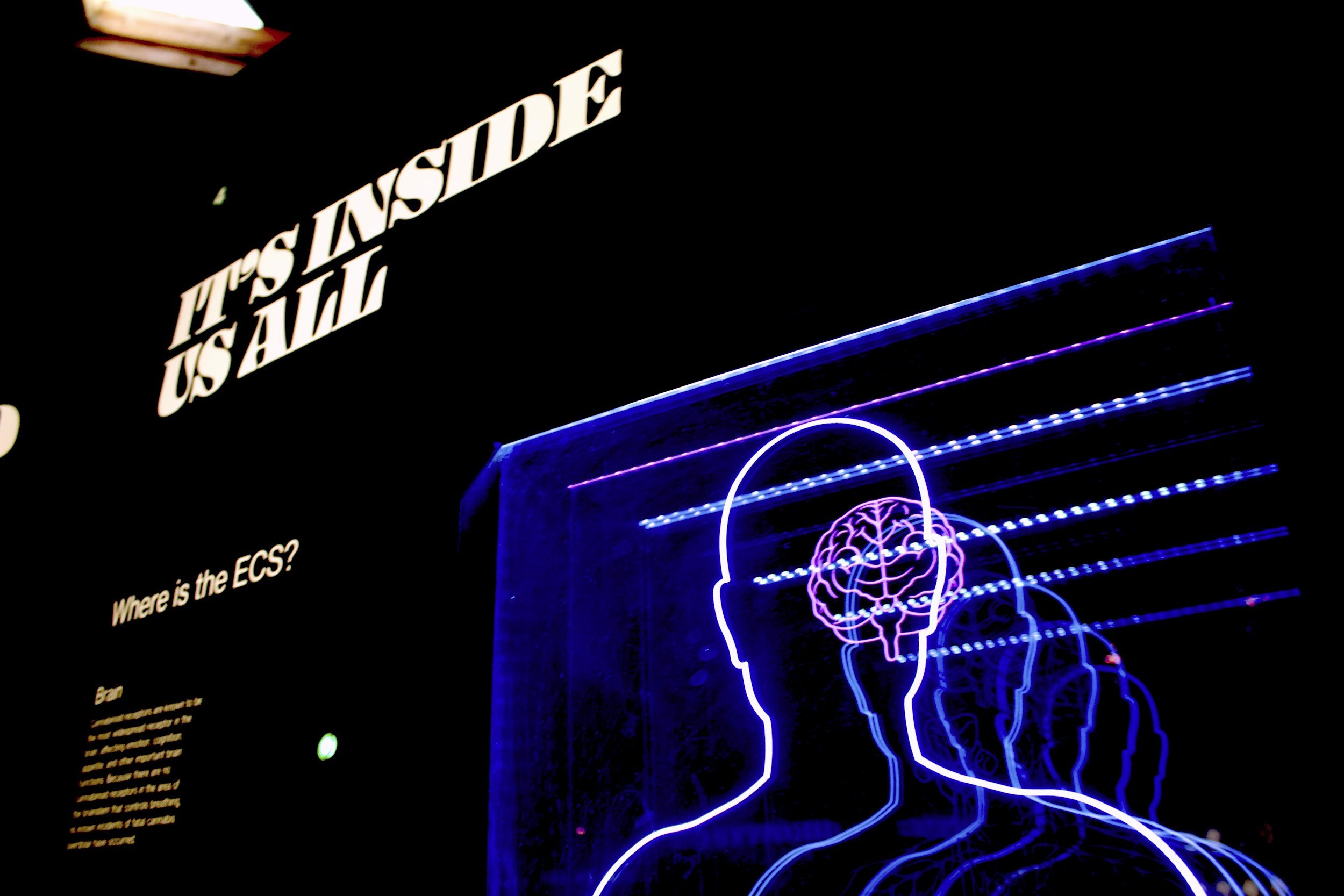
To legally defeat an insurance adjuster’s claim that you are "faking" or exaggerating your symptoms, your legal team must clearly articulate the objective, biological reality of a traumatic brain injury (TBI).
The Physics of the Impact
A concussion does not require your head to physically strike the steering wheel or the window. It is caused by acceleration and deceleration forces.
The Coup-Contrecoup: When your car is rear-ended, your skull is whipped violently forward and backward. Your brain, which floats in cerebrospinal fluid, crashes into the hard, bony inside of your skull, then rebounds and crashes into the opposite side.
Axonal Shearing: This violent shaking causes the brain tissue to twist. The delicate, microscopic nerve fibers (axons) that connect different regions of your brain are stretched, frayed, and sheared.
The Energy Crisis (Why MRI Scans Are Often "Normal")
Insurance companies love to point out that your CT scan or MRI came back "clear" as proof that you are not injured. This is a deliberate medical-legal fallacy.
Standard MRIs look for macro-structural damage, like massive bleeding or tumors. They cannot see microscopic axonal shearing or cellular chemical imbalances.
The Chemical Chaos: The physical shearing of the cells causes massive amounts of toxic chemicals (like glutamate) to flood the brain. The brain goes into an absolute panic, demanding massive amounts of energy (glucose) to repair the cells.
The Chokehold: However, the trauma of the accident temporarily restricts cerebral blood flow. The brain is starving for energy precisely when it needs it most. This metabolic mismatch is the exact physiological cause of the exhaustion, confusion, and chronic headaches that prevent you from working.
The Legal Framework: Breaking Out of the Minor Injury Guideline
In Ontario, dealing with an MVA claim involves navigating a two-part system: your Accident Benefits (no-fault) and your Tort Claim (suing the at-fault driver).
Accident Benefits (SABS)
If your insurer places you in the Minor Injury Guideline (MIG), your medical and rehabilitation benefits are drastically capped.
The Legal Strategy: To access higher funding tiers (Non-Catastrophic or Catastrophic Impairment), your legal team must assemble a network of specialized medical experts—such as neuropsychologists, vestibular physiotherapists, and occupational therapists.
We must generate hard, objective data proving that your concussion has resulted in a neurological deficit that falls outside the legal definition of a "minor" injury.
The Tort Claim (Loss of Competitive Advantage)
If your concussion prevents you from returning to your fast-paced corporate job in the Financial District, or if you can no longer handle the multitasking required to manage a busy household, you are entitled to compensation for lost future earning capacity.
Insurance defense lawyers will argue that your cognitive fog is just "stress" or a pre-existing psychological issue.
Our role is to utilize complex neurocognitive testing to prove a direct, undeniable causal link between the biomechanical trauma of the crash and your current inability to compete in the open labor market.
Proving the Invisible: How We Build the Case
To secure the maximum settlement value for a traumatic brain injury, we leave nothing to chance. We combat insurance skepticism with overwhelming, interdisciplinary medical evidence.
Functional Capacity Evaluations (FCE)
A subjective complaint of "I feel dizzy" is easily dismissed by an adjuster. We utilize objective Functional Capacity Evaluations to quantify exactly how your brain injury limits you. If your heart rate spikes and your balance fails after five minutes of reading, the FCE generates the hard data required to prove you cannot sustain an 8-hour workday.
Neuro-Optometry and Vestibular Mapping
A massive percentage of post-concussion syndrome is driven by damage to the vestibular system (inner ear) and the oculomotor nerve pathways. We partner with specialized clinicians who can map the exact tracking delays in your eye movements, providing undeniable, objective proof of the brain injury.
Protect Your Legal Rights and Your Future
A concussion is a complex neurological event that can derail your career and your quality of life. Do not let an insurance company rush you into an early, undervalued settlement by dismissing your symptoms as a "minor headache."
You need a legal team that understands the deep human mechanics of brain trauma and knows how to translate that biological reality into maximum legal compensation. We work in tandem with them all under the umbrella of litigation privilege.

About the Author
Mr. Sanjay Attwala (B.Sc., M.Sc., RPT) is a Registered Physiotherapist, clinical director, and the founder of Rehab Mechanics in Toronto. With over 15 years of registered clinical practice and a deep specialization in complex musculoskeletal rehabilitation, Sanjay synthesizes rigorous international academic training with advanced evidence-based therapeutics to guide his clinical practice and patient education initiatives.
Academic Background & Credentials
Master of Science (M.Sc.) in Physiotherapy – University of Keele, United Kingdom (2010).
Bachelor of Science (B.Sc.) – University of Waterloo, Ontario, Canada.
Registered Physiotherapist (RPT) – Regulated health professional in excellent standing with the College of Physiotherapists of Ontario (CPO).
Corporate Entity – Operating officially under the S. Attwala Physiotherapy Professional Corporation with a DBA of Rehab Mechanics.
Clinical Expertise & Philosophy
Sanjay’s clinical approach rejects passive symptom management in favor of identifying underlying biomechanical root causes. His diverse expertise spans advanced manual therapies, personalized corrective exercise prescription, and modern physical modalities. At the Rehab Mechanics Toronto Queen West clinic, he routinely diagnoses and treats complex conditions including:
Spinal & Discogenic Pathology – Cervical, thoracic, and lumbar disc injuries, sciatica, and sacroiliac joint (SIJ) dysfunction.
Upper & Lower Extremity Injuries – Rotator cuff tears, frozen shoulder, tennis/golfer’s elbow, carpal tunnel syndrome, and complex ankle/foot pathologies.
Perinatal & Pelvic Health Rehabilitation – Specialized assessment and rehabilitation protocols tailored specifically for women during pregnancy and the post-partum period, addressing pelvic girdle pain, diastasis recti, and core stabilization.
Specialized Rehabilitation – Pelvic health therapy, TMJ dysfunction, post-surgical rehabilitation (including Total Hip and Total Knee Replacements), and custom orthotics dispensing.
Shockwave Therapy: with advanced cutting edge technological devices to suit your needs.
Interdisciplinary Practice & Patient Care
Sanjay practices an integrated model of healthcare, working closely alongside medical doctors inside the Prime Medical Centre on Abell Street to streamline patient recovery pathways. He maintains a human-centric, communication-first clinical framework, ensuring that care remains fully customized rather than automated.
His clinical caseload encompasses a broad operational spectrum under Ontario's regulatory frameworks, including:
Motor Vehicle Accident (MVA) Claims – Rehabilitation navigating Ontario’s statutory accident benefits schedule.
Workplace Safety and Insurance Board (WSIB) – Occupational injury management and return-to-work screening.
Extended Health Care (EHC) & Private Practice – Multi-tier insurance coordination and long-term athletic development plans.
Commitment to Research & Community
Outside of his clinical caseload at Rehab Mechanics and his additional practice affiliations in Etobicoke, Sanjay is an active health writer and community educator. He translates contemporary peer-reviewed medical research into accessible, actionable guidance on his professional blog. As a dedicated father and husband, he mirrors his professional advice in his personal life, focusing on structural mobility, cross-training, and longevity to help his family and his community thrive. Naturally he takes he a keen interest in rehabilitation for women who are pregnant and post-partum.
Disclaimer: The information provided on this blog is intended for educational and informational purposes only. It does not constitute medical advice, diagnosis, or a treatment plan. Always seek the direct advice of a Registered Physiotherapist, physician, or other qualified health provider regarding any medical condition or physical rehabilitation routine.
Be sure to check out Rehab Mechanics’ Google My Business Profile for daily posts, location and directions in addition to the directions on the website!
We love interacting with prospective and current patients, and love honest feedback and even constructive criticism and areas for improvement!