Can Physiotherapy Fix a Slipped Vertebra (Spondylolisthesis) Without Surgery?
Yes. While physical therapy cannot push a slipped vertebra back into place, it permanently stabilizes the spine. By building massive anti-extension core strength, mobilizing the thoracic spine, and correcting pelvic tilt, physiotherapy stops the forward slippage, eliminating chronic lower back pain and nerve compression without spinal fusion surgery.
The Terror of a "Slipping" Spine

Feel like you are slipping? We will get you back upright!
If you have experienced a deep, localized ache in your lower back that suddenly flares into sharp, radiating nerve pain when you stand up straight or walk for long periods, you may have demanded an X-ray. For many Toronto residents—ranging from former competitive gymnasts to heavy weightlifters and active older adults—that X-ray returns a terrifying diagnosis: Spondylolisthesis.
Your doctor may point to the image and explain that one of your lumbar vertebrae has literally "slipped forward" over the bone beneath it. The immediate, panic-inducing assumption is that your spine is highly unstable, on the verge of collapsing, and that major spinal fusion surgery is your only hope of avoiding a wheelchair.
At Rehab Mechanics in Queen West, we specialize in advanced spinal biomechanics, and we want to change this narrative. Your spine is not fragile. A slipped vertebra does not automatically mean a surgical fusion. Through highly targeted, biomechanically precise physical therapy, we can build a massive, biological corset of muscle around the "slipped" joint. This stops any further movement, stabilizes the spine against gravity, and permanently relieves the crushing pressure on your nerves.
Structural Analysis: The Mechanics of a Spinal Slip
To understand how to treat spondylolisthesis, we must perform a detailed anatomical analysis of the posterior spine and exactly why a vertebra moves out of place.
The Anatomy of the Neural Arch
Your spine is designed to stack perfectly, like building blocks. In the lower back (lumbar spine), these blocks are massive to handle the weight of your upper body.
The Facet Joints: At the back of each vertebra, there are tiny overlapping hinges (facet joints) that connect the bone above to the bone below.
The Pars Interarticularis: This is a small, thin bridge of bone that connects the upper and lower halves of the facet joint. It acts as the critical structural "hook" that prevents the vertebra from sliding forward down the natural slope of the lower back.
How the Slip Happens
Spondylolisthesis occurs when that bony "hook" fails, allowing the vertebra (most commonly L4 or L5) to slide forward toward your stomach. This failure usually happens via two distinct mechanical pathways.
1. Isthmic Spondylolisthesis (The Stress Fracture)
This is highly common in young athletes (gymnasts, fast bowlers in cricket, weightlifters) who heavily arch their lower backs.
The Micro-Trauma: Repeated, heavy arching (lumbar extension) places massive shear stress on the thin pars interarticularis.
The Fracture: Over time, the bone suffers a stress fracture (spondylolysis). If it fractures on both sides, the vertebra loses its anchor and slips forward.
2. Degenerative Spondylolisthesis
This typically affects active adults over the age of 50.
The Wear and Tear: Over decades, the spinal discs flatten out, and the facet joints develop severe osteoarthritis.
The Loosening: The ligaments holding the joints together become loose and incompetent. Without a fracture, the entire degenerated joint simply slides forward under the weight of gravity.
The Neurological Consequence
The pain from a slipped vertebra is rarely just a muscle ache. When the bone slides forward, it violently narrows the central spinal canal and the tiny exit holes (foramina) for the nerve roots.
This physical "guillotine" effect crushes the nerves, causing profound sciatica, numbness in the feet, and severe neurogenic claudication (leg heaviness when walking).

Identifying the Clinical Red Flags
Treating a slipped vertebra like a standard herniated disc is a massive clinical mistake. Spondylolisthesis has very specific movement triggers:
The Extension Trigger: Arching your back (extension) physically forces the vertebra to slide further forward. Standing for long periods or walking slowly (like wandering through a museum) becomes agonizing.
The Flexion Relief: Bending forward (like sitting in a chair or leaning on a shopping cart) instantly opens the nerve spaces and reduces the forward slippage, providing immediate relief.
The "Step-Off" Deformity: In severe cases, you or your physiotherapist can actually feel a physical "step" or dent in your lower spine when running a finger down your back.
Primary Source Proof: Non-Operative Spinal Stabilization
Orthopedic and neurosurgical research emphatically confirms that targeted, flexion-biased physical therapy focusing on deep core stabilization yields excellent long-term functional outcomes for mild to moderate spondylolisthesis, successfully preventing surgical intervention in the vast majority of patients.
Note: The link above directs to external, peer-reviewed medical literature demonstrating our commitment to evidence-based practice and international clinical guidelines for complex spinal rehabilitation.
Lumbar Stabilization Exercises for Spondylolisthesis: Clinical Evidence
Clinical evidence supports lumbar stabilization exercises as an effective non-surgical intervention for selected patients with spondylolysis or spondylolisthesis, particularly when the program targets deep trunk control, functional movement, and symptom-guided progression. Randomized trials show meaningful improvements in pain and disability, although more recent comparative evidence suggests stabilization exercises may perform similarly—not necessarily superiorly—to other active exercise approaches such as flexion-based programs.
Key Clinical Findings
Pain and disability outcomes. In a randomized controlled trial of patients with chronic low back pain and radiologic spondylolysis or spondylolisthesis, a 10-week specific stabilizing exercise program significantly reduced pain intensity and functional disability, with benefits maintained at long-term follow-up. The intervention emphasized training of the deep abdominal muscles and lumbar multifidus, then integrating that control into aggravating postures and functional tasks.
Comparative efficacy. In adults over 50 with degenerative spondylolisthesis, a randomized trial comparing lumbar stabilization exercises with flexion exercises found no significant between-group differences in lumbar pain, radicular pain, Oswestry Disability Index scores, or Roland-Morris Disability Questionnaire scores at 6 months. This suggests that stabilization exercises are a reasonable active treatment option, but current evidence does not establish clear superiority over flexion-based exercise in this population.
Best-practice interpretation. Reviews and rehabilitation guidance support conservative management as first-line care for many patients, typically combining physical therapy, pain management, activity modification, and progressive exercise. The strongest practical approach is an individualized program that integrates core stabilization with walking or low-impact aerobic activity, graded strengthening, mobility work, and careful avoidance of symptom-provoking loading early in rehabilitation.
Clinical Takeaway
Lumbar stabilization exercises are evidence-supported for improving pain and function in spondylolisthesis, especially when supervised and tailored to the patient’s presentation. However, clinicians should avoid overstating the evidence: available trials indicate that stabilization may be comparable to other active exercise programs rather than consistently superior. Treatment selection should therefore be individualized based on symptoms, age, diagnosis type, tolerance, goals, and response to exercise.
References
1. O’Sullivan PB, Phyty GD, Twomey LT, Allison GT. Evaluation of specific stabilizing exercise in the treatment of chronic low back pain with radiologic diagnosis of spondylolysis or spondylolisthesis. Spine. 1997;22(24):2959–2967. PMID: 9431633.
2. Nava-Bringas TI, Romero-Fierro LO, Trani-Chagoya YP, et al. Stabilization exercises versus flexion exercises in degenerative spondylolisthesis: a randomized controlled trial. Physical Therapy. 2021;101(8):pzab108. PMID: 33792726.
3. Li N, Scofield J, Mangham P, Cooper J, Sherman W, Kaye AD. Spondylolisthesis. Orthopedic Reviews. 2022;14(3). PMID: 35910544; PMCID: PMC9329062.
The Rehab Mechanics Stabilization Protocol
We do not stretch a slipped spine; we lock it down. Our clinical protocol is entirely focused on "anti-extension" mechanics and building impenetrable core rigidity.
Phase 1: Pain Modulation and Pelvic Neutrality (Weeks 1-4)
The immediate goal is to stop the spine from arching and crushing the nerves.
Posterior Pelvic Tilt Training: We aggressively train you to tuck your tailbone underneath you (posterior pelvic tilt). This physically flattens the lower back, instantly creating millimeter-level space for the suffocating nerves and reversing the forward slip.
Hip Flexor Release: The psoas muscle attaches directly to the lumbar spine. When you sit all day, the psoas gets incredibly tight and constantly yanks the spine forward. We use deep manual therapy to release these "brakes," taking the mechanical pressure off the fractured bone.
Avoidance of Extension: We temporarily ban all back-bending activities, overhead pressing, and generic yoga "cobra" poses.
Phase 2: Deep Core Resurrection (Weeks 4-8)
If the bones are failing to hold the spine together, the muscles must take over 100% of the job.
Transversus Abdominis (TvA) Isolation: We use precise biofeedback to wake up your deepest abdominal layer. The TvA acts as a biological weight belt; when it fires, it violently compresses the spine together, stopping any unwanted translation.
Multifidus Co-Contraction: We train the tiny, deep stabilizers at the back of the spine to fire simultaneously with the front abdominals, effectively "casting" the slipped vertebra in a muscular block of concrete.
Phase 3: Anti-Extension Load Training (Weeks 8-12+)
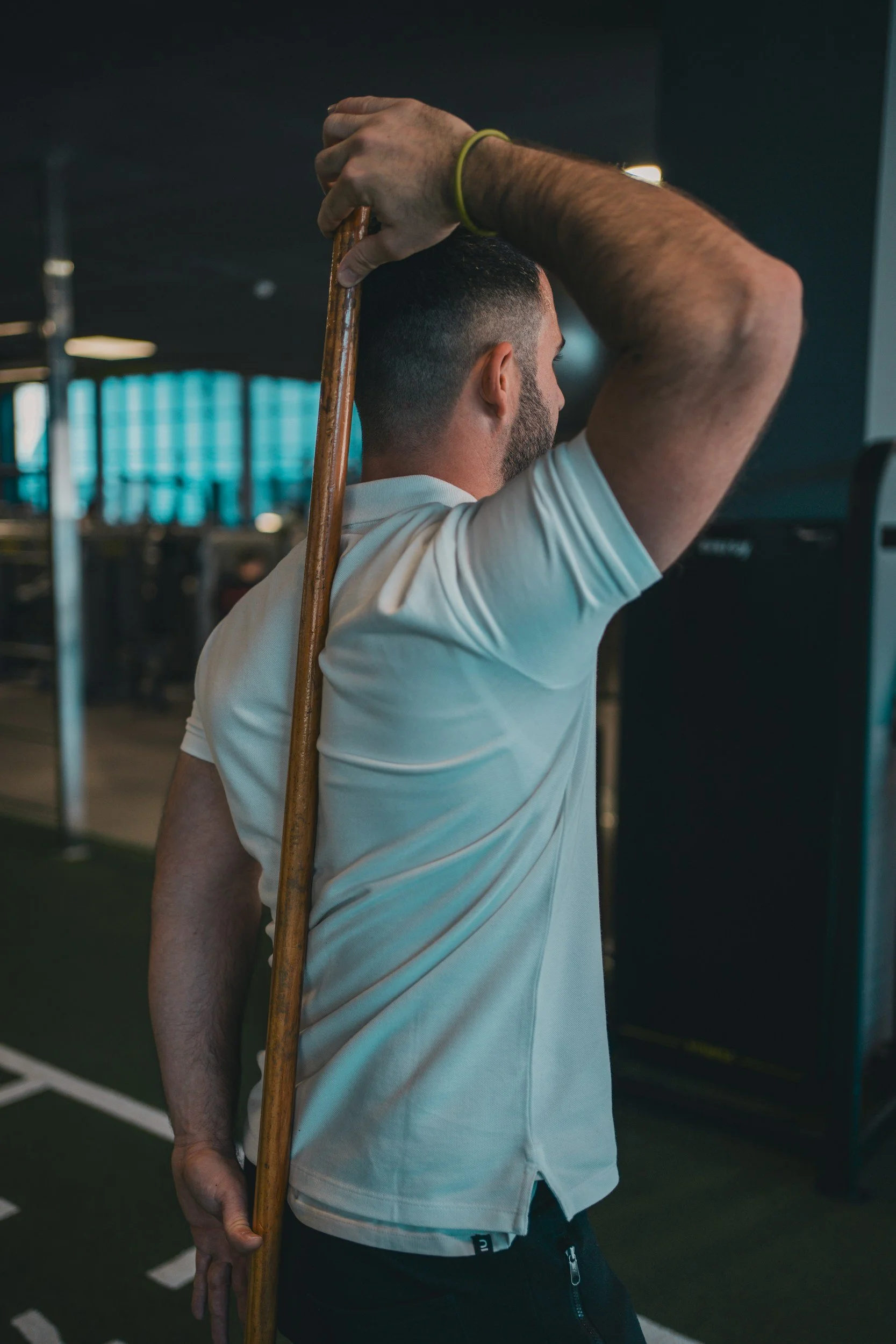
Once you know how to lock the spine in a neutral position, we must prove to your brain that it can hold that position under the stress of gravity.
Plank and Dead Bug Progressions: These exercises force the core to resist the spine's natural desire to arch toward the floor.
Hip Hinge Mechanics: If your spine is unstable, you can never lift with it again. We meticulously teach the hip hinge (Romanian deadlifts, kettlebell swings). By relying entirely on massive glute and hamstring power, we ensure the lumbar spine remains a rigid, unmoving lever during athletic and daily activities.
Build an Indestructible Core
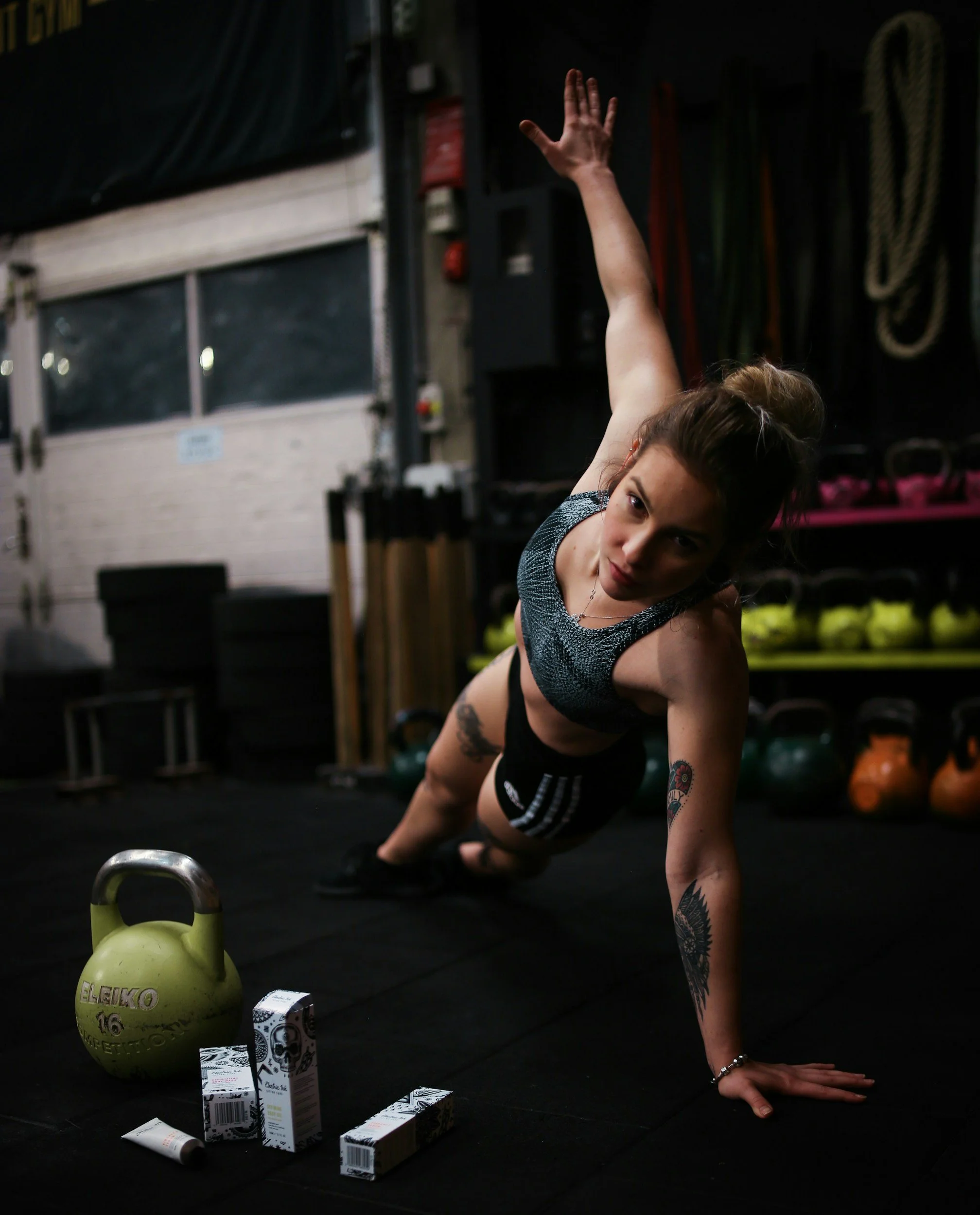
A slipped vertebra does not have to end your athletic career or force you into a risky spinal fusion. By mastering your pelvic tilt and building an impenetrable muscular brace, expert physical therapy can stabilize your spine and eradicate the nerve pain.
Book a comprehensive structural spinal assessment with our clinical team today. We are conveniently located inside the Prime Medical Centre at 68 Abell Street, offering elite diagnostic orthopedic care in Toronto Queen West.
Contact us to schedule your appointment:
Email: info@rehabmechanics.com
Phone: (416) 533-3900
About the Author
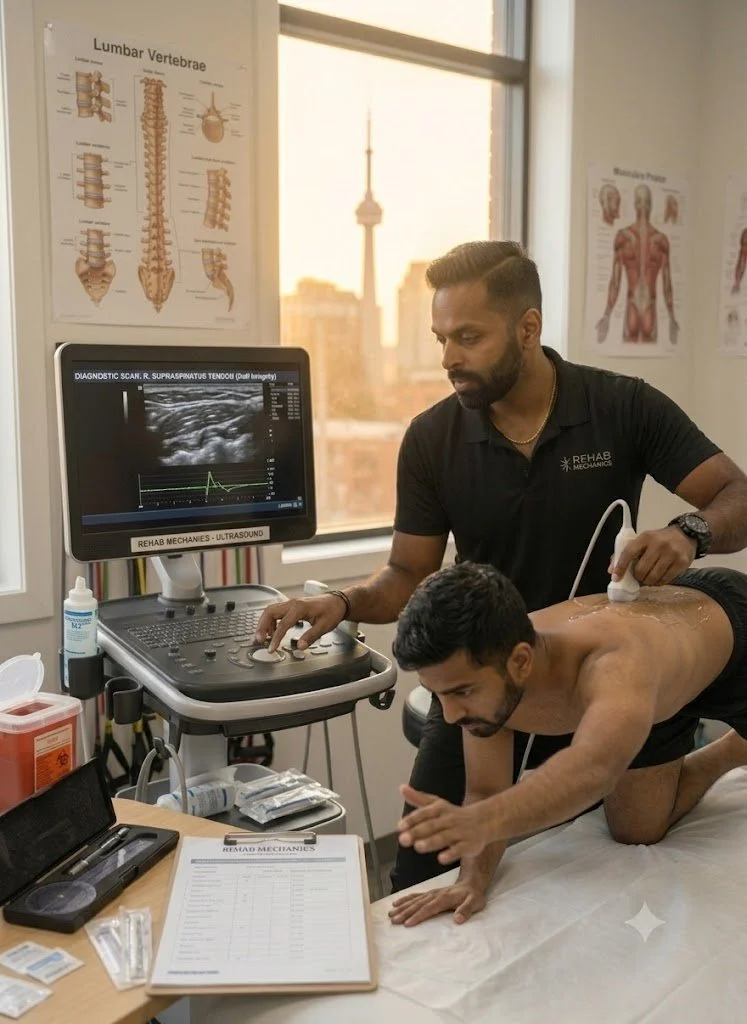
Mr. Sanjay Attwala (B.Sc., M.Sc., RPT) is a Registered Physiotherapist, clinical director, and the founder of Rehab Mechanics in Toronto. With over 15 years of registered clinical practice and a deep specialization in complex musculoskeletal rehabilitation, Sanjay synthesizes rigorous international academic training with advanced evidence-based therapeutics to guide his clinical practice and patient education initiatives.
Academic Background & Credentials
Master of Science (M.Sc.) in Physiotherapy – University of Keele, United Kingdom (2010).
Bachelor of Science (B.Sc.) – University of Waterloo, Ontario, Canada.
Registered Physiotherapist (RPT) – Regulated health professional in excellent standing with the College of Physiotherapists of Ontario (CPO).
Corporate Entity – Operating officially under the S. Attwala Physiotherapy Professional Corporation with a DBA of Rehab Mechanics.
Clinical Expertise & Philosophy
Sanjay’s clinical approach rejects passive symptom management in favor of identifying underlying biomechanical root causes. His diverse expertise spans advanced manual therapies, personalized corrective exercise prescription, and modern physical modalities. At the Rehab Mechanics Toronto Queen West clinic, he routinely diagnoses and treats complex conditions including:
Spinal & Discogenic Pathology – Cervical, thoracic, and lumbar disc injuries, sciatica, and sacroiliac joint (SIJ) dysfunction.
Upper & Lower Extremity Injuries – Rotator cuff tears, frozen shoulder, tennis/golfer’s elbow, carpal tunnel syndrome, and complex ankle/foot pathologies.
Perinatal & Pelvic Health Rehabilitation – Specialized assessment and rehabilitation protocols tailored specifically for women during pregnancy and the post-partum period, addressing pelvic girdle pain, diastasis recti, and core stabilization.
Specialized Rehabilitation – Pelvic health therapy, TMJ dysfunction, post-surgical rehabilitation (including Total Hip and Total Knee Replacements), and custom orthotics dispensing.
Shockwave Therapy: with advanced cutting edge technological devices to suit your needs.
Interdisciplinary Practice & Patient Care
Sanjay practices an integrated model of healthcare, working closely alongside medical doctors inside the Prime Medical Centre on Abell Street to streamline patient recovery pathways. He maintains a human-centric, communication-first clinical framework, ensuring that care remains fully customized rather than automated.
His clinical caseload encompasses a broad operational spectrum under Ontario's regulatory frameworks, including:
Motor Vehicle Accident (MVA) Claims – Rehabilitation navigating Ontario’s statutory accident benefits schedule.
Workplace Safety and Insurance Board (WSIB) – Occupational injury management and return-to-work screening.
Extended Health Care (EHC) & Private Practice – Multi-tier insurance coordination and long-term athletic development plans.
Commitment to Research & Community
Outside of his clinical caseload at Rehab Mechanics and his additional practice affiliations in Etobicoke, Sanjay is an active health writer and community educator. He translates contemporary peer-reviewed medical research into accessible, actionable guidance on his professional blog. As a dedicated father and husband, he mirrors his professional advice in his personal life, focusing on structural mobility, cross-training, and longevity to help his family and his community thrive. Naturally he takes he a keen interest in rehabilitation for women who are pregnant and post-partum.
Disclaimer: The information provided on this blog is intended for educational and informational purposes only. It does not constitute medical advice, diagnosis, or a treatment plan. Always seek the direct advice of a Registered Physiotherapist, physician, or other qualified health provider regarding any medical condition or physical rehabilitation routine.