
Why Do My Muscles "Pop" During a Massage? Understanding Fascial Adhesions
A "popping" or grinding sensation during a deep tissue massage is not your bones; it is the physical breaking apart of fibrotic scar tissue and fascial adhesions. Physiotherapy assists in managing this by utilizing targeted soft tissue release to restore smooth, frictionless movement between muscle layers.
The Patient’s Story
In the highly driven corporate and creative hubs of Liberty Village and the Financial District, carrying physical tension is almost a badge of honor. Many Toronto professionals endure months of chronic shoulder stiffness and upper back pain before finally booking a deep tissue massage or physiotherapy session.
During the treatment, as the therapist applies deep pressure across the shoulder blades or the back of the neck, patients often hear and feel a deeply unsettling "popping," "snapping," or "crunching" sensation beneath the skin. It feels as though the therapist is rolling over a bag of marbles or grinding directly on the bone.
Naturally, patients panic, assuming their joints are popping out of place or their muscles are tearing. However, at Rehab Mechanics in Queen West, we quickly reassure our patients that this gritty, popping sensation is actually a fantastic sign of structural progress. You are feeling the physical destruction of "fascial adhesions"—dense webs of scar tissue that have literally glued your muscle layers together. By understanding the biomechanics of fascia, we can systematically break down these restrictions and restore your fluid, pain-free mobility.
Structural / Biomechanical Analysis
To understand why your muscles sound like popping bubble wrap, we must perform a detailed anatomical analysis of your body's internal connective tissue network.
The Anatomy of Healthy Fascia
Fascia is a continuous, spiderweb-like layer of connective tissue that wraps around every single muscle, nerve, bone, and organ in your body.
The Gliding Surface: In a healthy body, fascia is highly hydrated, slippery, and elastic. It acts like biological WD-40, allowing adjacent muscles to glide effortlessly over one another when you move your arm or turn your neck.
The Fibrotic Web (The Adhesion)
When you sustain an injury, or when you force your body into a chronic, static posture (like "Tech Neck" over a laptop), the fascial system breaks down.
The Ischemic Response: Holding a poor posture starves the muscles of oxygen and blood flow (ischemia). The tissue becomes highly inflamed.
The Biological Glue: To protect the exhausted muscle, the body lays down thick, disorganized, chaotic collagen fibers. This scar tissue acts like biological glue. It physically binds the fascia to the underlying muscle, fusing them into a single, rigid block. This is a fascial adhesion (commonly known as a "knot").
The "Popping" Mechanism
The popping sound you hear during treatment is a direct mechanical release.
The Snapping Fibers: When a physiotherapist applies deep, transverse pressure across the adhesion, the rigid, glued-down collagen fibers are physically forced to break apart and separate. The audible "pop" or "crunch" is the sound of the fascial layers unsticking and snapping back into their proper, individual alignment.
The Joint Compression Pattern
If fascial adhesions are left untreated, they act like a straightjacket on the body. A massive adhesion in the upper trapezius will physically tether the shoulder blade to the neck, severely restricting your range of motion and forcefully compressing the underlying cervical facet joints, which frequently triggers severe tension headaches.
Clinical Red Flags
It is crucial to differentiate the safe release of fascial adhesions from true joint pathology. We look for these specific clinical signs:
The "Gristle" Texture: When palpitating the tissue, it feels thick, ropey, or like a bed of gravel beneath the skin, rather than a smooth muscle belly.
Absence of Joint Locking: The popping occurs within the fleshy part of the muscle, not deep inside the joint hinge itself.
Hyperalgesia: The tissue over the adhesion is exquisitely tender to the touch, feeling like a severe bruise even without recent trauma.
Referred Pain Patterns: Pressing aggressively on the "crunchy" adhesion sends a distinct, radiating ache to another part of the body (e.g., pressing the shoulder blade refers pain into the eye).
Post-Treatment Warmth: Following the mechanical release of the popping tissue, the area feels incredibly warm due to the massive, sudden influx of fresh blood flow (hyperemia).

Not that kind of lock and “joint” but you get the idea, right? Or at least we have your attention….
Primary Source Proof
Clinical evidence in manual therapy and fascial research strongly supports the use of mechanical pressure to break down fibrotic connective tissue, restoring tissue elasticity and reducing chronic musculoskeletal pain.
The Efficacy of Myofascial Release and Instrument-Assisted Soft Tissue Mobilization in Fibrotic Adhesions (National Institutes of Health)
Fascial Tissue Alterations in Chronic Myofascial Pain Syndrome: A Biomechanical Perspective (National Institutes of Health)
Extracorporeal Shockwave Therapy for the Disruption of Chronic Connective Tissue Fibrosis (National Institutes of Health)
The Rehab Mechanics Corrective Protocol
We do not just chase the knots; we systematically dismantle the fibrotic tissue and retrain your posture so the biological glue stops forming.
Phase 1 — Load Modification and Tissue Disruption
Instrument-Assisted Soft Tissue Mobilization (IASTM): Our physiotherapists utilize specialized medical-grade tools to shear across the fascial layers. This precisely targets and breaks down the dense scar tissue, creating the therapeutic "popping" that frees the muscle.
Extracorporeal Shockwave Therapy (ESWT): For deeply entrenched, chronic adhesions that resist manual pressure, we use high-energy acoustic waves to physically shatter the fibrotic calcifications at a cellular level.
Ischemic Compression: Applying sustained, deep pressure to the center of the trigger point to cut off local blood flow momentarily, triggering a massive, healing rush of fresh blood when the pressure is released.
Phase 2 — Pelvic Fortification
Correcting the Foundation: Adhesions in the upper back are often the result of a collapsing lower back. We train the deep core (transversus abdominis) to hold the pelvis in a neutral position, naturally stacking the ribcage and decompressing the upper body.
Phase 3 — Gait Retraining / Mechanics Correction
Thoracic Unlocking: Utilizing high-grade manual joint manipulations to forcefully restore thoracic extension. If the mid-back moves fluidly during your walking cycle, the fascial tissues are constantly stretched and mobilized naturally, preventing them from gluing together.
Scapular Fluidity: Retraining the serratus anterior and lower trapezius muscles to ensure the shoulder blade glides smoothly over the ribcage during arm swing, rather than grinding against it.
Phase 4 — Return-to-Activity Strategy
Eccentric Tissue Loading: We prescribe heavy, slow eccentric exercises (the lowering phase of a lift). This heavy tension forces the newly freed fascial tissues to lay down fresh collagen in perfectly parallel, elastic lines.
Dynamic Flexibility Protocols: Implementing daily, movement-based mobility routines for the office to ensure the fascial layers remain hydrated and sliding freely throughout a 10-hour workday.
Related Conditions We Treat
Myofascial Pain Syndrome
Chronic Tension Headaches
Thoracic Outlet Syndrome
Adhesive Capsulitis (Frozen Shoulder)
Cervicogenic Dizziness
Iliotibial (IT) Band Friction Syndrome
Related Blogs
"Why Do My Deep Muscle Knots Keep Coming Back After a Massage?"
"Can Muscle Knots Become Permanent? Understanding Tangled Fascia"
"The 'Tech Neck' Trigger Point: How Posture Creates Unbreakable Knots"
Services Used in Treatment
Manual Therapy
Soft Tissue Release
Myofascial Release
Shockwave Therapy
Gait Retraining
Neuromuscular Re-Education
Custom Orthotics
Strengthening Programs
FAQ Section
1. Can physiotherapy assist in managing chronic fascial adhesions?
Yes. Physiotherapy supports recovery by utilizing advanced manual techniques and modalities to physically break down restrictive scar tissue, helping to optimize movement between the muscle layers.
2. Is it safe when my muscles pop or grind during a massage?
Yes. As long as it is occurring in the soft tissue and not the joint hinge, this popping is the necessary mechanical release of fibrotic tissue. We help reduce tissue irritation by ensuring the release is targeted and controlled.
3. Why do I feel sore the day after a deep fascial release?
Breaking down adhesions triggers a mild, localized inflammatory response as the body clears away the broken scar tissue. We support recovery by guiding you through active mobility to flush the area with fresh blood.
4. How does poor posture cause these adhesions to form?
Chronic slouching starves your muscles of oxygen. The body attempts to protect the strained tissue by laying down thick, restrictive collagen fibers. We address contributing factors by aggressively correcting your spinal posture.
5. Will stretching get rid of the popping feeling?
Passive stretching alone is rarely enough to break severe fibrotic adhesions; the tissue is simply too dense. We utilize targeted manual therapy and shockwave to assist in managing the mechanical restriction.
6. Can shockwave therapy help reduce thick muscle knots?
Yes. Shockwave therapy utilizes acoustic energy to help break down deeply entrenched fascial restrictions, supporting local blood flow and cellular repair in areas that resist manual massage.
7. Why does my neck feel lighter after treating my shoulder blade?
Fascia is a continuous web. An adhesion in the shoulder blade physically yanks the tissue all the way up into the neck. Releasing it helps reduce mechanical overload on the cervical spine.
8. How long does it take to restore healthy fascial tissue?
While immediate mobility improvements often occur after a single session of release, training the body to lay down healthy, elastic collagen typically requires several weeks of targeted neuromuscular re-education.
How Physiotherapy Helps
Reducing tissue irritation through targeted fibrotic release
Correcting pelvic drop to optimize total-body fascial tension
Improving cadence to naturally mobilize tissues during gait
Strengthening stabilizers to prevent postural fatigue and spasm
Reducing mechanical overload on restricted muscle groups
Improving foot mechanics to balance the upward kinetic chain
Contact Us Today — All you have to lose is the pain
Book a comprehensive biomechanical assessment with our clinical team today. Located inside the Prime Medical Centre at 68 Abell Street, Queen West.
Email: info@rehabmechanics.com Phone: (416) 533-3900
About the Author
Mr. Sanjay Attwala (B.Sc., M.Sc., RPT) is a Registered Physiotherapist, clinical director, and the founder of Rehab Mechanics in Toronto. With over 15 years of registered clinical practice and a deep specialization in complex musculoskeletal rehabilitation, Sanjay synthesizes rigorous international academic training with advanced evidence-based therapeutics to guide his clinical practice and patient education initiatives.
Academic Background & Credentials
Master of Science (M.Sc.) in Physiotherapy – University of Keele, United Kingdom (2010).
Bachelor of Science (B.Sc.) – University of Waterloo, Ontario, Canada.
Registered Physiotherapist (RPT) – Regulated health professional in excellent standing with the College of Physiotherapists of Ontario (CPO).
Corporate Entity – Operating officially under the S. Attwala Physiotherapy Professional Corporation with a DBA of Rehab Mechanics.
Clinical Expertise & Philosophy
Sanjay’s clinical approach rejects passive symptom management in favor of identifying underlying biomechanical root causes. His diverse expertise spans advanced manual therapies, personalized corrective exercise prescription, and modern physical modalities. At the Rehab Mechanics Toronto Queen West clinic, he routinely diagnoses and treats complex conditions including:
Spinal & Discogenic Pathology – Cervical, thoracic, and lumbar disc injuries, sciatica, and sacroiliac joint (SIJ) dysfunction.
Upper & Lower Extremity Injuries – Rotator cuff tears, frozen shoulder, tennis/golfer’s elbow, carpal tunnel syndrome, and complex ankle/foot pathologies.
Perinatal & Pelvic Health Rehabilitation – Specialized assessment and rehabilitation protocols tailored specifically for women during pregnancy and the post-partum period, addressing pelvic girdle pain, diastasis recti, and core stabilization.
Specialized Rehabilitation – Pelvic health therapy, TMJ dysfunction, post-surgical rehabilitation (including Total Hip and Total Knee Replacements), and custom orthotics dispensing.
Shockwave Therapy: with advanced cutting edge technological devices to suit your needs.
Interdisciplinary Practice & Patient Care
Sanjay practices an integrated model of healthcare, working closely alongside medical doctors inside the Prime Medical Centre on Abell Street to streamline patient recovery pathways. He maintains a human-centric, communication-first clinical framework, ensuring that care remains fully customized rather than automated.
His clinical caseload encompasses a broad operational spectrum under Ontario's regulatory frameworks, including:
Motor Vehicle Accident (MVA) Claims – Rehabilitation navigating Ontario’s statutory accident benefits schedule.
Workplace Safety and Insurance Board (WSIB) – Occupational injury management and return-to-work screening.
Extended Health Care (EHC) & Private Practice – Multi-tier insurance coordination and long-term athletic development plans.
Commitment to Research & Community
Outside of his clinical caseload at Rehab Mechanics and his additional practice affiliations in Etobicoke, Sanjay is an active health writer and community educator. He translates contemporary peer-reviewed medical research into accessible, actionable guidance on his professional blog. As a dedicated father and husband, he mirrors his professional advice in his personal life, focusing on structural mobility, cross-training, and longevity to help his family and his community thrive. Naturally he takes he a keen interest in rehabilitation for women who are pregnant and post-partum.
Disclaimer
The information provided on this blog is intended for educational and informational purposes only. It does not constitute medical advice, diagnosis, or a treatment plan. Always seek the direct advice of a Registered Physiotherapist, physician, or other qualified health provider regarding any medical condition or physical rehabilitation routine.
Google MyBusiness for Instant Posts, Photos, Updates, Offers and Communication
Be sure to check out Rehab Mechanics’ Google My Business Profile for daily posts, location and directions in addition to the directions on the website!











We love interacting with prospective and current patients, and love honest feedback and even constructive criticism and areas for improvement!
Can a Herniated Disc in My Lower Back Heal on Its Own Without Surgery?
Yes. Through a biological process called spontaneous resorption, the body's immune system can literally "eat" the herniated disc material. Physiotherapy accelerates this by utilizing directional preference therapy and spinal decompression to centralize nerve pain while the disc structurally heals.
The Terror of the MRI Report
From this….
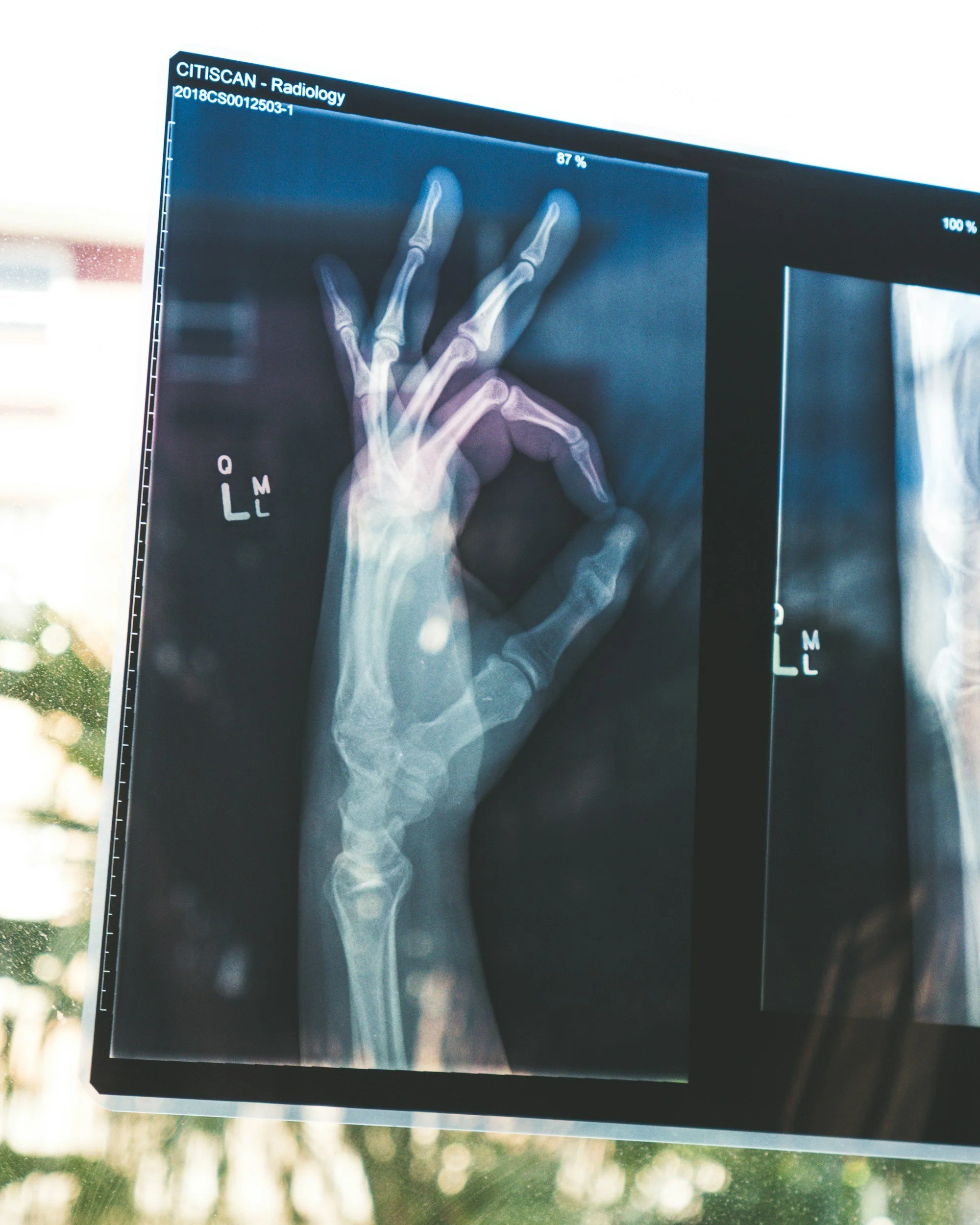
To this with Rehab Mechanics
There are few diagnoses in modern medicine that strike as much fear into patients as a "herniated disc." If you have been struggling with a sharp, burning pain shooting from your lower back, down your glute, and into your calf (sciatica), you likely pushed for an MRI.
When the radiologist's report returns with terrifying words like "disc extrusion," "protrusion," or "sequestration," the immediate, panic-inducing assumption is that your spine is permanently broken. Patients assume that the piece of disc material currently crushing their spinal nerve will sit there forever unless a neurosurgeon physically cuts it out.
At Rehab Mechanics in Queen West, we specialize in advanced spinal pathology, and we want to deliver a message of profound clinical hope: your body has the miraculous ability to heal itself.
While severe neurological deficits (like losing control of your bowel/bladder or the ability to lift your foot) represent absolute surgical emergencies, the vast majority of severe lumbar disc herniations can naturally regress and disappear. By utilizing highly specific biomechanical physiotherapy, we can manage the crushing nerve pain while your immune system actively "eats" the herniated disc material, keeping you far away from the operating room.
Structural Analysis: The Biology of Disc Resorption
To understand how a "slipped disc" can disappear, we must dive deep into the cellular biology of your immune system and the unique anatomy of the intervertebral disc.
The Anatomy of the Herniation
Your spinal discs act as shock absorbers between your vertebrae.
The Nucleus Pulposus: The soft, highly pressurized, jelly-like center of the disc.
The Annulus Fibrosus: The tough, fibrous outer ring that holds the jelly in place.
When you bend forward heavily or lift with poor posture, the massive pressure forces the inner jelly backward. Over time, it tears through the outer ring and squirts out into the spinal canal. This is a disc herniation. The extruded jelly physically crushes the adjacent sciatic nerve root.
The Miracle of Spontaneous Resorption
For decades, surgeons believed that once the jelly was out, it stayed out. Modern MRI studies have proven this completely false. In fact, massive disc extrusions are more likely to heal spontaneously than small bulges. Why? Because of an aggressive immune response.
The Immune System Attack
The jelly inside your spinal disc is a closed system; it has never been exposed to your bloodstream.
The Alien Invader: When the disc herniates and the jelly bursts into the highly vascularized spinal canal, your body's immune system does not recognize it. It views the disc material as a hostile, foreign invader, like a virus or a splinter.
The Macrophage Swarm: The immune system immediately launches a massive inflammatory attack. It sends thousands of specialized white blood cells called macrophages to the site.
Phagocytosis (The Cleanup): The word macrophage literally means "big eater." These cells swarm the extruded disc material, secrete enzymes to break it down, and physically digest (phagocytize) the herniated jelly.
The Shrinking Mass: Over a period of weeks to months, the immune system literally eats the herniation away. The mass shrinks, pulls away from the spinal nerve, and the excruciating sciatica vanishes.
Identifying the Clinical Timeline: Mechanical vs. Chemical Pain
While the immune system is eating the disc, you are still in severe pain. We must manage the symptoms during the biological healing window.
Chemical Pain (Weeks 1-4): The initial, blinding pain is heavily driven by the massive chemical inflammation of the immune attack itself. This pain is constant and severe.
Mechanical Pain (Weeks 4-12): As the inflammation settles, the pain becomes purely mechanical—meaning it only hurts when you move into positions that pinch the remaining disc material against the nerve.
Primary Source Proof: Spontaneous Disc Resorption
Extensive neurological and orthopedic research universally confirms that the phenomenon of spontaneous regression of herniated disc tissue is highly prevalent, making conservative physiotherapy the mandated first-line treatment over early surgical intervention.
Note: The link above directs to external, peer-reviewed medical literature demonstrating our commitment to evidence-based practice and international clinical guidelines for spinal rehabilitation.
Clinical evidence indicates that lumbar disc herniations may undergo spontaneous resorption with conservative management, with reported overall rates of approximately two-thirds to 70%. This process most commonly occurs within the first three to six months and is mediated by inflammatory activity, neovascularization, macrophage infiltration and phagocytosis, enzymatic matrix degradation, and related cellular mechanisms such as apoptosis and autophagy.
The likelihood of spontaneous regression varies substantially according to herniation morphology. Sequestered fragments demonstrate the highest probability of regression, reported at approximately 88% to 96%, followed by extrusions at approximately 66% to 70%, protrusions at approximately 38% to 41%, and disc bulges at approximately 13%.
The principal biological mechanism appears to involve immune recognition of exposed nucleus pulposus material as foreign tissue, prompting inflammatory recruitment and macrophage-mediated breakdown of the herniated fragment. Larger, extruded, and sequestered disc fragments tend to provoke a stronger inflammatory and vascular response, which may explain their greater tendency toward resorption. Although the timeline for radiological resolution varies among patients, clinical improvement often precedes complete imaging-confirmed regression.
For a more detailed discussion of the underlying physiological mechanisms, see the review on spontaneous resorption of lumbar disc herniation available through NIH PubMed Central. For population-level incidence data, refer to the published meta-analyses on the incidence of spontaneous resorption of lumbar disc herniation indexed in PubMed.
The Rehab Mechanics Decompression Protocol
We cannot make your immune system eat the disc faster, but we can mechanically alter the pressure in your spine to pull the disc away from the nerve and stop the agonizing leg pain while nature does its work.
Phase 1: Centralization and Directional Preference
Our absolute first priority is to "centralize" the pain—meaning we want to draw the burning pain out of your calf/foot and move it back up to your lower back.
The McKenzie Method: We utilize highly specific, repeated movements to alter the hydraulic pressure inside the disc. For a posterior herniation, we typically use repeated lumbar extensions (like a sloppy push-up or "cobra" pose). This movement physically milks the remaining disc jelly forward, away from the crushed nerve root.
Lateral Shift Correction: If the disc is pushing you completely crooked, we manually glide your hips back under your shoulders to safely clear the mechanical block before extending the spine.
Phase 2: Spinal Unloading and Core Bracing
We must protect the healing tear in the outer disc wall.
Spinal Decompression: Utilizing targeted manual traction to physically separate the vertebrae, relieving the ischemic (blood-starved) nerve roots.
Intra-Abdominal Pressure (IAP): We teach you how to fire your deep transversus abdominis to create a biological weight belt. When contracted, this muscle rigidifies the spine, preventing the micro-movements that aggravate the healing disc wall.
Phase 3: Hip Hinge Mechanics and Functional Return
To ensure you never herniate a disc again, we must fundamentally change how you move through the world.
The Hip Hinge: We meticulously teach you how to bend forward by pushing your hips back (like a deadlift), rather than rounding your lower spine. By relying entirely on massive glute and hamstring power, we ensure the lumbar spine remains a rigid, unmoving lever during athletic and daily lifting activities.
Fear-Avoidance Eradication: We systematically expose you to the movements you fear most, proving to your brain that your spine is healed, strong, and capable of handling load.
Trust Your Body's Capacity to Heal
A herniated disc is a severe injury, but it is not a permanent sentence. By managing the mechanical pressure on your nerves and allowing your immune system to aggressively resorb the herniated material, expert physical therapy can guide you to a complete recovery without spinal surgery.
Book an immediate, comprehensive spinal diagnostic assessment with our clinical team today. We are conveniently located inside the Prime Medical Centre at 68 Abell Street, offering elite, rapid-response orthopedic care in Toronto Queen West.
Contact us to schedule your appointment:
Email: info@rehabmechanics.com
Phone: (416) 533-3900
About the Author
Mr. Sanjay Attwala (B.Sc., M.Sc., RPT) is a Registered Physiotherapist, clinical director, and the founder of Rehab Mechanics in Toronto. With over 15 years of registered clinical practice and a deep specialization in complex musculoskeletal rehabilitation, Sanjay synthesizes rigorous international academic training with advanced evidence-based therapeutics to guide his clinical practice and patient education initiatives.
Academic Background & Credentials
Master of Science (M.Sc.) in Physiotherapy – University of Keele, United Kingdom (2010).
Bachelor of Science (B.Sc.) – University of Waterloo, Ontario, Canada.
Registered Physiotherapist (RPT) – Regulated health professional in excellent standing with the College of Physiotherapists of Ontario (CPO).
Corporate Entity – Operating officially under the S. Attwala Physiotherapy Professional Corporation with a DBA of Rehab Mechanics.
Clinical Expertise & Philosophy
Sanjay’s clinical approach rejects passive symptom management in favor of identifying underlying biomechanical root causes. His diverse expertise spans advanced manual therapies, personalized corrective exercise prescription, and modern physical modalities. At the Rehab Mechanics Toronto Queen West clinic, he routinely diagnoses and treats complex conditions including:
Spinal & Discogenic Pathology – Cervical, thoracic, and lumbar disc injuries, sciatica, and sacroiliac joint (SIJ) dysfunction.
Upper & Lower Extremity Injuries – Rotator cuff tears, frozen shoulder, tennis/golfer’s elbow, carpal tunnel syndrome, and complex ankle/foot pathologies.
Perinatal & Pelvic Health Rehabilitation – Specialized assessment and rehabilitation protocols tailored specifically for women during pregnancy and the post-partum period, addressing pelvic girdle pain, diastasis recti, and core stabilization.
Specialized Rehabilitation – Pelvic health therapy, TMJ dysfunction, post-surgical rehabilitation (including Total Hip and Total Knee Replacements), and custom orthotics dispensing.
Shockwave Therapy: with advanced cutting edge technological devices to suit your needs.
Interdisciplinary Practice & Patient Care
Sanjay practices an integrated model of healthcare, working closely alongside medical doctors inside the Prime Medical Centre on Abell Street to streamline patient recovery pathways. He maintains a human-centric, communication-first clinical framework, ensuring that care remains fully customized rather than automated.
His clinical caseload encompasses a broad operational spectrum under Ontario's regulatory frameworks, including:
Motor Vehicle Accident (MVA) Claims – Rehabilitation navigating Ontario’s statutory accident benefits schedule.
Workplace Safety and Insurance Board (WSIB) – Occupational injury management and return-to-work screening.
Extended Health Care (EHC) & Private Practice – Multi-tier insurance coordination and long-term athletic development plans.
Commitment to Research & Community
Outside of his clinical caseload at Rehab Mechanics and his additional practice affiliations in Etobicoke, Sanjay is an active health writer and community educator. He translates contemporary peer-reviewed medical research into accessible, actionable guidance on his professional blog. As a dedicated father and husband, he mirrors his professional advice in his personal life, focusing on structural mobility, cross-training, and longevity to help his family and his community thrive. Naturally he takes he a keen interest in rehabilitation for women who are pregnant and post-partum.
Disclaimer: The information provided on this blog is intended for educational and informational purposes only. It does not constitute medical advice, diagnosis, or a treatment plan. Always seek the direct advice of a Registered Physiotherapist, physician, or other qualified health provider regarding any medical condition or physical rehabilitation routine.