Is the Lateral Pterygoid Muscle Causing My Chronic Jaw Pain and Headaches?
Chronic jaw clicking and facial pressure are frequently driven by spasms in the lateral pterygoid muscle. Physiotherapy assists in managing TMJ dysfunction through intra-oral release and postural correction, addressing the contributing cervical factors to help reduce tissue irritation.
The Patient's Story
In the intense, screen-dominated work environments of Liberty Village and Toronto's Financial District, stress manifests physically. For countless professionals, the stress of looming deadlines and hours spent hunched over laptops translates directly into chronic, unconscious teeth clenching (bruxism).
Patients often arrive at Rehab Mechanics exhausted and frustrated. They complain of a constant, dull pressure deep in their cheeks, chronic tension headaches that wrap around their temples, and a jaw that loudly "clicks" or "pops" every time they try to eat a bagel or an apple. Many have visited dentists and received night guards, which protect their teeth from grinding but do not always address the deep muscular tension. Some have even been misdiagnosed with sinus issues.
The reality is that these patients are suffering from Temporomandibular Joint (TMJ) Dysfunction, and a primary culprit is often a tiny, highly overworked muscle hidden deep inside the skull: the Lateral Pterygoid. At our clinic in Queen West, we understand that you cannot easily access this muscle from the outside. By utilizing specialized intra-oral physical therapy and addressing the cervical mechanics driving the tension, we can assist in managing the jaw function and support the recovery of facial comfort.
Structural / Biomechanical Analysis
To understand why your jaw clicks and your head aches, we must perform a detailed biomechanical analysis of the TMJ architecture and the specific muscle responsible for opening your mouth.
The Anatomy of the TMJ
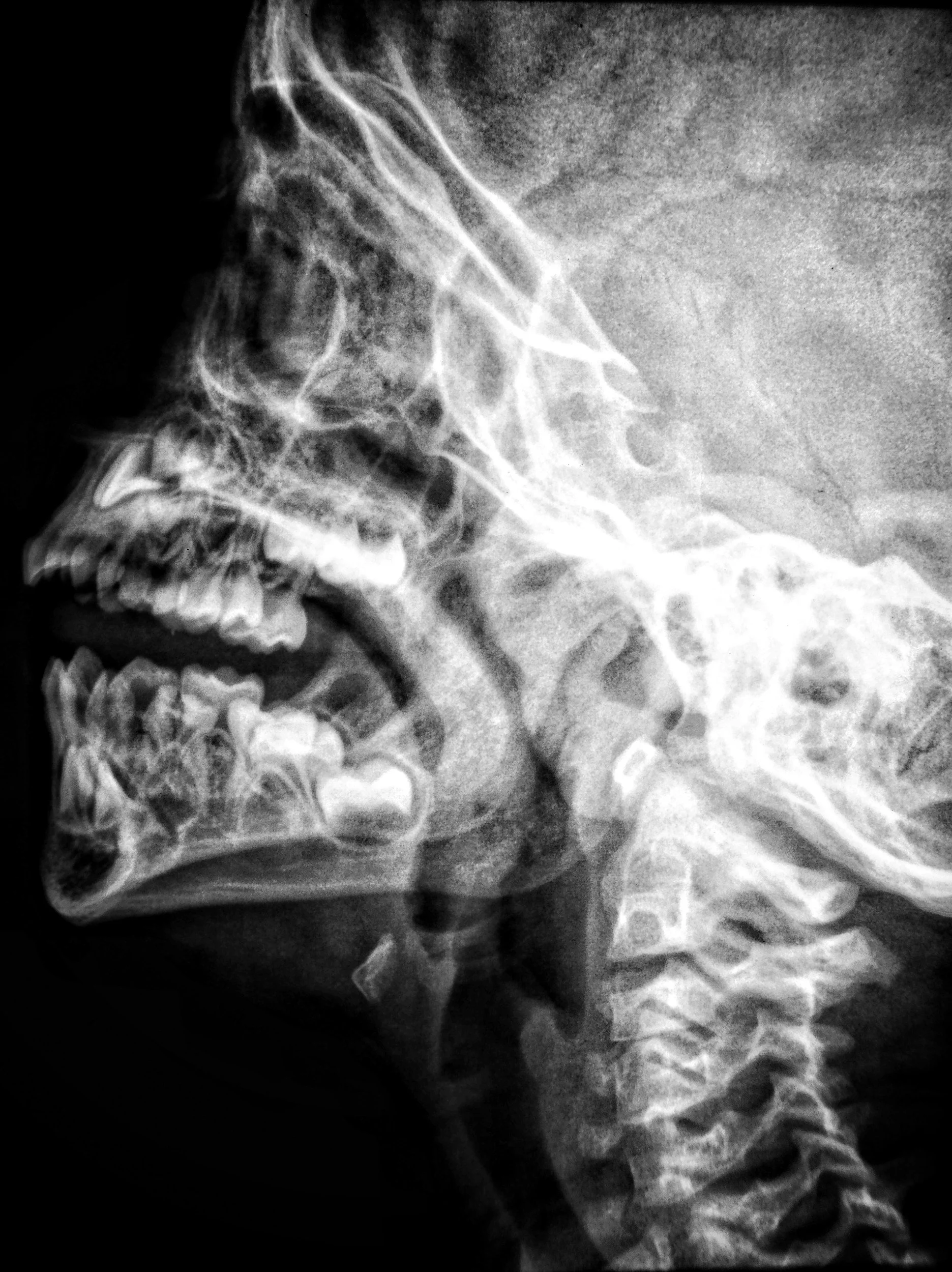
Your jaw (mandible) connects to your skull at the Temporomandibular Joint, located just in front of your ear.
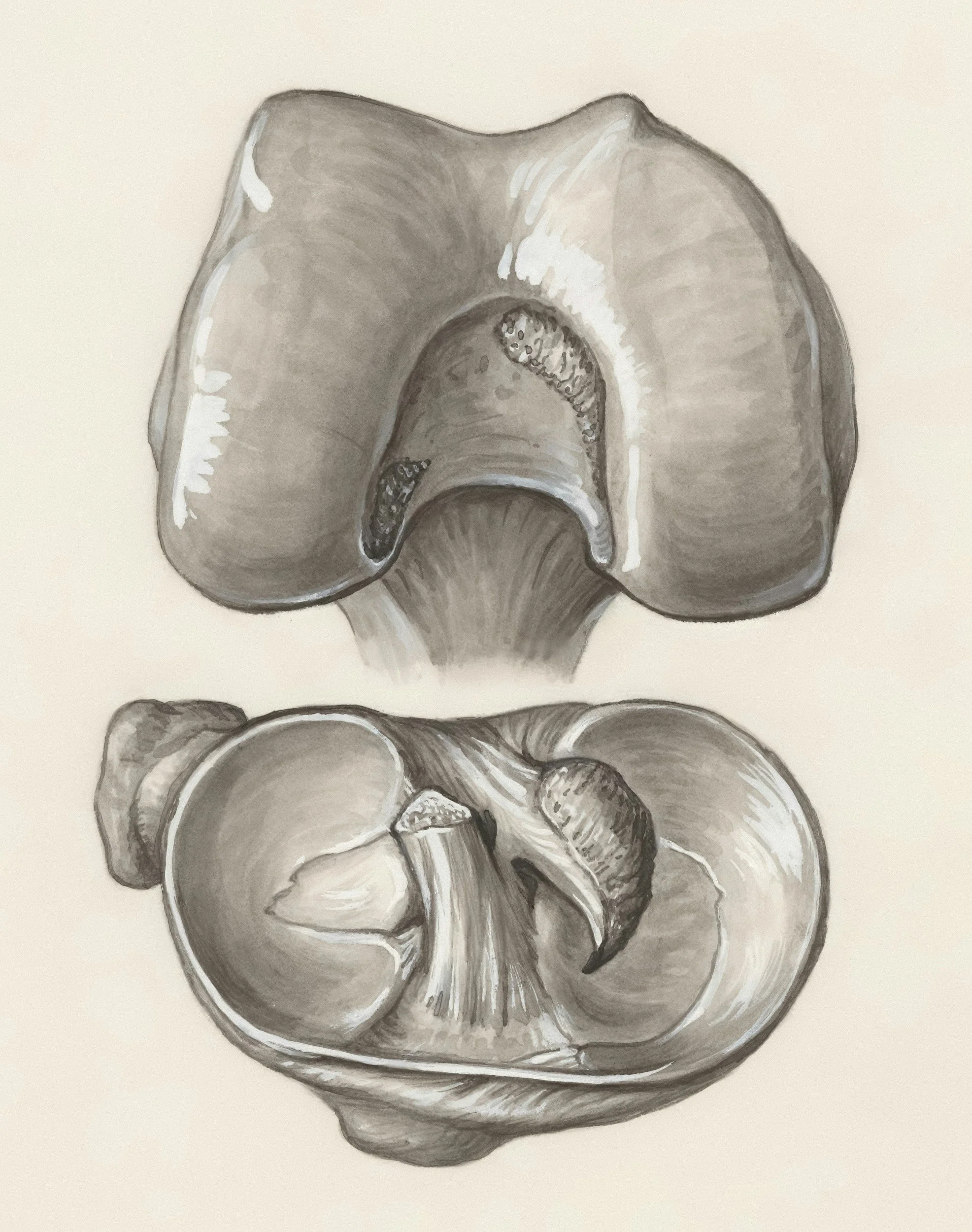
The Articular Disc: Inside this joint space is a small, biconcave cartilaginous disc. It acts as a crucial shock absorber, allowing the jaw bone to hinge and glide smoothly when you open your mouth.
The Lateral Pterygoid Muscle
While the massive masseter and temporalis muscles close your jaw, the lateral pterygoid is heavily involved in opening it and moving it side-to-side.
The Hidden Location: It sits deep inside your skull, running horizontally from the sphenoid bone directly into the neck of the jawbone and—crucially—attaching directly to the articular disc itself.
The Biomechanical Breakdown (The Click)
When you clench your teeth from stress or adopt poor posture, the lateral pterygoid becomes exhausted, hypertonic, and locks into a spasm.
Disc Displacement: Because the spasming muscle is attached to the articular disc, it can pull the disc forward, out of its proper alignment.
The "Pop": When you try to open your mouth, the jaw bone has to shift over this displaced disc to open fully. This structural friction causes the painful "click" or "pop" you hear and feel.
The Restriction: If the muscle gets tight enough, the disc can become stuck in front of the joint, physically restricting the jaw from opening normally.
The "Tech Neck" Trigger
The jaw does not operate in isolation; it is heavily influenced by the posture of your neck.
When your head translates forward to look at a monitor ("Tech Neck"), it alters the resting tension of the muscles on the front of your throat.
This altered tension forces the closing muscles of your jaw to overwork just to keep your mouth balanced against gravity. The muscular system of the face exhausts itself, contributing to referred pressure into the temples and behind the eyes.
Clinical Red Flags
TMJ dysfunction driven by pterygoid spasm presents with highly specific mechanical signs:
Asymmetrical Opening (Deviation): When looking in a mirror, your jaw opens in a distinct "C" or "S" shape, zig-zagging rather than dropping perfectly straight down.
Painful Clicking: A sharp, audible pop localized just in front of the ear canal during chewing or yawning.
Deep Facial Aching: A dull, unrelenting pressure deep behind the cheekbones that is worse in the morning (from nighttime clenching) or at the end of a long workday.
Ear Fullness: Because the TMJ is millimeters from the ear canal, severe muscle tension can cause a sensation that the ear needs to "pop."
Primary Source Proof
Review the Clinical Evidence on PubMed supporting intra-oral manual therapy and postural correction for TMJ disorders:
The Effectiveness of Intra-Oral Manual Therapy in the Management of Temporomandibular Disorders (National Institutes of Health)
The Relationship Between Forward Head Posture and Temporomandibular Joint Dysfunction (National Institutes of Health)
Myofascial Trigger Points in the Lateral Pterygoid: Clinical Implications for Face and Jaw Pain (National Institutes of Health)
The Rehab Mechanics Corrective Protocol
Addressing the lateral pterygoid requires a highly specialized approach. We focus on internal joint mechanics alongside total-body postural correction.
Phase 1 — Intra-Oral Release and Decompression
Internal Pterygoid Release: Using sterile, medical-grade gloves, our specially trained physiotherapist will carefully access the muscles inside your mouth. We apply precise, sustained pressure to the lateral pterygoid belly to help release the dense spasm.
Joint Mobilization: Utilizing gentle, downward manual glides to the mandible to physically assist the TMJ capsule, supporting the articular disc space in returning to its proper anatomical position.
Phase 2 — Pelvic and Cervical Fortification
Fixing the Foundation: We cannot support the jaw if the head is slouched forward. We strengthen the deep core to stabilize the pelvis, providing an upright foundation for the entire spine.
Deep Cervical Flexor Activation: Utilizing specific biofeedback drills to re-awaken the tiny muscles in the front of the neck, helping to pull the head back over the shoulders and relieve downward tension on the jaw.
Phase 3 — Gait Retraining / Mechanics Correction
Jaw Tracking Re-Education: We utilize specific mirror-feedback techniques and tongue-positioning exercises to train your neuromuscular system to open the jaw symmetrically, helping to reduce the clicking.
Thoracic Spine Mobility: Using targeted manual therapy to support extension in the mid-back, ensuring fluid upper-body mechanics that assist in optimal head posture.
Phase 4 — Return-to-Activity Strategy
Habit Modification: Providing actionable coaching to address micro-traumas, including sleep posture correction and teaching the optimal "rest position" for the jaw (lips together, teeth apart, tongue resting lightly on the roof of the mouth).
Stress Load Management: Integrating diaphragmatic breathing techniques to actively support the nervous system, helping reduce the physiological drive to clench the jaw during high-stress scenarios.
Related Conditions We Treat
Temporomandibular Joint (TMJ) Dysfunction
Cervicogenic Headaches
Tension-Type Headaches
Myofascial Pain Syndrome
Cervical Radiculopathy
Bruxism (Teeth Grinding) Tension
Related Blogs
"Are Your Chronic Migraines Actually Being Caused by Your Neck?"
"The 'Tech Neck' Trigger Point: How Posture Creates Unbreakable Knots"
"Can Physiotherapy Cure Chronic Tension Headaches from Desk Work?"
Services Used in Treatment
Manual Therapy
Soft Tissue Release
Myofascial Release
Shockwave Therapy
Gait Retraining
Neuromuscular Re-Education
Custom Orthotics
Strengthening Programs
FAQ Section
1. Can physiotherapy assist in managing TMJ pain and clicking?
Yes. Physiotherapy supports recovery by utilizing specialized manual therapy to address the muscles controlling the jaw, and providing exercises to help optimize movement and tracking of the joint.
2. How do you address a muscle inside the mouth?
Our specially trained physiotherapists use a sterile glove to gently access the lateral pterygoid muscle from inside the cheek. We apply sustained, careful pressure to help reduce tissue irritation and release chronic tension.
3. Will addressing my neck posture help my jaw pain?
Yes. Forward head posture alters the tension of the muscles attached to your jaw, forcing it to overwork. We address contributing factors by strengthening cervical stabilizers to help improve head alignment.
4. Is jaw clicking always a sign of TMJ dysfunction?
Painless clicking can be common, but if the clicking causes discomfort or restriction, it indicates a mechanical tracking issue. We assist in managing this to optimize joint function.
5. Can tight jaw muscles cause referred pressure in my ears?
Yes. The muscles and ligaments of the TMJ are anatomically very close to the ear structures. Severe tension can lead to referred symptoms. We focus on soft tissue release to help reduce this pressure.
6. Do I still need to wear my dental night guard?
Yes. A night guard is crucial for protecting your teeth from the physical damage of grinding. Physiotherapy complements this by helping address the muscular factors that drive the clenching behavior.
7. How does stress affect my TMJ?
Stress often leads to unconscious clenching. We support recovery by integrating diaphragmatic breathing and neuromuscular re-education to help address contributing factors and relax the facial muscles.
8. How long does it take to see progress with TMJ physiotherapy?
Many patients experience relief from severe pressure after the first few sessions of intra-oral release, while building the postural endurance to maintain comfort requires consistent training over several weeks.
How Physiotherapy Helps
Reducing tissue irritation through internal myofascial release
Correcting pelvic drop to support global spinal posture
Improving cadence and upper body fluid dynamics
Strengthening stabilizers in the neck and mid-back
Reducing mechanical overload on the TMJ articular disc
Improving foot mechanics to anchor the kinetic chain
Contact Us Today — All you have to lose is the pain
Book a comprehensive biomechanical assessment with our clinical team today. Located inside the Prime Medical Centre at 68 Abell Street, Queen West.
Email: info@rehabmechanics.com Phone: (416) 533-3900
About the Author
Mr. Sanjay Attwala (B.Sc., M.Sc., RPT) is a Registered Physiotherapist, clinical director, and the founder of Rehab Mechanics in Toronto. With over 15 years of registered clinical practice and a deep specialization in complex musculoskeletal rehabilitation, Sanjay synthesizes rigorous international academic training with advanced evidence-based therapeutics to guide his clinical practice and patient education initiatives.
Academic Background & Credentials
Master of Science (M.Sc.) in Physiotherapy – University of Keele, United Kingdom (2010).
Bachelor of Science (B.Sc.) – University of Waterloo, Ontario, Canada.
Registered Physiotherapist (RPT) – Regulated health professional in excellent standing with the College of Physiotherapists of Ontario (CPO).
Corporate Entity – Operating officially under the S. Attwala Physiotherapy Professional Corporation with a DBA of Rehab Mechanics.
Clinical Expertise & Philosophy
Sanjay’s clinical approach rejects passive symptom management in favor of identifying underlying biomechanical root causes. His diverse expertise spans advanced manual therapies, personalized corrective exercise prescription, and modern physical modalities. At the Rehab Mechanics Toronto Queen West clinic, he routinely diagnoses and treats complex conditions including:
Spinal & Discogenic Pathology – Cervical, thoracic, and lumbar disc injuries, sciatica, and sacroiliac joint (SIJ) dysfunction.
Upper & Lower Extremity Injuries – Rotator cuff tears, frozen shoulder, tennis/golfer’s elbow, carpal tunnel syndrome, and complex ankle/foot pathologies.
Perinatal & Pelvic Health Rehabilitation – Specialized assessment and rehabilitation protocols tailored specifically for women during pregnancy and the post-partum period, addressing pelvic girdle pain, diastasis recti, and core stabilization.
Specialized Rehabilitation – Pelvic health therapy, TMJ dysfunction, post-surgical rehabilitation (including Total Hip and Total Knee Replacements), and custom orthotics dispensing.
Shockwave Therapy: with advanced cutting edge technological devices to suit your needs.
Interdisciplinary Practice & Patient Care
Sanjay practices an integrated model of healthcare, working closely alongside medical doctors inside the Prime Medical Centre on Abell Street to streamline patient recovery pathways. He maintains a human-centric, communication-first clinical framework, ensuring that care remains fully customized rather than automated.
His clinical caseload encompasses a broad operational spectrum under Ontario's regulatory frameworks, including:
Motor Vehicle Accident (MVA) Claims – Rehabilitation navigating Ontario’s statutory accident benefits schedule.
Workplace Safety and Insurance Board (WSIB) – Occupational injury management and return-to-work screening.
Extended Health Care (EHC) & Private Practice – Multi-tier insurance coordination and long-term athletic development plans.
Commitment to Research & Community
Outside of his clinical caseload at Rehab Mechanics and his additional practice affiliations in Etobicoke, Sanjay is an active health writer and community educator. He translates contemporary peer-reviewed medical research into accessible, actionable guidance on his professional blog. As a dedicated father and husband, he mirrors his professional advice in his personal life, focusing on structural mobility, cross-training, and longevity to help his family and his community thrive. Naturally he takes he a keen interest in rehabilitation for women who are pregnant and post-partum.
Disclaimer: The information provided on this blog is intended for educational and informational purposes only. It does not constitute medical advice, diagnosis, or a treatment plan. Always seek the direct advice of a Registered Physiotherapist, physician, or other qualified health provider regarding any medical condition or physical rehabilitation routine.
Be sure to check out Rehab Mechanics’ Google My Business Profile for daily posts, location and directions in addition to the directions on the website!
We love interacting with prospective and current patients, and love honest feedback and even constructive criticism and areas for improvement!