Why Does My Wrist Hurt on the Pinky Side When I Push Up From a Chair?
Pinky-side wrist pain during weight-bearing is rarely a simple sprain; it is often a TFCC tear. Physiotherapy resolves this by utilizing targeted unloading, ulnar-sided soft tissue release, and progressive isometric loading to stabilize the wrist joint without surgery.
The Mystery of Ulnar-Sided Wrist Pain
In the active neighborhoods of Queen West and Liberty Village, our hands and wrists endure immense mechanical stress. Whether you are performing heavy front squats at a local CrossFit box, holding a prolonged downward dog in a yoga studio, or simply spending ten hours a day typing on a keyboard, your wrists are constantly bearing load.
When a sharp, catching, or deep aching pain develops specifically on the "pinky side" of the wrist, it is profoundly disabling. Patients often realize something is wrong when they experience a blinding jolt of pain simply trying to push themselves up out of an office chair or while attempting to turn a heavy doorknob.
The standard medical response at a walk-in clinic is usually a diagnosis of a "wrist sprain," followed by advice to ice it and wear a generic pharmacy wrist brace. However, weeks later, the pain remains sharp and unforgiving.
At Rehab Mechanics, we recognize that ulnar-sided wrist pain is structurally complex. You are likely not dealing with a simple stretched ligament; you are dealing with a tear in the Triangular Fibrocartilage Complex (TFCC). Often referred to as the "meniscus of the wrist," the TFCC requires a highly specific, biomechanically precise rehabilitation protocol to heal properly without surgical intervention.
Structural Analysis: The Mechanics of the TFCC
To understand why this injury is so stubborn, we must perform a detailed anatomical analysis of the wrist joint and how it transfers weight.
The "Meniscus" of the Wrist
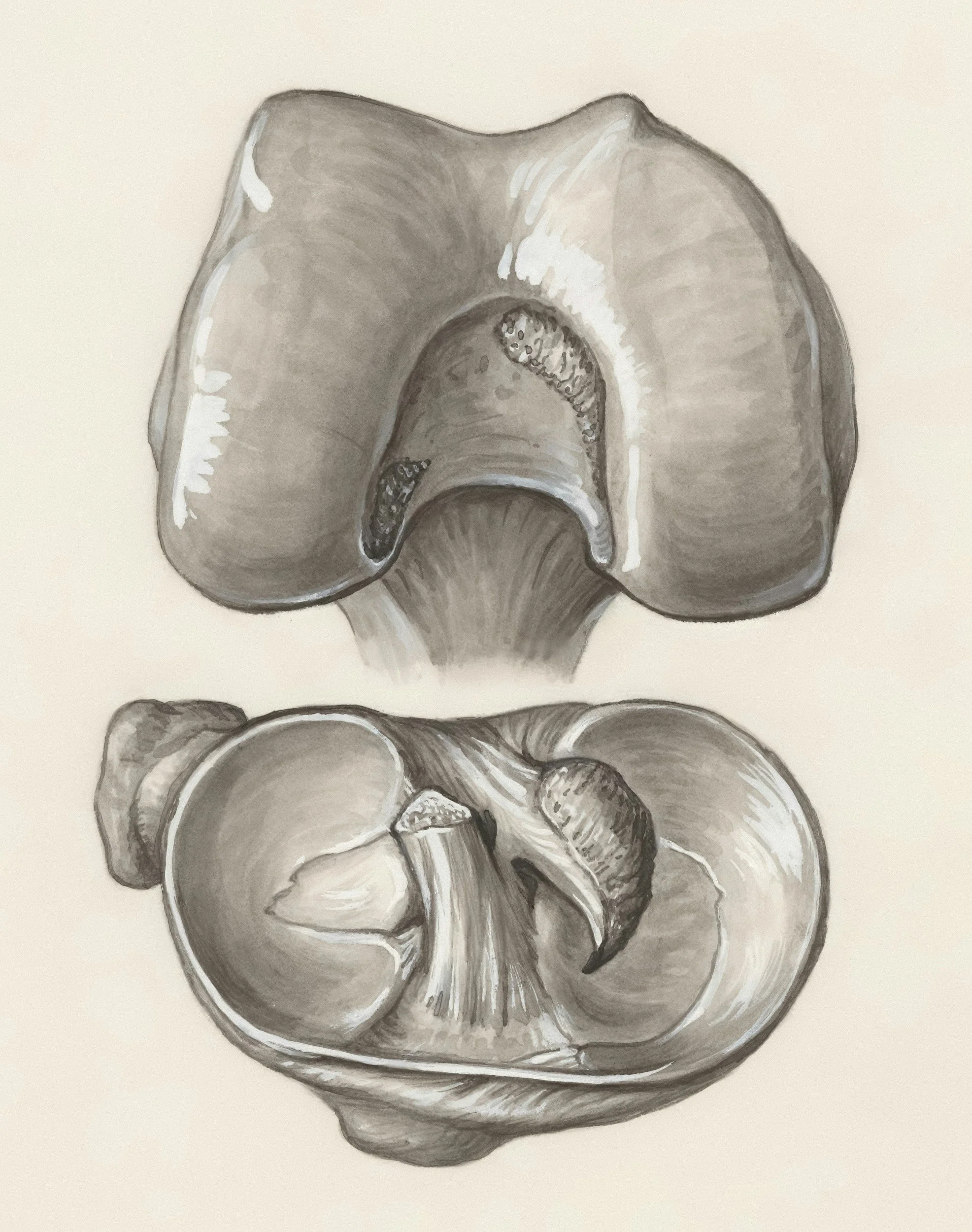
The human wrist is not a single hinge; it is an incredibly complex articulation of eight small carpal bones meeting the two long bones of your forearm: the radius (thumb side) and the ulna (pinky side).
The Anatomical Gap: The radius bone connects directly to the wrist bones. However, the ulna bone stops short, leaving a gap between the end of the bone and the wrist.
The TFCC: Filling this gap is the Triangular Fibrocartilage Complex. It is a dense, hammock-like structure made of cartilage and ligaments that suspends the carpal bones and acts as a massive shock absorber for the ulnar side of the hand.
Mechanisms of TFCC Tearing
The TFCC is designed to handle compression, but it is highly vulnerable to rotational shearing forces.
1. Acute Traumatic Tears
The FOOSH Injury: Falling on an outstretched hand (FOOSH), particularly on an icy Toronto sidewalk, forces the wrist into extreme extension and pronation, violently tearing the central cartilage or the anchoring ligaments of the TFCC.
The Rotational Torque: Swinging a golf club, a tennis racket, or a baseball bat, where the wrist is forcefully twisted under load, can rip the TFCC from its bony attachment.
2. Degenerative Tears (Ulnar Variance)
Many urban professionals develop TFCC pain without a specific trauma. This is often driven by genetics and overuse.
Positive Ulnar Variance: In some people, the ulna bone is biologically slightly longer than the radius bone.
The Impingement: Because the bone is longer, the physical space for the TFCC is smaller. Over years of typing and lifting, the long ulna bone violently grinds into the TFCC cartilage, slowly wearing a hole through it (similar to a degenerative meniscus tear in the knee).
Identifying the Clinical Red Flags

How do we differentiate a TFCC tear from a standard tendon strain? We look for specific, load-bearing mechanical failures.
Weight-Bearing Pain: The absolute hallmark of a TFCC tear is exquisite pain when extending the wrist and applying body weight (e.g., doing a push-up or getting out of a bathtub).
The "Click" or "Clunk": A physical sensation of catching or popping on the pinky side of the wrist when rotating the palm face up to face down (supination to pronation).
Loss of Grip Strength: A sudden, inexplicable weakness when trying to tightly grip a steering wheel, a heavy pan, or a barbell.
Primary Source Proof: Non-Operative TFCC Management
Orthopedic upper extremity literature confirms that conservative physiotherapy, utilizing specific load-management splinting and progressive proprioceptive strengthening, successfully resolves pain and restores function in the vast majority of stable TFCC tears.
Note: The link above directs to external, peer-reviewed medical literature demonstrating our commitment to evidence-based practice and international clinical guidelines for upper extremity rehabilitation.
PubMed clinical reviews indicate that conservative management—including 4 to 6 weeks of above-elbow casting or splinting, NSAIDs, and physical therapy—yields outcomes comparable to surgery for many stable, traumatic TFCC tears. However, tears with distal radioulnar joint (DRUJ) instability typically require operative repair.
Key Clinical Evidence & Management Guidelines
Immobilization: Evidence emphasizes that above-elbow immobilization for 4 to 6 weeks is critical for healing. Short-arm casts or splints frequently result in higher failure rates, which may ultimately require surgical intervention.
Physical Therapy: Targeted forearm, grip, and wrist stabilization exercises are vitalfor regaining function once the immobilization period is complete. A case study on PubMed showed pain reduction and functional restoration without surgery after an 8-week structured strength training program. [1]
Indications for Surgery: If conservative treatments fail to relieve painor if imaging (such as an MRI) reveals structural DRUJ instability, surgical intervention (such as arthroscopic debridement or repair) is generally indicated. [1, 2]
Outcomes: A systematic review highlights that non-operative management of certain traumatictears (like Palmer-type IB) provides highly effective, noninferior functional outcomes compared to operative management. [1]
For a deeper dive, you can explore the full clinical guidelines available on the National Center for Biotechnology Information (NCBI) Bookshelf or review thePubMed Natural History Study. [1]
The Rehab Mechanics Hand and Wrist Protocol
Treating the TFCC requires immense clinical patience. The cartilage has poor blood supply, meaning we must protect it heavily while stimulating surrounding muscular support.
Phase 1: Mechanical Unloading and Stabilization (Weeks 1-4)
If you continue to crush the torn cartilage, it will never heal. We must immediately alter the joint mechanics.
Specialized Splinting: Standard wrist braces do not work for TFCC tears because they do not stop rotational movement. We utilize or recommend specialized ulnar-sided bracing (like a WristWidget) that physically compresses the radius and ulna together, relieving the tension on the torn TFCC hammock.
Activity Modification: A strict, temporary ban on all weight-bearing extension (no push-ups, burpees, or heavy pressing) and heavy rotational torque.
Phase 2: Pain Modulation and Soft Tissue Release
The muscles in the forearm will spasm protectively around the injured joint.
Extensor Carpi Ulnaris (ECU) Release: The ECU tendon runs directly over the TFCC. When the TFCC tears, this tendon often becomes violently inflamed. We use targeted soft tissue release to melt the trigger points in the forearm, taking the pulling tension off the wrist.
Joint Mobilization: Gentle, targeted glides of the carpal bones to maintain joint nutrition (synovial fluid pumping) without stressing the torn cartilage.
Phase 3: Isometric and Proprioceptive Fortification (Weeks 4-8)
Once the acute pain settles, we must build a muscular "cast" around the pinky side of the wrist.
Isometric Loading: Holding a weight in a neutral wrist position without moving. This forces the forearm muscles to stabilize the joint safely, triggering a powerful analgesic (pain-relieving) response in the nervous system.
Proprioceptive Retraining: The TFCC is packed with nerve endings that tell your brain where your wrist is in space. We use unstable surfaces (like balancing a ball on a plate) to force the nervous system to reconnect with the injured wrist, restoring high-speed reflexive stability.
Phase 4: Dynamic Load Integration (Weeks 8+)
Eccentric Strengthening: Slowly lowering heavy weights to structurally thicken the supporting tendons.
Closed-Chain Return: Gradually re-introducing weight-bearing activities, modifying grip angles (e.g., using push-up handles to keep the wrist neutral) until the TFCC is robust enough to handle flat-hand pressure again.
Restore Your Grip and Confidence
You do not have to live with chronic wrist pain or immediately resort to arthroscopic surgery. By protecting the injured cartilage and building massive structural support in the forearm, expert physical therapy can permanently stabilize a TFCC tear.
Book a comprehensive upper extremity assessment with our clinical team today. We are conveniently located inside the Prime Medical Centre at 68 Abell Street, offering advanced orthopedic recovery in Queen West.
Contact us to schedule your appointment:
Email: info@rehabmechanics.com
Phone: (416) 533-3900
About the Author
Mr. Sanjay Attwala (B.Sc., M.Sc., RPT) is a Registered Physiotherapist, clinical director, and the founder of Rehab Mechanics in Toronto. With over 15 years of registered clinical practice and a deep specialization in complex musculoskeletal rehabilitation, Sanjay synthesizes rigorous international academic training with advanced evidence-based therapeutics to guide his clinical practice and patient education initiatives.
Academic Background & Credentials
Master of Science (M.Sc.) in Physiotherapy – University of Keele, United Kingdom (2010).
Bachelor of Science (B.Sc.) – University of Waterloo, Ontario, Canada.
Registered Physiotherapist (RPT) – Regulated health professional in excellent standing with the College of Physiotherapists of Ontario (CPO).
Corporate Entity – Operating officially under the S. Attwala Physiotherapy Professional Corporation with a DBA of Rehab Mechanics.
Clinical Expertise & Philosophy
Sanjay’s clinical approach rejects passive symptom management in favor of identifying underlying biomechanical root causes. His diverse expertise spans advanced manual therapies, personalized corrective exercise prescription, and modern physical modalities. At the Rehab Mechanics Toronto Queen West clinic, he routinely diagnoses and treats complex conditions including:
Spinal & Discogenic Pathology – Cervical, thoracic, and lumbar disc injuries, sciatica, and sacroiliac joint (SIJ) dysfunction.
Upper & Lower Extremity Injuries – Rotator cuff tears, frozen shoulder, tennis/golfer’s elbow, carpal tunnel syndrome, and complex ankle/foot pathologies.
Perinatal & Pelvic Health Rehabilitation – Specialized assessment and rehabilitation protocols tailored specifically for women during pregnancy and the post-partum period, addressing pelvic girdle pain, diastasis recti, and core stabilization.
Specialized Rehabilitation – Pelvic health therapy, TMJ dysfunction, post-surgical rehabilitation (including Total Hip and Total Knee Replacements), and custom orthotics dispensing.
Shockwave Therapy: with advanced cutting edge technological devices to suit your needs.
Interdisciplinary Practice & Patient Care
Sanjay practices an integrated model of healthcare, working closely alongside medical doctors inside the Prime Medical Centre on Abell Street to streamline patient recovery pathways. He maintains a human-centric, communication-first clinical framework, ensuring that care remains fully customized rather than automated.
His clinical caseload encompasses a broad operational spectrum under Ontario's regulatory frameworks, including:
Motor Vehicle Accident (MVA) Claims – Rehabilitation navigating Ontario’s statutory accident benefits schedule.
Workplace Safety and Insurance Board (WSIB) – Occupational injury management and return-to-work screening.
Extended Health Care (EHC) & Private Practice – Multi-tier insurance coordination and long-term athletic development plans.
Commitment to Research & Community
Outside of his clinical caseload at Rehab Mechanics and his additional practice affiliations in Etobicoke, Sanjay is an active health writer and community educator. He translates contemporary peer-reviewed medical research into accessible, actionable guidance on his professional blog. As a dedicated father and husband, he mirrors his professional advice in his personal life, focusing on structural mobility, cross-training, and longevity to help his family and his community thrive. Naturally he takes he a keen interest in rehabilitation for women who are pregnant and post-partum.
Disclaimer: The information provided on this blog is intended for educational and informational purposes only. It does not constitute medical advice, diagnosis, or a treatment plan. Always seek the direct advice of a Registered Physiotherapist, physician, or other qualified health provider regarding any medical condition or physical rehabilitation routine.