Moving Beyond Passive Care: Active Management & Physical Therapy (Part 3 of 3)
September 14, 2026
Receiving an X-ray report detailing a misaligned or "slipping" vertebra—whether Retrolisthesis or Spondylolisthesis—is deeply terrifying for most Toronto residents. The immediate assumption is that the spine is fragile, crumbling, and on the verge of catastrophic collapse. Patients frequently stop exercising, stop lifting, and begin relying on heavy back braces or passive treatments like hot packs, assuming that major spinal fusion surgery is their only eventual option.
At Rehab Mechanics, we want to completely dismantle this fear. A misaligned vertebra does not mean you can never lift weights or move safely again.
Our clinical philosophy rejects the idea that passive care can heal a structural failure. Passive care—like medication or massage—provides short-term symptom relief, but only active movement fixes the underlying mechanical dysfunction. By utilizing advanced human mechanics physical therapy, we can build a massive, biological corset of muscle around the "slipped" joint. This active approach stops any further movement, stabilizes the spine against gravity, and permanently relieves the crushing pressure on your nerves.
The Rehab Mechanics Corrective Protocol
Treating a slipped vertebra is a highly precise exercise in biomechanical engineering. We must determine exactly what direction the spine is slipping, decompress the crushed nerves, and aggressively rebuild the surrounding muscular scaffolding.
1. Directional Preference Therapy
We do not use generic back stretches; stretching an unstable spine in the wrong direction can violently aggravate the nerve compression.
Finding the Relief Vector: We utilize highly specific, repeated movement patterns to determine your "directional preference."
The Mechanical Response: For example, a forward slip (spondylolisthesis) is almost always aggravated by arching backward (extension) and relieved by bending forward (flexion). We will prescribe a flexion-biased protocol to physically open the nerve canals and alleviate the neurological crush. We use movement as medicine to safely decompress the spine before we begin strengthening.
2. Deep Core Stabilization (The Internal Brace)
If the bones and ligaments have failed to hold the spine together, your muscles must take over 100% of the job.
Transversus Abdominis Isolation: We use precise biofeedback to wake up your deepest abdominal layer. This muscle acts as a biological weight belt; when it fires, it violently compresses the L4-L5 or pelvic segments together from the inside out, stopping any further slippage.
Multifidus Co-Contraction: We train the tiny, deep stabilizers at the back of the spine to fire simultaneously with the front abdominals, effectively "casting" the slipped vertebra in a rigid muscular block.
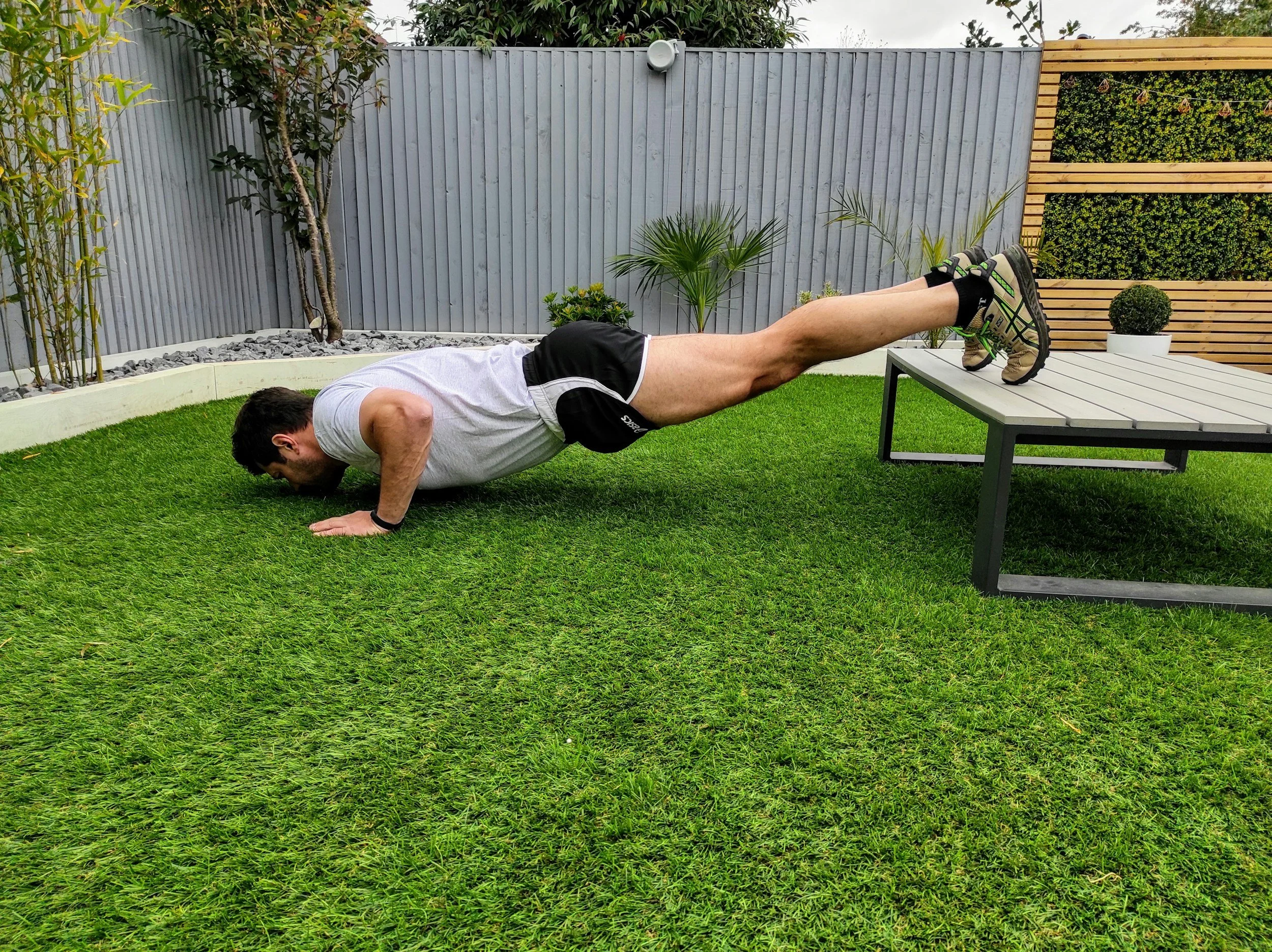
Anti-Extension Training: We prescribe heavy Pallof presses, dead bugs, and front planks to force the core to resist the spine's natural desire to arch or twist against gravity.
3. Hands-On Manual Therapy and Joint Unlocking
While active movement is the cure, the surrounding joints are often locked in a rigid, protective spasm that must be cleared first.
Hip Flexor Release: The psoas muscle attaches directly to the slipping lumbar spine. When you sit all day, it gets incredibly tight and constantly yanks the spine forward. We use targeted soft-tissue work to release these "brakes," taking the mechanical pressure off the compromised bone.
Thoracic and Hip Mobilization: If your mid-back or hips are stiff, your fragile lower back has to do all the moving. We perform targeted joint mobility evaluations and manual therapy to ensure the joints above and below the slip are absorbing their fair share of the mechanical load.
Reclaim Your Structural Confidence
You do not have to live in fear of a slipping spine or resign yourself to invasive fusion surgery. By mastering your pelvic mechanics and building an impenetrable muscular brace, expert physical therapy can stabilize your spine and eradicate the nerve pain.
If you live in Queen West, Liberty Village, or Trinity Bellwoods, do not wait for the pain to become unbearable. Book a personalized, evidence-based spinal assessment with our clinical team today.
We are conveniently located inside the Prime Medical Centre at 68 Abell Street, offering elite diagnostic orthopedic care.
Contact us to schedule your appointment:
Email: info@rehabmechanics.com
Phone: (416) 533-3900
This concludes our three-part series on spinal slippage. If you missed the previous installments, please review Part 1 and Part 2 to understand the mechanics and root causes of these complex spinal conditions.
About the Author
Mr. Sanjay Attwala (B.Sc., M.Sc., RPT) is a Registered Physiotherapist, clinical director, and the founder of Rehab Mechanics in Toronto. With over 15 years of registered clinical practice and a deep specialization in complex musculoskeletal rehabilitation, Sanjay synthesizes rigorous international academic training with advanced evidence-based therapeutics to guide his clinical practice and patient education initiatives.
Academic Background & Credentials
Master of Science (M.Sc.) in Physiotherapy – University of Keele, United Kingdom (2010).
Bachelor of Science (B.Sc.) – University of Waterloo, Ontario, Canada.
Registered Physiotherapist (RPT) – Regulated health professional in excellent standing with the College of Physiotherapists of Ontario (CPO).
Corporate Entity – Operating officially under the S. Attwala Physiotherapy Professional Corporation with a DBA of Rehab Mechanics.
Clinical Expertise & Philosophy
Sanjay’s clinical approach rejects passive symptom management in favor of identifying underlying biomechanical root causes. His diverse expertise spans advanced manual therapies, personalized corrective exercise prescription, and modern physical modalities. At the Rehab Mechanics Toronto Queen West clinic, he routinely diagnoses and treats complex conditions including:
Spinal & Discogenic Pathology – Cervical, thoracic, and lumbar disc injuries, sciatica, and sacroiliac joint (SIJ) dysfunction.
Upper & Lower Extremity Injuries – Rotator cuff tears, frozen shoulder, tennis/golfer’s elbow, carpal tunnel syndrome, and complex ankle/foot pathologies.
Perinatal & Pelvic Health Rehabilitation – Specialized assessment and rehabilitation protocols tailored specifically for women during pregnancy and the post-partum period, addressing pelvic girdle pain, diastasis recti, and core stabilization.
Specialized Rehabilitation – Pelvic health therapy, TMJ dysfunction, post-surgical rehabilitation (including Total Hip and Total Knee Replacements), and custom orthotics dispensing.
Shockwave Therapy: with advanced cutting edge technological devices to suit your needs.
Interdisciplinary Practice & Patient Care
Sanjay practices an integrated model of healthcare, working closely alongside medical doctors inside the Prime Medical Centre on Abell Street to streamline patient recovery pathways. He maintains a human-centric, communication-first clinical framework, ensuring that care remains fully customized rather than automated.
His clinical caseload encompasses a broad operational spectrum under Ontario's regulatory frameworks, including:
Motor Vehicle Accident (MVA) Claims – Rehabilitation navigating Ontario’s statutory accident benefits schedule.
Workplace Safety and Insurance Board (WSIB) – Occupational injury management and return-to-work screening.
Extended Health Care (EHC) & Private Practice – Multi-tier insurance coordination and long-term athletic development plans.
Commitment to Research & Community
Outside of his clinical caseload at Rehab Mechanics and his additional practice affiliations in Etobicoke, Sanjay is an active health writer and community educator. He translates contemporary peer-reviewed medical research into accessible, actionable guidance on his professional blog. As a dedicated father and husband, he mirrors his professional advice in his personal life, focusing on structural mobility, cross-training, and longevity to help his family and his community thrive. Naturally he takes he a keen interest in rehabilitation for women who are pregnant and post-partum.
Disclaimer:
The information provided on this blog is intended for educational and informational purposes only. It does not constitute medical advice, diagnosis, or a treatment plan. Always seek the direct advice of a Registered Physiotherapist, physician, or other qualified health provider regarding any medical condition or physical rehabilitation routine.
Google MyBusiness for Instant Posts, Photos, Updates, Offers and Communication
Be sure to check out Rehab Mechanics’ Google My Business Profile for daily posts, location and directions in addition to the directions on the website!
We love interacting with prospective and current patients, and love honest feedback and even constructive criticism and areas for improvement!