How to Tell if Your Inner Knee Pain is a Meniscus Tear or Pes Anserine Bursitis (Part 1 of 3)
September 14, 2026
Medial knee pain is frequently misdiagnosed, as both a medial meniscus tear and pes anserine bursitis occur in the exact same anatomical region. Physiotherapy assists in managing this diagnostic confusion by utilizing precise mechanical loading tests and joint line palpation to determine the structural failure. The biomechanical root cause dictates the treatment: meniscus tears involve internal rotational shear, while bursitis is driven by external friction from poor pelvic stability.
The Patient’s Story: The Toronto Runner's Dilemma
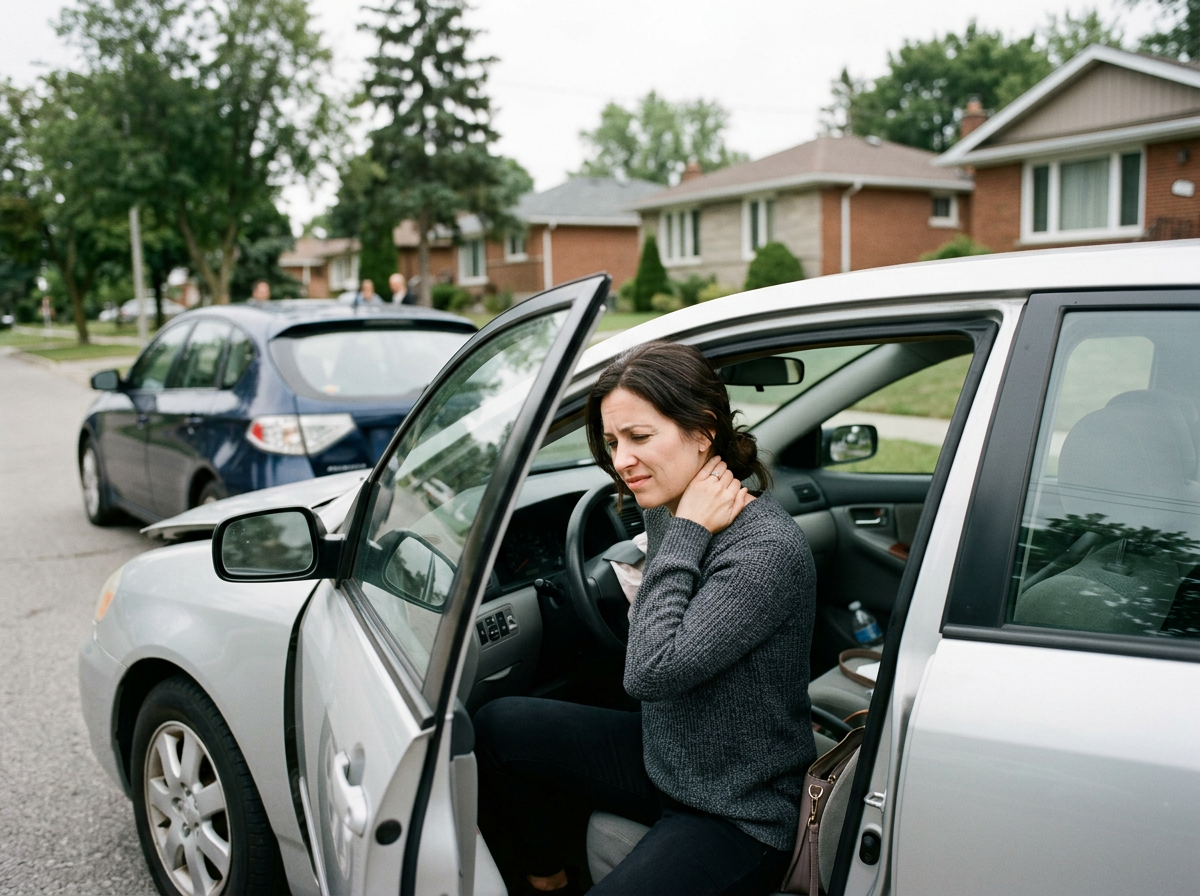
For the dedicated runners navigating the Martin Goodman Trail and the active professionals commuting by bike through Queen West, inner knee pain is an incredibly common threat. It usually begins during a long weekend run or after a sudden pivot during a recreational soccer match at Lamport Stadium.
You feel a sharp, stinging pain on the inside of your knee. When you visit a standard walk-in clinic, the diagnosis is often a swift "meniscus tear," leaving you terrified of impending arthroscopic surgery. You are told to rest, ice it, and wait for an MRI.
However, at Rehab Mechanics, we frequently find that this inner knee pain is not an internal cartilage tear at all; it is Pes Anserine Bursitis—a highly treatable inflammation of a fluid sac just below the joint. Because the treatments for a torn meniscus and an inflamed bursa are entirely different, knowing exactly which structure is failing is critical. We use advanced human mechanics and targeted provocation tests to differentiate these two conditions, helping you avoid unnecessary surgical waitlists.
Structural / Biomechanical Analysis
To understand why these two injuries mimic each other, we must break down the overlapping anatomy of the medial (inner) knee.
The Medial Meniscus (The Internal Shock Absorber)
The medial meniscus is a C-shaped wedge of tough fibrocartilage located deep inside the knee joint capsule, sitting directly between the thigh bone (femur) and shin bone (tibia).
The Movement Pattern: It acts as a primary shock absorber. It is highly vulnerable to violent, twisting forces while the foot is planted on the ground (e.g., catching a cleat in the turf).
The Joint Line: When the meniscus tears, the resulting inflammation and mechanical catching occur directly on the "joint line"—the physical gap between the two leg bones.
The Pes Anserine Bursa (The External Friction Sac)
The pes anserine bursa is a fluid-filled sac located completely outside the joint capsule, positioned roughly two inches below the joint line on the inner shin bone.
The Overloaded Tendons: Three massive thigh muscles (Sartorius, Gracilis, and Semitendinosus) merge and anchor directly over this bursa sac.
The Friction Pattern: If your glute muscles are weak, your knee caves inward (valgus collapse) when you run or climb stairs. This violently yanks the tendons tight, physically crushing the bursa sac against the bone and causing severe friction-based inflammation.
Clinical Red Flags: The Diagnostic Tests
Our physiotherapists use highly specific, active provocation tests to pinpoint whether the pain is internal cartilage (meniscus) or external friction (bursitis).
The Joint Line Palpation Test: If pressing your thumb directly into the soft gap between the thigh and shin bone elicits sharp pain, it strongly indicates a meniscus tear. If the exquisite, breathtaking tenderness is located 2 to 3 inches below that gap, it points to pes anserine bursitis.
McMurray’s Test (For Meniscus): The physiotherapist bends your knee and aggressively rotates the shin bone while straightening the leg. A painful, audible "click" or "catch" deep inside the joint is a positive sign for a meniscal tear.
The Stair Descent Test (For Bursitis): Walking down a flight of stairs requires massive eccentric tension from the hamstring tendons. If descending stairs triggers a sharp, burning pain on the inner shin, but twisting the knee on flat ground does not, the bursa is the likely culprit.
The True "Locking" Sign: If your knee physically jams and you absolutely cannot straighten your leg, a piece of torn meniscus has likely flipped into the hinge. Bursitis does not mechanically lock the joint.
Primary Source Proof
Clinical orthopedics and sports medicine literature mandate thorough differential diagnostic testing to distinguish between intra-articular and extra-articular medial knee pathology prior to considering surgical intervention.
The Rehab Mechanics Corrective Protocol
Once we identify the exact tissue failure, we apply a rigorously phased biomechanical protocol. (Note: This outlines the conservative protocol for non-surgical tears and bursitis).
Phase 1 — Load Modification and Tissue Desensitization
Targeted Decompression: Utilizing manual lymphatic drainage and compressive modalities to push joint effusion (swelling) out of the knee capsule.
Activity Modification: Temporarily replacing high-impact running or heavy squatting with pain-free stationary cycling to reduce both twisting shear (meniscus) and tendon friction (bursa).
Instrument-Assisted Soft Tissue Mobilization (IASTM): If bursitis is the diagnosis, we manually release the tight medial hamstring and adductor bellies to immediately remove the pulling tension on the bursa sac.
Phase 2 — Pelvic Fortification
Anti-Valgus Gluteal Activation: Strengthening the gluteus medius via banded clamshells and lateral walks. A strong side hip prevents the knee from caving inward, which protects the medial meniscus from being crushed and stops the pes anserine tendons from whipping across the bursa.
Core-to-Floor Stability: Integrating deep abdominal strength to ensure the pelvis remains level during single-leg stance.
Phase 3 — Gait Retraining / Mechanics Correction
Eccentric Tendon Loading: Using controlled, slow hamstring sliders to build resilient tendon tissue that does not spasm and crush the bursa.
Cadence Manipulation: For runners, increasing step rate by 5-10% to reduce the vertical impact forces absorbed by the meniscus.
Terminal Knee Extension (TKE): Ensuring the leg can lock perfectly straight without a limp, utilizing resistance bands to retrain the vastus medialis oblique (VMO).
Phase 4 — Return-to-Activity Strategy
Proprioceptive Perturbation Training: Using balance boards to train the knee's nerve endings to react instantly to uneven terrain, protecting the joint from sudden twists.
Multi-Planar Agility: Progressing to lateral bounding and cutting drills under strict supervision to ensure the knee tracking holds up to athletic forces.
Related Conditions We Treat
Medial Meniscus Tears
Pes Anserine Bursitis
Medial Collateral Ligament (MCL) Sprains
Knee Osteoarthritis
Patellofemoral Pain Syndrome
Iliotibial (IT) Band Syndrome
Related Blogs
"Is My Inner Knee Pain a Meniscus Tear or Pes Anserine Bursitis?"
"What Does a 'Boggy End Feel' in My Knee Actually Mean?"
"Do I Need Surgery for a Torn MCL in My Knee?"
"Is Your Swollen Knee a Torn Meniscus or Prepatellar Bursitis? (Part 2 of 3)"
Services Used in Treatment
Manual Therapy
Soft Tissue Release
Myofascial Release
Shockwave Therapy
Gait Retraining
Neuromuscular Re-Education
Custom Orthotics
Strengthening Programs
FAQ Section
1. Can physiotherapy assist in managing medial knee pain?
Yes. Physiotherapy supports recovery by utilizing precise diagnostic tests to identify the damaged structure and implementing targeted strengthening to optimize movement and reduce joint stress.
2. How do I know if my meniscus is torn?
A meniscus tear often presents with pain directly on the joint line, accompanied by mechanical symptoms like clicking, catching, or a feeling that the knee is physically locked. We assist in managing these symptoms through specific mobility protocols.
3. What causes pes anserine bursitis?
Bursitis is an inflammation caused by friction. When hip muscles are weak, the knee caves inward, pulling the inner thigh tendons tightly across the bursa sac. We help address contributing factors by fortifying pelvic stabilizers.
4. Will stretching help my knee bursitis?
Aggressive stretching can actually increase the friction on an inflamed bursa. We support recovery by utilizing manual therapy to release the muscle belly higher up the leg, providing safe mechanical slack.
5. Does a meniscus tear always require surgery?
No. Many degenerative or minor meniscus tears respond excellently to conservative care. We utilize strengthening programs to build a muscular brace that helps reduce mechanical overload on the cartilage.
6. Can shockwave therapy help knee pain?
Yes. Shockwave therapy can be highly effective for chronic pes anserine bursitis, helping to reduce tissue irritation and support localized blood flow to stubborn, fibrotic tissues.
7. How does custom orthotic dispensing support the knee?
If severe flat feet (overpronation) force your knee to collapse inward, custom orthotics assist in managing the alignment, providing a neutral foundation to optimize lower-limb mechanics.
8. Is it safe to ride a bike with inner knee pain?
Stationary cycling is often an excellent, low-impact way to support recovery, as it promotes synovial fluid circulation without the twisting or impact forces that irritate the meniscus.
How Physiotherapy Helps
Reducing tissue irritation through targeted fluid management
Correcting pelvic drop to prevent destructive inward knee collapse
Improving cadence to lessen vertical impact forces
Strengthening stabilizers in the gluteal complex and quadriceps
Reducing mechanical overload on the joint line and bursa sacs
Improving foot mechanics to align the lower kinetic chain
CTA — Contact Us Today
Contact Us Today — All you have to lose is the pain
Book a comprehensive biomechanical assessment with our clinical team today. Located inside the Prime Medical Centre at 68 Abell Street, Queen West.
Email: info@rehabmechanics.com Phone: (416) 533-3900
About the Author
Mr. Sanjay Attwala (B.Sc., M.Sc., RPT) is a Registered Physiotherapist, clinical director, and the founder of Rehab Mechanics in Toronto. With over 15 years of registered clinical practice and a deep specialization in complex musculoskeletal rehabilitation, Sanjay synthesizes rigorous international academic training with advanced evidence-based therapeutics to guide his clinical practice and patient education initiatives.
Academic Background & Credentials
Master of Science (M.Sc.) in Physiotherapy – University of Keele, United Kingdom (2010).
Bachelor of Science (B.Sc.) – University of Waterloo, Ontario, Canada.
Registered Physiotherapist (RPT) – Regulated health professional in excellent standing with the College of Physiotherapists of Ontario (CPO).
Corporate Entity – Operating officially under the S. Attwala Physiotherapy Professional Corporation with a DBA of Rehab Mechanics.
Clinical Expertise & Philosophy
Sanjay’s clinical approach rejects passive symptom management in favor of identifying underlying biomechanical root causes. His diverse expertise spans advanced manual therapies, personalized corrective exercise prescription, and modern physical modalities. At the Rehab Mechanics Toronto Queen West clinic, he routinely diagnoses and treats complex conditions including:
Spinal & Discogenic Pathology – Cervical, thoracic, and lumbar disc injuries, sciatica, and sacroiliac joint (SIJ) dysfunction.
Upper & Lower Extremity Injuries – Rotator cuff tears, frozen shoulder, tennis/golfer’s elbow, carpal tunnel syndrome, and complex ankle/foot pathologies.
Perinatal & Pelvic Health Rehabilitation – Specialized assessment and rehabilitation protocols tailored specifically for women during pregnancy and the post-partum period, addressing pelvic girdle pain, diastasis recti, and core stabilization.
Specialized Rehabilitation – Pelvic health therapy, TMJ dysfunction, post-surgical rehabilitation (including Total Hip and Total Knee Replacements), and custom orthotics dispensing.
Shockwave Therapy: with advanced cutting edge technological devices to suit your needs.
Interdisciplinary Practice & Patient Care
Sanjay practices an integrated model of healthcare, working closely alongside medical doctors inside the Prime Medical Centre on Abell Street to streamline patient recovery pathways. He maintains a human-centric, communication-first clinical framework, ensuring that care remains fully customized rather than automated.
His clinical caseload encompasses a broad operational spectrum under Ontario's regulatory frameworks, including:
Motor Vehicle Accident (MVA) Claims – Rehabilitation navigating Ontario’s statutory accident benefits schedule.
Workplace Safety and Insurance Board (WSIB) – Occupational injury management and return-to-work screening.
Extended Health Care (EHC) & Private Practice – Multi-tier insurance coordination and long-term athletic development plans.
Commitment to Research & Community
Outside of his clinical caseload at Rehab Mechanics and his additional practice affiliations in Etobicoke, Sanjay is an active health writer and community educator. He translates contemporary peer-reviewed medical research into accessible, actionable guidance on his professional blog. As a dedicated father and husband, he mirrors his professional advice in his personal life, focusing on structural mobility, cross-training, and longevity to help his family and his community thrive. Naturally he takes he a keen interest in rehabilitation for women who are pregnant and post-partum.
Disclaimer:
The information provided on this blog is intended for educational and informational purposes only. It does not constitute medical advice, diagnosis, or a treatment plan. Always seek the direct advice of a Registered Physiotherapist, physician, or other qualified health provider regarding any medical condition or physical rehabilitation routine.
Google MyBusiness for Instant Posts, Photos, Updates, Offers and Communication
Be sure to check out Rehab Mechanics’ Google My Business Profile for daily posts, location and directions in addition to the directions on the website!
We love interacting with prospective and current patients, and love honest feedback and even constructive criticism and areas for improvement!